
Beautiful Plants For Your Interior
Beautiful Plants For Your Interior
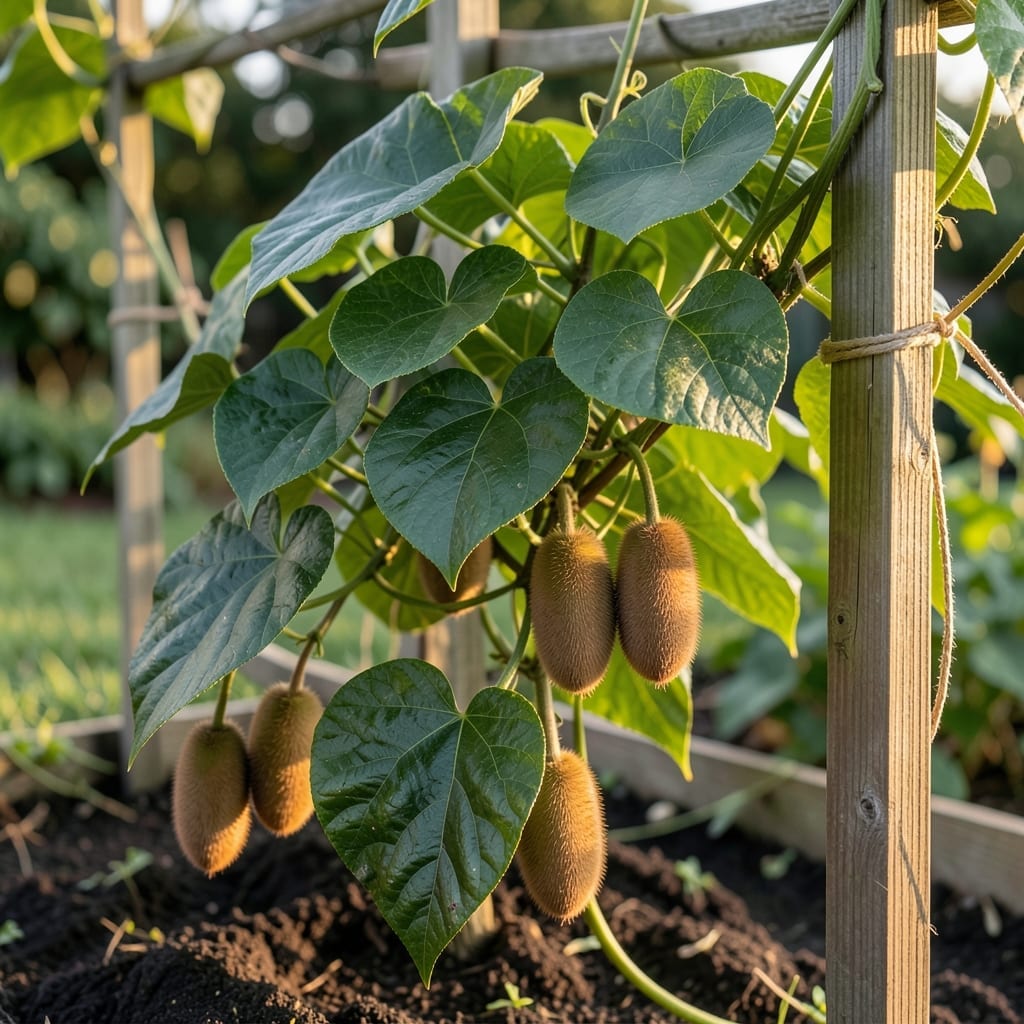
Kiwi vine leaves tell the whole story before the fruit ever appears. I learned to read their language—deep green means happy, yellow edges scream for water, and curled tips usually signal too much love from the sun.
Healthy foliage fuels the entire plant, turning sunlight into the energy that produces those sweet, fuzzy fruits. Spot issues early through the leaves, and you’ll catch problems before they spread to next season’s harvest.
📚 In This Guide
Here’s the method I use to keep my vines healthy and productive year after year.
Check your kiwi vine leaves weekly during the growing season for signs of stress or disease. Look for discoloration, spots, or unusual patterns that might indicate nutrient deficiencies or fungal issues. I always examine both the upper and lower surfaces of the leaves, as some problems first appear underneath.
Early detection makes treatment far easier. You’ll notice healthy leaves are a vibrant green with smooth edges. If leaves start yellowing between veins, it often signals iron deficiency. When edges brown and curl, suspect water stress or salt buildup in the soil.
Kiwi vines need 1-2 inches of water per week, more during extreme heat. Water deeply at the base rather than overhead to keep leaves dry and prevent fungal diseases. I water in the early morning so foliage dries quickly in the sun.
Ensure your vines get full sun (at least 6-8 hours daily). Without enough light, leaves become pale and sparse. You’ll see the difference immediately – well-lit leaves are thicker, darker green, and more abundant. Shaded vines produce weak growth and poor fruit set.
Apply a balanced fertilizer every 4-6 weeks during the growing season. I use one with equal parts nitrogen, phosphorus, and potassium. The nitrogen encourages lush leaf growth while the other nutrients support overall plant health.
Stop fertilizing by late summer to allow the plant to harden off before winter. Over-fertilizing produces excessive leafy growth at the expense of fruit. Watch for dark green, almost blue-tinted leaves – that’s often a sign of too much nitrogen. Yellowing older leaves may indicate nitrogen deficiency.
Prune your kiwi vine in late winter while it’s still dormant. Remove about 30-40% of the previous year’s growth, focusing on old, weak, or crowded wood. This opens up the canopy so sunlight and air can reach the center of the plant.
Good air circulation prevents many leaf problems. I always disinfected my pruners between cuts to avoid spreading disease. After pruning, you should see the vine’s structure clearly with leaves spaced evenly along the remaining canes. This also makes future inspections easier.
At the first sign of trouble, identify the issue and act quickly. For fungal diseases like powdery mildew, remove affected leaves and apply a fungicide. I keep a spray bottle of neem oil ready for early intervention.
For pest problems like aphids, a strong blast of water often dislodges them. You’ll know it’s working when new growth appears healthy and pest-free. Don’t wait for problems to spread – a few affected leaves can quickly become a vine-wide issue if left unchecked.
Here’s what I’ve learned from years of tending kiwi vines—small adjustments make a big difference.
The Weekly Check: That weekly leaf inspection in Step 1 isn’t just a suggestion. I’ve caught early signs of powdery mildew and nutrient deficiencies just by being consistent. Examining both leaf surfaces takes seconds but saves hours of treatment later.
Watering Wisdom: The 1-2 inches of water per week in Step 2 is your baseline, but watch your soil. Sandy soils drain fast and may need the full 2 inches, while clay holds moisture longer. The early morning timing ensures leaves dry quickly, preventing fungal issues.
Pruning Precision: When pruning in late winter as Step 4 details, don’t eyeball that 30-40% removal. I measure it out—too little and you won’t improve airflow, too much and you risk shock. Disinfecting pruners between cuts is non-negotiable for preventing disease spread.
Problem Response: Step 5 emphasizes quick action for good reason. I once let a few aphids linger, thinking they’d go away. Within a week, they’d spread to half the vine. That spray bottle of neem oil is now always at the ready.
Kiwi vine leaves often display disease symptoms in early spring or summer, especially during wet conditions. Look for yellowing, spots, or curling as early warning signs.
Yes! Neem oil is a natural fungicide and can help control mild fungal infections. Apply it in the evening and reapply after rain for best results.
Baking soda spray, copper fungicides, or compost tea can effectively manage leaf diseases without harsh chemicals. Always test on a small area first.
Brown, crispy leaves often indicate under-watering, nutrient deficiency, or sunburn. Check soil moisture, fertilizer levels, and ensure proper shading during peak heat.
Improve air circulation, avoid overhead watering, and remove fallen leaves to reduce fungal spores. Pruning and proper spacing also help keep plants healthy.