
Beautiful Plants For Your Interior
Beautiful Plants For Your Interior
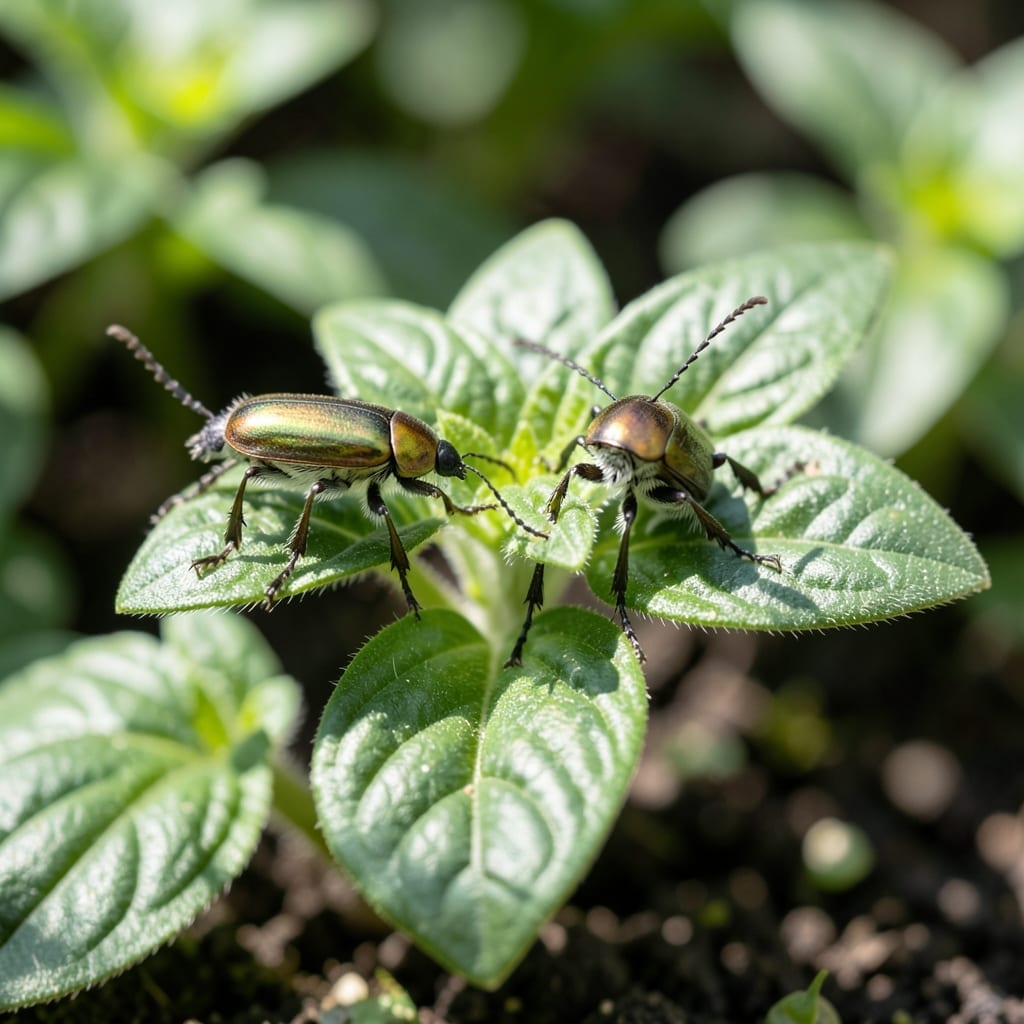
Nothing ruins a basil harvest faster than Japanese beetles. One day your plants are lush and thriving, the next they’re skeletonized by metallic invaders that chew through leaves like tissue paper.
I lost an entire patch three seasons ago before learning the telltale signs: copper-colored beetles with green heads, feeding in broad daylight and leaving behind lace-like foliage. They’re not subtle.
You can fight back without chemicals. Handpick them in early morning when they’re sluggish, drop them in soapy water, or spray with neem oil at dusk for best results.
Prevention works too—row covers early in the season or planting trap crops like marigolds can save your basil before the battle even starts.
Japanese beetles are drawn to basil for several key reasons, each rooted in their natural behaviors and the plant’s unique traits. Understanding these causes helps you disrupt their cycle and protect your herbs.
Basil emits volatile organic compounds (VOCs), like eugenol and linalool, which act as a homing beacon for Japanese beetles. These beetles have highly sensitive antennae that detect these scents from miles away, signaling a food source. The stronger the scent—especially in healthy, well-watered basil—the more irresistible it becomes.
Japanese beetles prefer soft, thin-leaved plants because their mouthparts are adapted for chewing through delicate tissue. Basil’s broad, tender leaves are an easy target compared to tougher plants like rosemary or lavender. The beetles skeletonize the leaves, feeding between the veins and leaving a lace-like pattern.
These pests thrive in warm, sunny environments (75–90°F), which align with basil’s ideal growing conditions. Full-sun gardens create the perfect habitat for beetles to feed and reproduce. Shade cloth or strategic planting can reduce your basil’s appeal by making it less accessible during peak beetle activity (mid-morning to mid-afternoon).
Basil grown in dense clusters or poor soil emits stress signals that attract pests, including Japanese beetles. Stressed plants often release higher levels of VOCs as a distress call, inadvertently luring more beetles. Proper spacing (12–18 inches apart) and nutrient-rich soil keep plants resilient and less enticing to invaders.
Japanese beetles can wreak havoc on your basil, but these targeted solutions will help you reclaim your plants and prevent future attacks.
If the infestation is small, the simplest fix is manual removal. Early in the morning, when beetles are sluggish, shake them into a bucket of soapy water. This drowning method ensures they won’t return. Wear gloves if you’re squeamish—it’s quick and effective!
For a natural approach, spray neem oil or insecticidal soap directly on the beetles and affected leaves. These disrupt their feeding and breeding cycles. Apply in the early morning or late evening to avoid harming beneficial pollinators like bees. Reapply every 5–7 days or after rain.
Protect your basil with floating row covers or fine mesh netting. Secure the edges with soil or weights to keep beetles out while allowing sunlight and water through. This works best for potted basil or small garden plots.
Japanese beetle traps can attract more beetles if placed improperly. If you use them, position traps at least 30 feet away from your garden to lure beetles elsewhere. Alternatively, skip traps entirely—they’re often more trouble than they’re worth for home gardeners.
With persistence, you can save your basil and enjoy lush, pest-free leaves all season long!
No, they target over 300 plant species, including roses, grapes, and beans. Basil is a favorite because of its soft leaves and strong scent.
They feed most aggressively on warm, sunny days between 9 AM and 3 PM. Early morning is the best time to remove them by hand.
Yes! Mix 1 tablespoon dish soap per quart of water and spray directly. The soap breaks down their protective coating, causing them to dehydrate.
Yes, their grubs overwinter in soil. Rotate crops and use milky spore powder in fall to break their life cycle.