
Beautiful Plants For Your Interior
Beautiful Plants For Your Interior
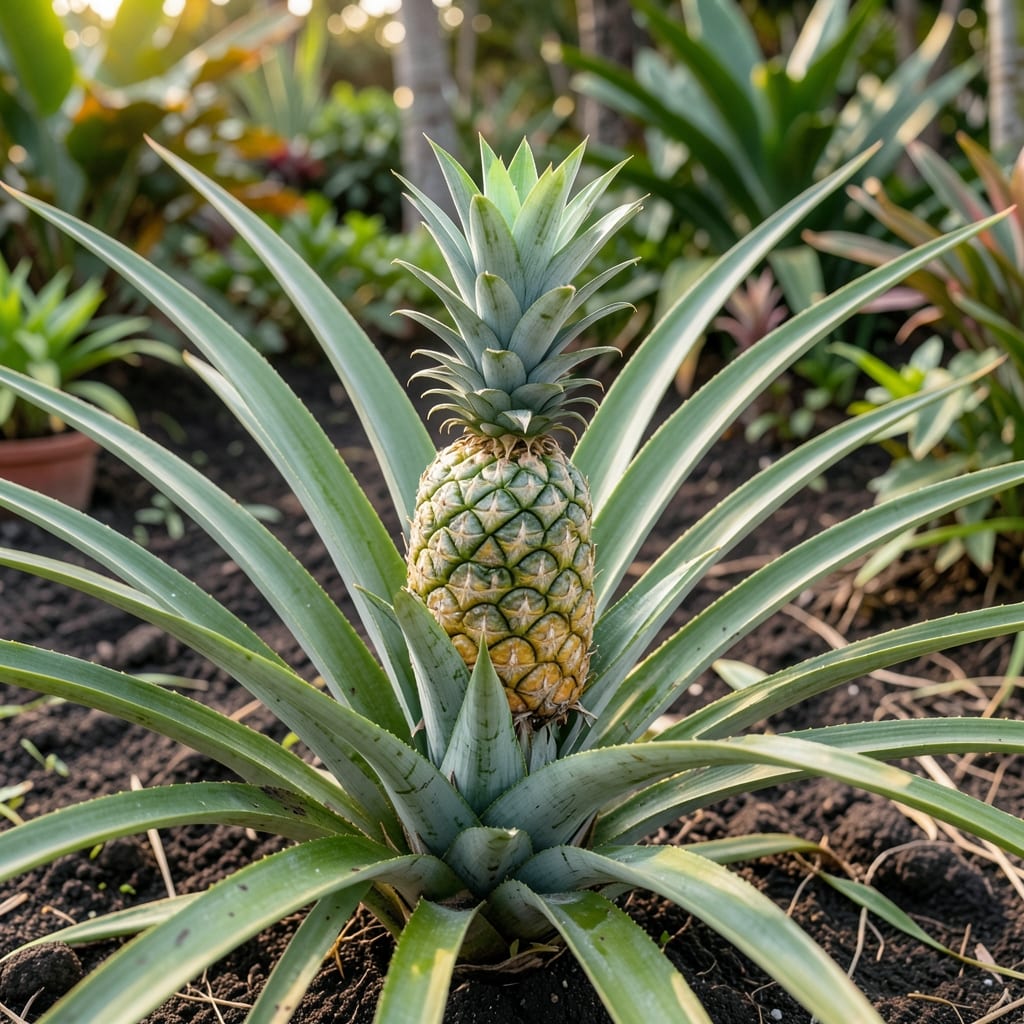
Yes, pineapple is a tropical fruit originating from South America, thriving in warm climates with well-drained soil and high humidity.
What fascinates me most is how this plant belongs to the Bromeliaceae family, which sets it apart from most other fruits. Its spiky crown and tough exterior are perfect adaptations for the tropical environments it calls home. I’ve learned that even in cooler areas, you can grow pineapples with the right care—just expect a longer wait for that sweet reward. ✨
💡 In This Article
Pineapple belongs to the Bromeliaceae family, a group known for its tough, spiky leaves and rosette growth pattern. This family thrives in tropical regions where temperatures range from 68-86°F, with high humidity and consistent rainfall supporting its growth cycle.
The plant’s native habitat spans South America’s Amazon basin, where it evolved to store water in its leaves—a clever adaptation for dry spells. 🔥
The fruit itself is a syncarp, formed by the fusion of multiple berries around a central core. This unique structure gives pineapple its distinctive look and texture. Each scale-like segment on the skin represents an individual berry, fused together during development.
The plant’s shallow roots rely on the bromeliad’s water-storing ability, making it resilient in nutrient-poor soils. ✨
What sets pineapple apart is its CAM photosynthesis, a process that allows it to conserve water by opening its stomata at night. This adaptation is crucial in tropical climates where daytime heat could cause excessive water loss. The fruit’s sweetness comes from its high sugar content, typically 12-15%, developed as it ripens on the plant.
In its natural environment, pineapple plants grow in well-drained, slightly acidic soil with a pH of 4.5-6.5. They require full sun exposure, at least 6-8 hours daily, to produce the energy needed for fruit development. These conditions mimic the open canopies of tropical forests where wild pineapples originally flourished. 💫
The plant’s lifecycle is fascinating: it takes 18-24 months from planting to harvest, with the fruit itself requiring 5-7 months to mature after flowering. This slow growth is why pineapples are often propagated from crowns or slips rather than seeds, ensuring genetic consistency and faster production.
Pineapple is a syncarp, formed by fused berries, and belongs to the Bromeliaceae family. Its tough leaves store water, and it uses CAM photosynthesis to survive dry tropical climates.
Yes! Start with a crown in a 12-inch pot using well-draining soil. Keep it in a sunny spot with temperatures above 60°F. Expect fruit in 2-3 years with proper care.
It takes 18-24 months from planting to harvest due to its slow growth cycle. The fruit itself needs 5-7 months to mature after flowering, as it develops its characteristic sweetness.
Avoid overwatering, which causes yellowing leaves, or using high-nitrogen fertilizer, which promotes leaves over fruit. Below 50°F can kill the plant.