
Beautiful Plants For Your Interior
Beautiful Plants For Your Interior
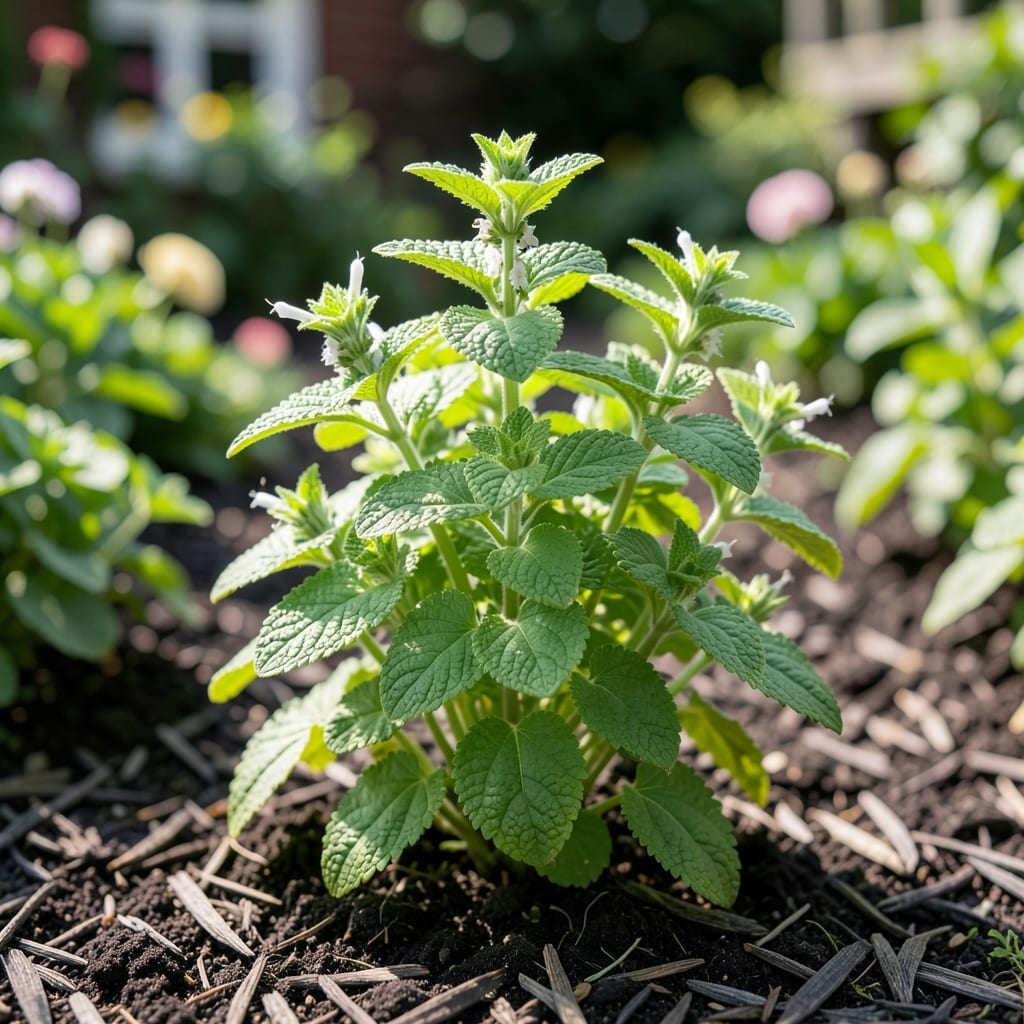
That citrusy aroma hits you before you even see it. Lemon balm gives itself away with a scent so strong it follows you down the garden path. I learned to spot it by crushing a leaf between my fingers—instant lemon confirmation.
Look for heart-shaped leaves with wrinkled surfaces, growing in opposite pairs along square stems. The plant stays bushy, reaching 2-3 feet tall when happy. It spreads eagerly, which is great until it’s taking over your herb bed.
You’ll find it thriving in partial shade, though it tolerates full sun. The leaves release their signature fragrance with the slightest touch. Even the flowers carry that citrus note, though they’re small and white.
Confusion often happens with mint, but lemon balm’s scent and leaf shape are unmistakable. Once you know what to look for, you’ll spot it everywhere.
Identifying lemon balm can be tricky, especially for beginners, due to its similarities with other plants. Here’s why misidentification occurs and the science behind it.
Lemon balm (Melissa officinalis) shares heart-shaped or ovate leaves with other members of the Lamiaceae family, like mint or bee balm. These plants evolved in the same botanical family, leading to overlapping morphological traits. The opposite leaf arrangement and serrated edges further blur the lines, as these are common adaptations for sunlight absorption and water retention in temperate climates.
The citrusy aroma of lemon balm is a defining feature, but it’s not unique. Other herbs, such as lemon verbena or lemongrass, produce similar volatile oils (e.g., citral or geranial). These compounds serve as natural insect repellents and attract pollinators, a shared evolutionary advantage. Without crushing the leaves to release the oils, distinguishing them by scent alone can be challenging.
Lemon balm’s spreading habit and square stems mimic other mints, which thrive in similar growing conditions (moist, well-drained soil). This rhizomatous growth—a survival strategy to colonize space quickly—makes it visually indistinguishable from invasive lookalikes like creeping Charlie (Glechoma hederacea) at a glance.
To avoid confusion, examine the leaf texture (lemon balm’s are softly hairy) and flower structure (small, white, and clustered in axils). A quick crush test for scent remains the most reliable field method.
If you’re struggling with identifying lemon balm, these practical solutions will help you distinguish it from look-alikes and cultivate it with confidence.
Fix: Check the scent—crush a leaf between your fingers. Lemon balm releases a bright, citrusy aroma, while mint smells peppery and bee balm has a milder, floral scent. Also, examine the leaves: lemon balm’s are heart-shaped with serrated edges and a slightly wrinkled texture.
Prevention tip: 💡 Plant lemon balm in a dedicated pot or labeled garden section to avoid confusion with similar herbs.
Fix: Lemon balm thrives in partial shade and moist, well-draining soil. If your plant looks sparse or stretched, move it to a spot with morning sun and afternoon shade. Trim back leggy stems to encourage bushier growth.
Prevention tip: ✨ Water consistently (but not excessively) and fertilize lightly with compost every 4-6 weeks during the growing season.
Fix: Spider mites and aphids love lemon balm. Spray leaves with a mild soap-and-water solution to deter pests. For yellowing leaves, check for overwatering—let the top inch of soil dry out between waterings.
Prevention tip: 🎯 Prune regularly to improve airflow and reduce pest hiding spots. Rotate crops if planting in the same spot yearly.
Fix: Lemon balm seeds can take 7–14 days to sprout. Speed up germination by lightly covering seeds (they need light to grow) and keeping the soil at 70°F (21°C). Use a heat mat if starting indoors.
Prevention tip: 🌡️ Start seeds 6–8 weeks before the last frost for a head start, or propagate from cuttings for faster results.
It has a bright, fresh citrus aroma that’s unmistakable. Crush a leaf between your fingers for the strongest scent. This fragrance is often compared to lemon candy or lemon verbena.
Look for heart-shaped leaves with serrated edges. Mint has more oval leaves and a peppery scent. Lemon balm’s square stems are another key identifier.
Rub a leaf between your fingers. If it smells strongly of lemon, it’s almost certainly lemon balm. The scent is the most reliable way to identify it.
It thrives in partial shade but tolerates full sun. Prefers moist, well-drained soil. Often found spreading in gardens or wild in temperate climates.