
Beautiful Plants For Your Interior
Beautiful Plants For Your Interior
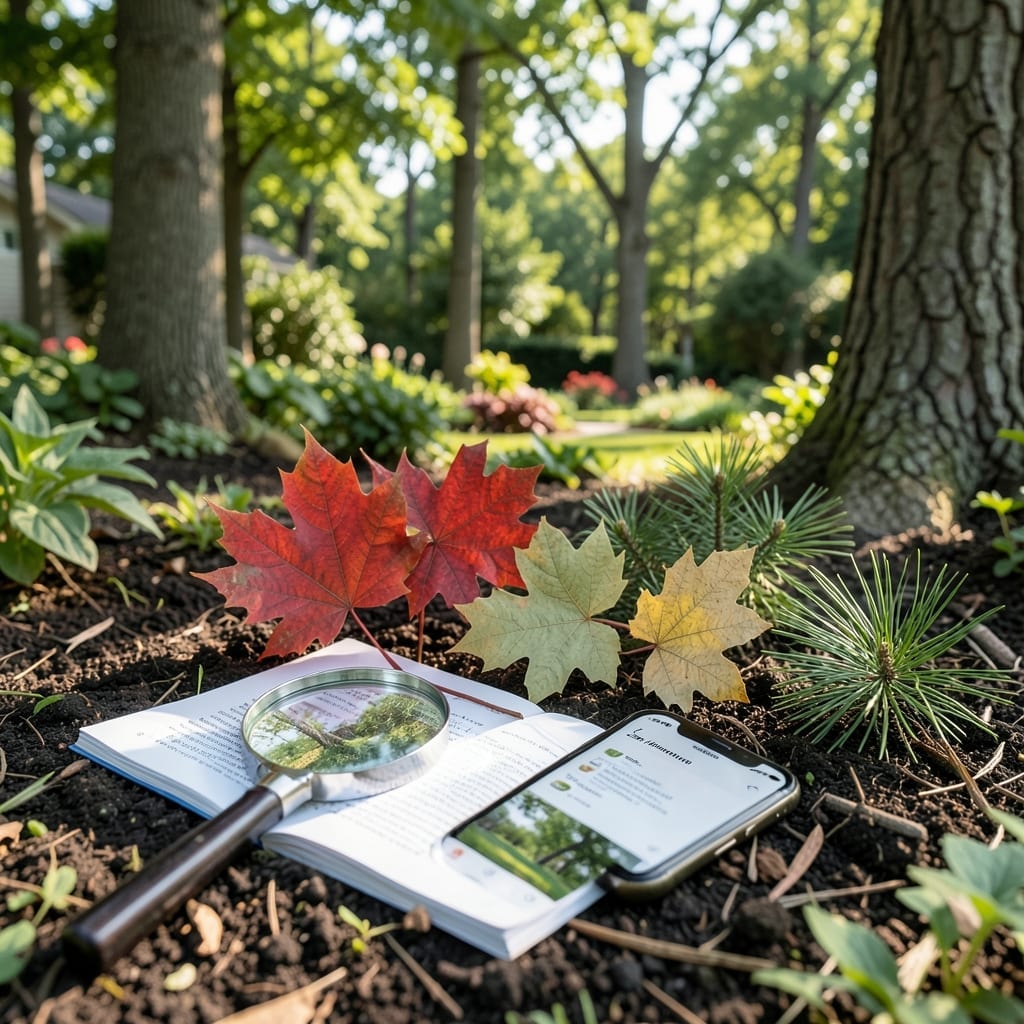
That moment when you find a leaf and wonder which tree it belongs to? I’ve been there countless times, staring at shapes and edges, trying to piece together the puzzle. This guide turns that guesswork into confidence.
I learned the hard way that leaf shapes, edges, and veins tell a story. Pointed or rounded, jagged or smooth—each detail narrows it down. Even the way veins branch can be the clue that unlocks the mystery.
With this method, you’ll start recognizing patterns in minutes. Oak, maple, birch—suddenly, the forest feels like an open book. No advanced degree required.
Works for backyard trees, park walks, or that random leaf stuck to your shoe. Let’s start spotting the differences.
Even with clear pictures, identifying tree leaves can be tricky. Several scientific and environmental factors contribute to misidentification. Here’s why it happens:
Trees of the same species can have leaves that vary in shape, size, or edge pattern due to genetic diversity. For example, a sugar maple (Acer saccharum) may have leaves with 3 to 5 lobes, and the depth of these lobes can differ. Environmental stressors like drought or poor soil can also alter leaf morphology, making visual identification less reliable.
Light, water, and temperature affect leaf development. Leaves grown in full sun are often smaller and thicker, while those in shade may be larger and thinner. Nutrient deficiencies can cause discoloration or irregular growth, further complicating identification. For instance, a nitrogen-deficient oak leaf might appear pale or stunted, mimicking a different species.
Many tree species share overlapping traits. Red maples (Acer rubrum) and silver maples (Acer saccharinum) both have lobed leaves, but their lobe shapes and stem color differ subtly. Without close examination of leaf arrangement, veins, or margins, even experts can confuse them. Hybridization between species (e.g., Quercus × schuettei) blurs distinctions even more.
Blurry, poorly lit, or cropped photos obscure critical details like vein patterns, leaf bases, or petiole length. A top-down shot of a leaf might hide its 3D structure, such as rolled edges in Eucalyptus or the fine hairs on a willow. Scale is another issue—without a reference (e.g., a coin or ruler), it’s hard to judge if a leaf is 2 inches or 12 inches long.
Identifying tree leaves from pictures can be tricky, but these practical steps will help you get it right every time. Follow these solutions to overcome common challenges and improve your accuracy.
If your leaf pictures are blurry, the details needed for identification may be lost. Fix: Use a high-resolution camera or smartphone and ensure good lighting. Hold the leaf against a plain background (like white paper) to reduce distractions. For existing blurry images, try image-sharpening apps to enhance clarity.
Prevention tip: 💡 Always take photos in natural light and avoid shadows by shooting during the day.
When leaves overlap in a picture, it’s hard to see their full shape and edges. Fix: Gently separate the leaves before photographing or take multiple shots from different angles. Use a ruler or small object for scale to help apps or guides assess size accurately.
Prevention tip: 🎯 Place leaves on a flat surface and arrange them so they don’t touch each other.
Sometimes, apps or guides misidentify leaves if the database is limited. Fix: Cross-check your results with at least two reliable sources, such as a field guide or a well-reviewed app like LeafSnap or iNaturalist. Note unique features like leaf margins, veins, and arrangement (alternate, opposite, or whorled) to verify.
Prevention tip: ✨ Use apps with large, region-specific databases for more accurate results.
Leaves can look similar, so missing details like texture or scent can lead to errors. Fix: Note additional traits such as roughness, smoothness, or aroma (e.g., crushing a sassafras leaf releases a distinct smell). Include close-ups of the stem, base, and tip in your photos.
Prevention tip: 🌡️ Always examine the leaf in person first, then photograph its most distinctive parts.
Capture the overall shape, edge pattern, and vein structure. Include close-ups of the leaf base, tip, and stem attachment. A ruler in the shot helps with scale.
Apps rely on databases that may have gaps or regional biases. Always cross-check with a second source and note unique traits like scent or texture.
Often yes, but it’s safer to examine multiple leaves from the same tree. Look for consistency in shape, size, and arrangement. Some species vary widely.
Oak leaves usually have rounded lobes, while maples have pointed ones. Oaks also tend to have deeper sinuses between lobes.