
Beautiful Plants For Your Interior
Beautiful Plants For Your Interior
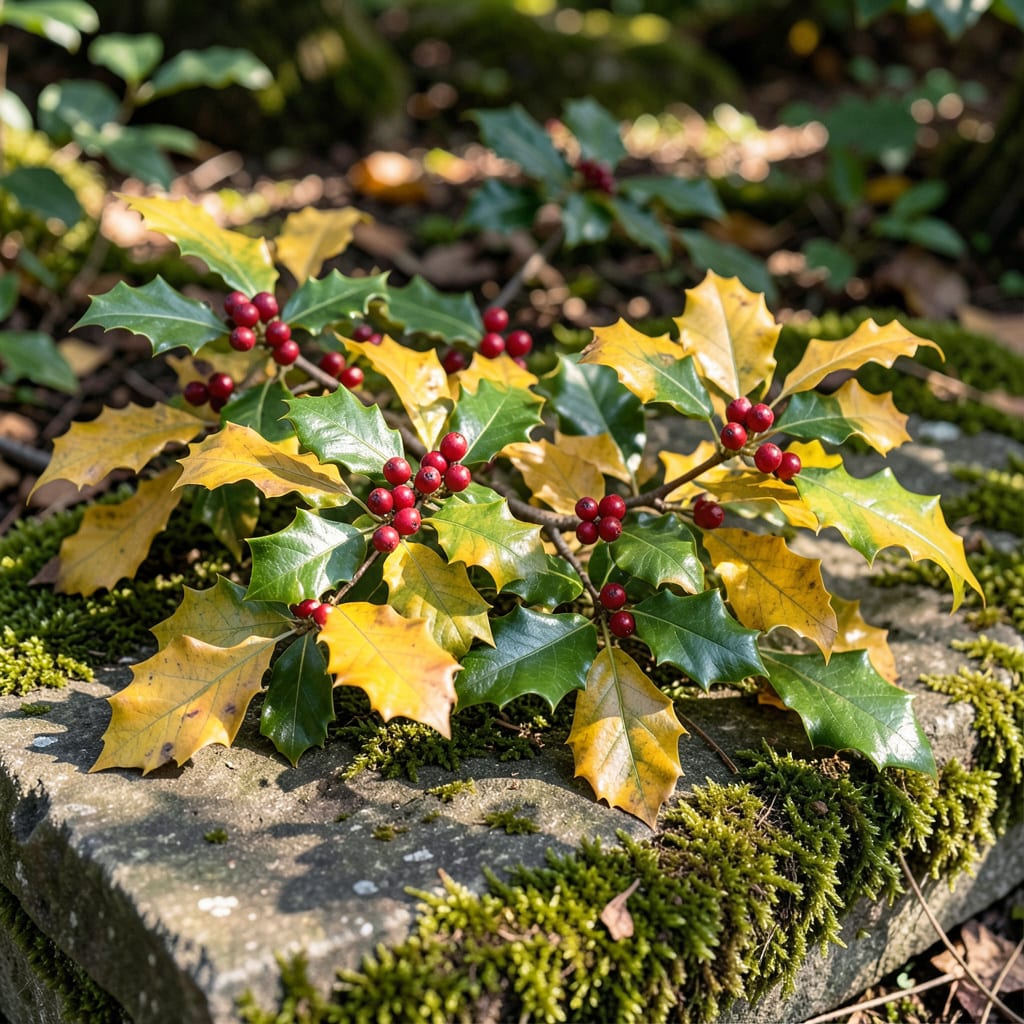
Yellow leaves on your holly tree aren’t just ugly—they’re a distress signal. I’ve seen this happen to my own hollies, and the fix usually comes down to a few simple issues.
Most of the time, it’s either iron deficiency, water stress, or soil that’s too alkaline. The leaves start lightening at the edges while the veins stay green, and if you don’t act, the whole plant weakens.
With the right soil test and a few amendments, you can turn things around in 4-6 weeks. The key is matching the solution to the actual problem, not just throwing fertilizer at it.
This works for American, English, and Nellie Stevens hollies alike. Let’s figure out what your tree’s trying to tell you.
Holly trees (Ilex spp.) develop yellow leaves due to several stress factors, often tied to environmental or cultural conditions. Here are the most common causes:
Nitrogen, iron, or magnesium shortages are frequent culprits. Nitrogen deficiency causes uniform yellowing of older leaves, while iron deficiency leads to interveinal chlorosis (yellowing between veins) in new growth. Magnesium deficiency appears as yellowing with green veins, often on lower leaves. Test soil to confirm deficiencies before amending.
Holly trees thrive in acidic soil (pH 5.0–6.0). Alkaline soils (pH > 7.0) lock out iron and manganese, even if present. Use a soil test kit and amend with sulfur or peat moss to lower pH if needed.
Root rot from soggy soil disrupts nutrient uptake, causing yellowing. Ensure well-draining soil and avoid waterlogging. Mulch can help regulate moisture without suffocating roots.
Extreme heat, drought, or sudden temperature swings can stress hollies, leading to yellow leaves. Provide consistent watering and partial shade in scorching climates.
Spider mites, scale insects, or fungal diseases like leaf spot can weaken trees, triggering discoloration. Inspect leaves for pests or spots and treat with horticultural oil or fungicides as needed.
Addressing yellowing leaves on your holly tree starts with identifying the root cause. Below are targeted solutions for the most common issues, paired with prevention tips to keep your tree thriving.
Fix: Test your soil with a kit to confirm deficiencies (iron, magnesium, or nitrogen are common culprits). Apply a balanced fertilizer or targeted supplements:
Fix: Test soil pH (ideal: 5.0–6.0). If too alkaline (above 7.0), amend with elemental sulfur or peat moss to acidify. For overly acidic soil (below 5.0), add lime to raise pH. Retest every 2–3 months until balanced.
Prevent: Mulch with pine needles or oak leaves annually to maintain acidity naturally. ✨
Fix: Holly trees need consistent moisture. If leaves yellow due to drought, deep-water (1–2 inches per week) at the base, avoiding foliage. For waterlogged roots, improve drainage by amending soil with compost or creating a small berm to redirect excess water.
Prevent: Install a drip irrigation system for even watering, and mulch (2–3 inches deep) to retain moisture. 🎯 Pro tip: Water early in the day to reduce evaporation.
Fix: Inspect leaves for pests (e.g., spider mites, scale) or fungal spots. Treat with neem oil or insecticidal soap for pests. For fungal issues (e.g., leaf spot), apply a copper-based fungicide and remove infected leaves.
Prevent: Prune to improve airflow, and avoid overhead watering to reduce fungal spores. Clean up fallen debris regularly. 🌿
Look for yellowing between the veins on new leaves while veins stay green. This pattern, called interveinal chlorosis, is the classic sign of iron deficiency in hollies.
For iron deficiency, apply chelated iron as a foliar spray for quick absorption. Results often appear within 7-14 days. For soil pH issues, sulfur amendments take longer to work.
Yes, soggy soil leads to root rot which prevents nutrient uptake. Holly roots need oxygen—water only when the top 2-3 inches of soil are dry.
Test in early spring before new growth starts, and again in fall if problems persist. Use a kit that measures both pH and nutrient levels for best results.
