
Beautiful Plants For Your Interior
Beautiful Plants For Your Interior
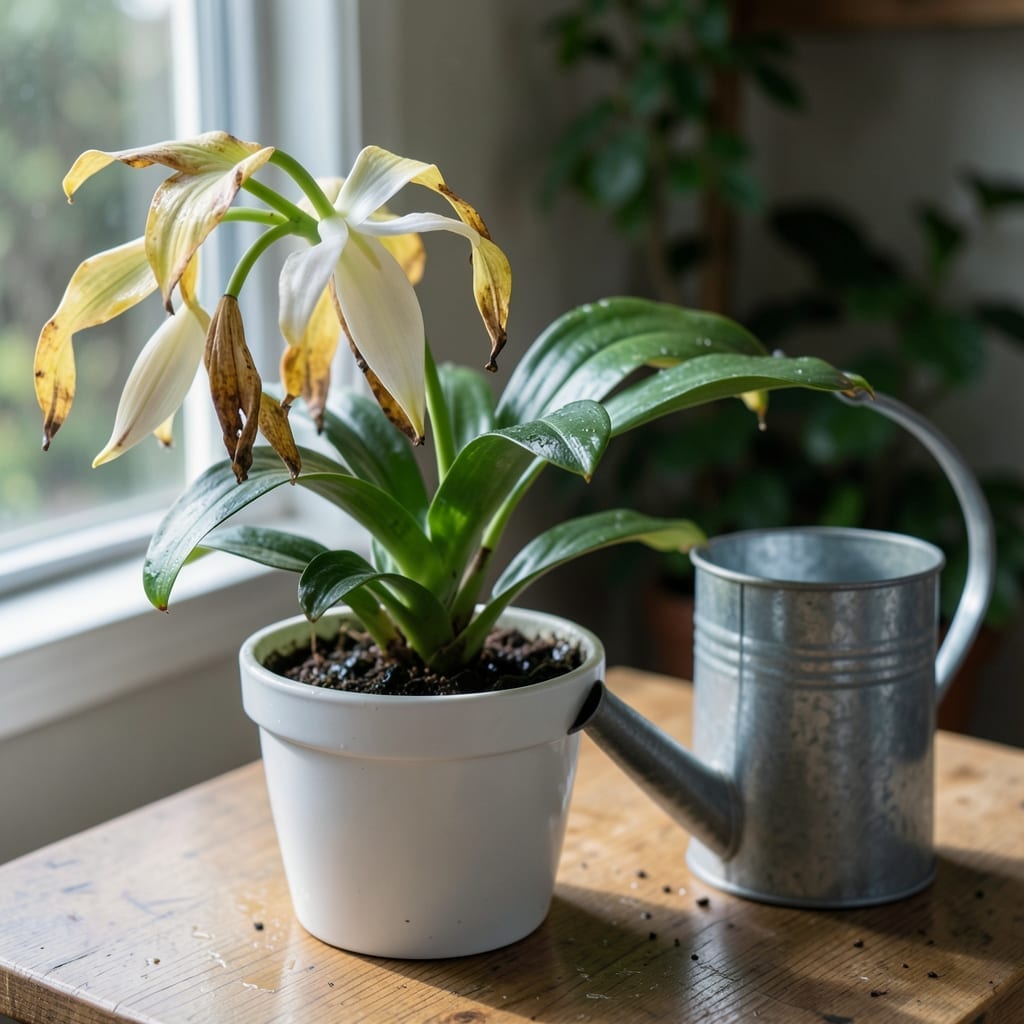
Yellow leaves and droopy stems can mean too much love. I’ve drowned my share of houseplants thinking I was helping, but overwatering does more harm than a week-long drought in most cases.
The signs are subtle at first: soft stems, leaves turning yellow from the bottom up, or soil that stays soggy for days. Your plants aren’t thirsty—they’re suffocating from lack of oxygen at the roots.
Check the soil before watering: if it’s damp an inch down, wait. Most plants prefer the top 1-2 inches to dry out between waterings, and proper drainage holes prevent the root rot that kills them.
Catch it early and your plants bounce back fast. The key is observation over routine—water when they need it, not when you think they do.
Overwatering isn’t just about how much you water—it’s about why the plant can’t handle it. Here’s what typically goes wrong:
Plants suffocate when water pools at the roots. If your pot lacks drainage holes or the soil is too dense (like clay-heavy mixes), water can’t escape. This creates anaerobic conditions, where roots are starved of oxygen. Saturated soil also promotes fungal growth, like Phytophthora or Pythium, which rot roots from the inside out.
Many gardeners stick to rigid schedules (e.g., “water every Monday”) without checking soil moisture. Plants’ needs vary by species, season, and environment. For example, a succulent in winter may need water once a month, while a tropical fern in summer could thrive with weekly watering. Always test the top 1–2 inches of soil—if it’s damp, wait.
Oversized pots hold excess moisture that small root systems can’t absorb. A 12-inch pot for a 4-inch peperomia means most of the soil stays soggy, increasing rot risk. Conversely, compacted roots in a too-small pot can’t access air pockets, worsening waterlogging.
Fix: Repot into containers just 1–2 inches larger than the root ball, and use well-draining soil (e.g., mixes with perlite or bark).
Once you’ve spotted the signs of overwatering, act fast to give your plant a fighting chance. Here’s how to tackle each issue and prevent future waterlogging woes.
Gently remove the plant from its pot and trim away any black, mushy roots with clean scissors. Repot in fresh, well-draining soil and a container with drainage holes. Hold off on watering for a few days to let the roots recover. Prevention tip: Use a pot with drainage holes and always empty the saucer after watering. 💡
If the leaves are yellow but the roots are healthy, stop watering immediately. Place the plant in a bright, indirect light spot to help the soil dry out faster. Trim yellow leaves to redirect energy to healthier growth. Prevention tip: Stick your finger an inch into the soil—only water if it feels dry. ✨
Check the soil moisture—if it’s soggy, let it dry out completely before watering again. If the stem is soft or collapsing, it may be too late, but you can try propagating healthy cuttings. Prevention tip: Water deeply but less frequently to encourage strong root growth. 🎯
Switch to a fast-draining potting mix (add perlite or sand for extra aeration) and ensure your pot isn’t oversized—excess soil holds too much moisture. Terracotta pots are great for moisture-prone plants as they dry out faster. Prevention tip: Elevate pots on feet or a stand to improve airflow underneath. 🌡️
Yellow leaves, especially lower ones, often signal overwatering. The plant struggles to absorb nutrients when roots are waterlogged. Check soil moisture before assuming it’s thirsty.
Soft stems often mean advanced root rot. If caught early, stop watering and repot in fresh, dry soil. Severe cases may require propagation from healthy cuttings.
Test soil moisture every 2-3 days for new plants, weekly for established ones. Stick your finger 1-2 inches deep—only water if it feels dry.
Poor drainage or dense soil traps moisture. Use pots with drainage holes and mix in perlite or sand. Terracotta pots dry faster than plastic.