
Beautiful Plants For Your Interior
Beautiful Plants For Your Interior
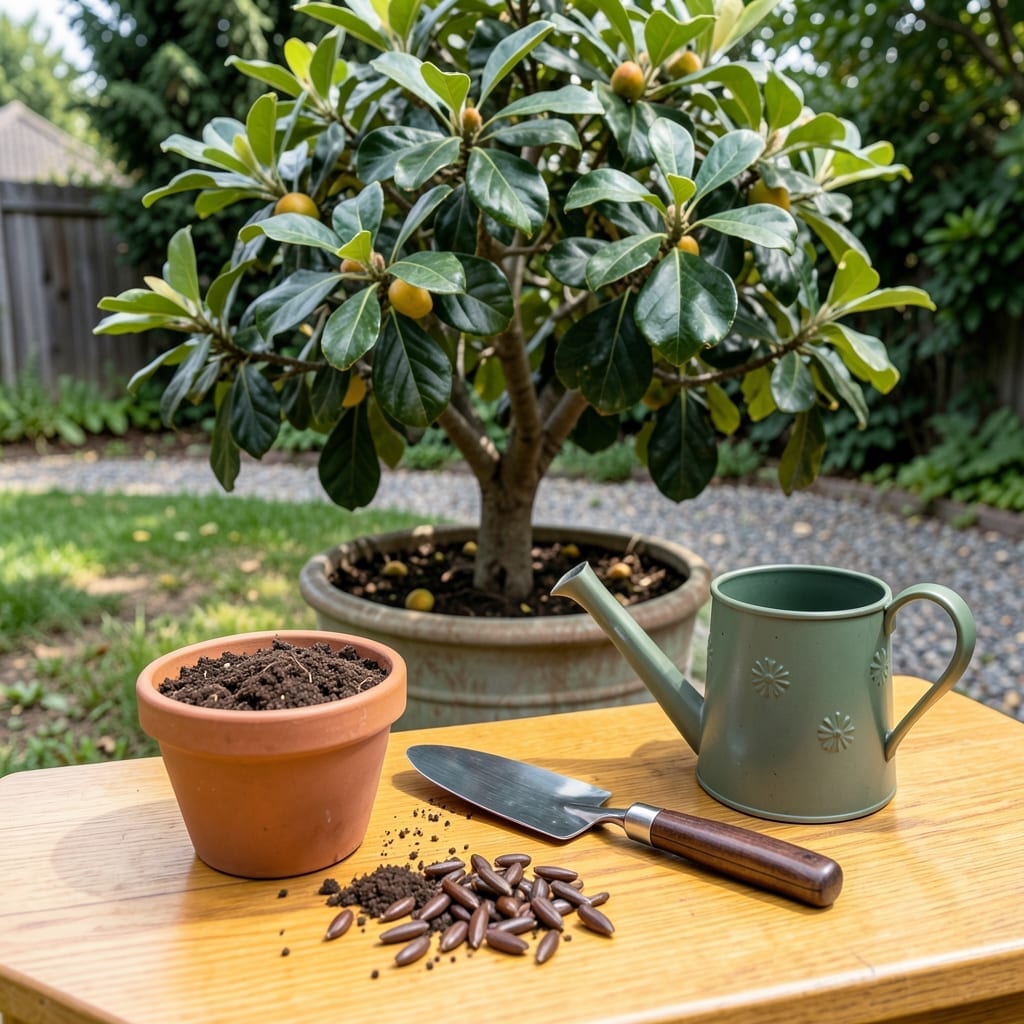
Growing a Loquat tree from seed is a rewarding journey that lets you nurture a tropical fruit-bearing plant from the very beginning. With the right approach, you can turn those glossy black seeds into thriving saplings ready for your garden.
I’ve discovered that the key to success lies in proper seed preparation and creating the ideal germination environment. It’s easier than you might think to get those first green shoots appearing.
Let me walk you through the simple steps that will have you growing healthy Loquat saplings in no time. The process is straightforward when you know the right techniques.

Starting your Loquat tree from seed begins with selecting healthy seeds from ripe fruit. I always look for plump black seeds that haven’t dried out, as these have the best chance of sprouting successfully.
Before planting, give your Loquat seeds a 24-hour soak in room temperature water. This softens the seed coat and boosts germination rates significantly in my experience.
For the planting medium, I recommend a light seed-starting mix rather than regular garden soil. This provides the perfect balance of moisture retention and drainage that Loquat seeds need.
Plant your seeds about 1 inch deep in the soil, spacing them 2 inches apart if using a single container. This depth gives them enough coverage while still allowing easy emergence of the seedlings.
After planting, create a mini greenhouse effect by covering your pots with clear plastic wrap. This maintains the humidity levels that Loquat seeds love during germination. Just
Place your pots in a warm location with temperatures between 70-80°F. A sunny windowsill works well, but avoid direct hot sun which can dry out the soil too quickly. I’ve found that consistent warmth is key to success.
Keep the soil consistently moist but not soggy. I check mine daily and mist with water when the surface starts to dry. Overwatering can cause the seeds to rot, so it’s important to monitor carefully during this stage.
You should see germination in about 2-4 weeks if conditions are right. Once your Loquat seedlings have a few true leaves, they’re ready to be transplanted into individual pots. This is always an exciting moment in the process!
Remember that patience is key when growing from seed. Some Loquat seeds may take longer to sprout, but with proper care, most will eventually grow into strong saplings ready for your garden.
🌱Once your Loquat seeds have sprouted, the next step is giving your young saplings the perfect home. I’ve found that well-draining soil is absolutely essential for healthy growth at this stage.
For the best results, mix 50% potting soil with 30% perlite and 20% compost. This blend provides the ideal balance of nutrients and drainage that Loquat saplings need. 🌱
| Requirement | Specification |
|---|---|
| Soil pH | 6.0-6.5 |
| Sunlight | 6+ hours daily |
| Planting Depth | Same as root ball |
| Container Size | 1-gallon minimum |
When choosing a planting location, remember that Loquat trees thrive in full sun to partial shade. I recommend a spot that gets morning sun and afternoon shade for young plants.
For container growing, select pots that are at least 12 inches deep with drainage holes. This gives your Loquat saplings room to develop strong root systems while preventing waterlogging.
If planting in the ground, space your Loquat saplings about 15-20 feet apart. This accounts for their mature size of 15-25 feet tall and wide.
After transplanting, water your Loquat saplings deeply and add a 2-inch layer of organic mulch around the base. This helps retain moisture and suppress weeds as your tree establishes. 🌿