
Beautiful Plants For Your Interior
Beautiful Plants For Your Interior
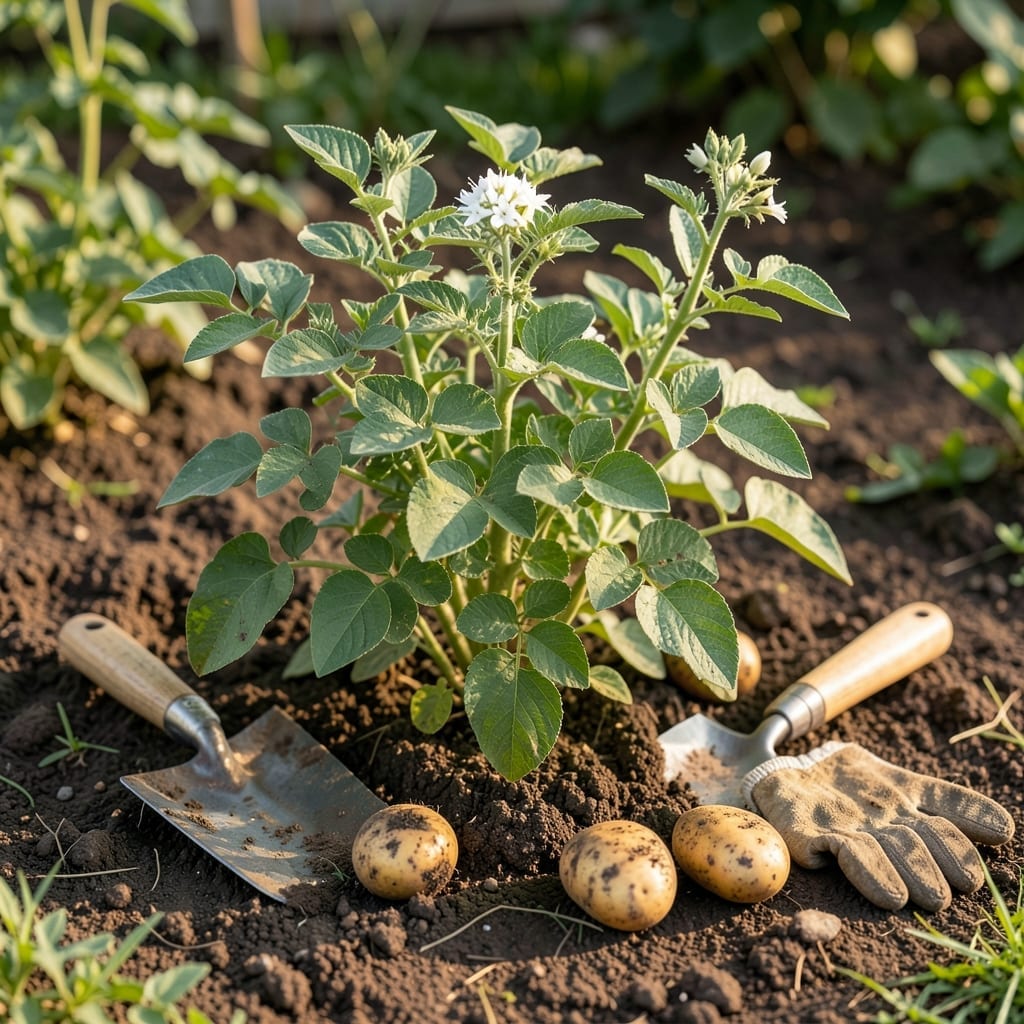
Nothing beats the satisfaction of pulling perfect potatoes from your container garden. But how do you know they’re truly ready?
With the 🥔 Potato, timing is everything. Harvest too soon and you’ll get small, underdeveloped tubers. Wait too long and you risk rot or pest damage.
I’ve learned the subtle signs that indicate your potatoes have reached their peak. It’s not just about the calendar – your plants will actually tell you when they’re done.
Discover the simple visual cues that take the guesswork out of harvest time. Your most bountiful crop starts with knowing these signals.
I always watch for that magical moment when my potato plants start signaling they’re done. The first clue is the foliage turning yellow, which means the tubers are nearing maturity.
Soon after, the vines begin to die back, wilting completely as the plant redirects energy to its underground treasures. This is nature’s way of saying harvest time is near.
| Sign | What It Means | Variety Note |
|---|---|---|
| Yellowing leaves | Early maturity stage | All types |
| Dead vines | Full maturity reached | Late varieties |
| Flowers appear | Tubers forming | Flowering types |
| Firm skin | Ready to harvest | All types |
For early potato varieties, I start checking when I see the first few flowers bloom. These typically produce harvest-ready tubers about 60-70 days after planting.
With mid-season potatoes, the foliage will yellow and begin to die back around 80-90 days. This is when I know it’s time to start my gentle harvest test.
For late-season potatoes, I wait until all the foliage has died completely. This usually happens around 100-120 days after planting, depending on your climate.
The skin set test is my favorite final check. I gently rub a dug tuber with my thumb – if the skin doesn’t peel, it’s ready for harvest.
Remember, new potatoes can be harvested earlier when the plants are still flowering. These will have thinner skins but are perfect for immediate use.
For storage potatoes, I always wait until the vines are completely dead and the skins have toughened up. This ensures they’ll keep well in storage.
I’ve found that stopping watering about 1-2 weeks before harvest helps toughen the skins naturally, making them less prone to damage during digging.
Each year, I’m amazed how my potatoes practically tell me when they’re ready. With these visual cues, I’ve never had a disappointing harvest. 🌱
Testing potato readiness doesn’t have to be guesswork. I always start with a gentle dig test near the plant base, using my hands to avoid damaging tubers. This lets me check size and skin development without harming the plant.
For a more precise check, the skin rub test is my go-to. I carefully rub a thumb over the surface of a exposed tuber. If the skin stays intact, it’s ready. If it peels easily, I know I need to wait a bit longer.
The size assessment is particularly useful for early varieties. These typically mature faster, often ready in about 60-70 days. I look for tubers about the size of a small egg or larger.
For late varieties, which can take up to 120 days, I’m more patient. These potatoes often grow larger and need more time to develop their full flavor and proper skin set.
Remember, these tests work best when combined with the visual signs we discussed earlier. The yellowing foliage and dying vines are nature’s way of telling you it’s time to start checking.
I’ve found that testing a few potatoes from different plants gives the most accurate picture. This way, I can be sure my entire crop is at the perfect stage for harvesting.
☀️