
Beautiful Plants For Your Interior
Beautiful Plants For Your Interior
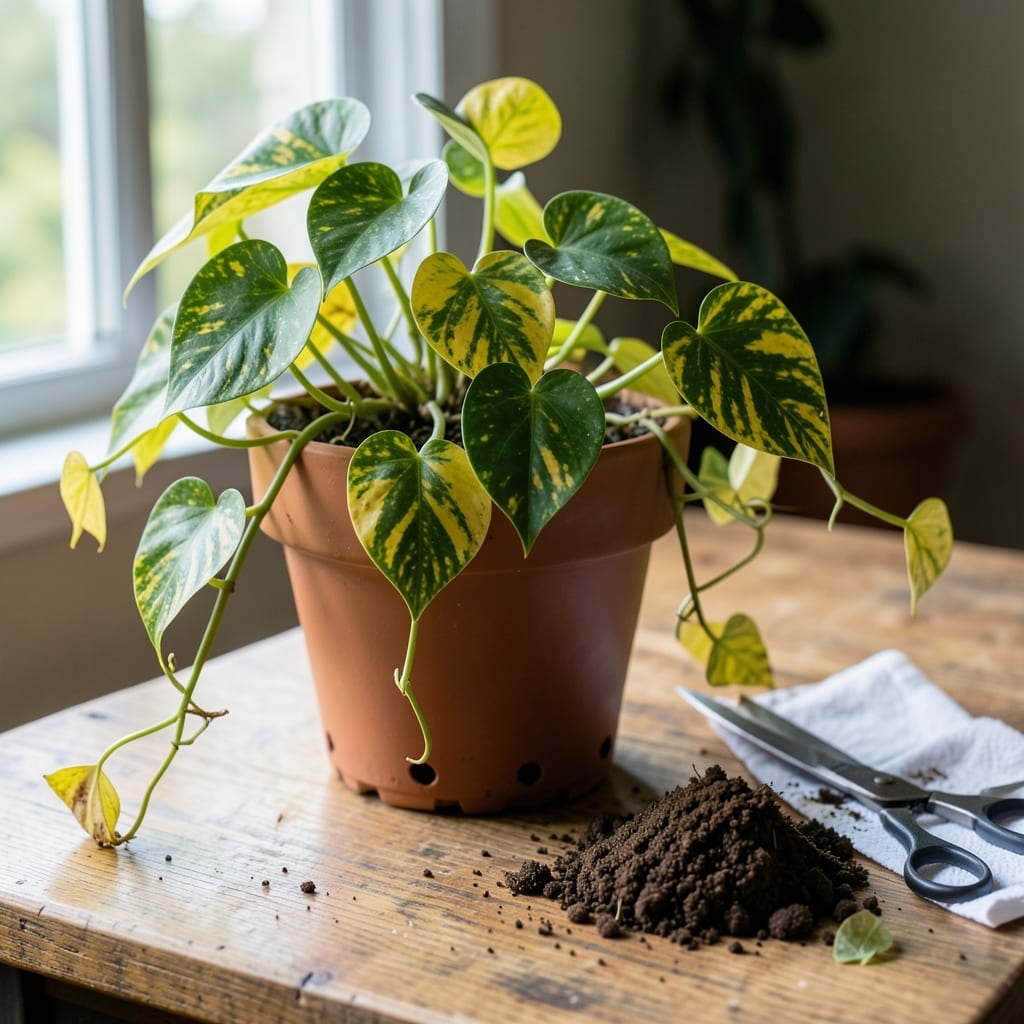
Yellow leaves and mushy stems mean your pothos is drowning. I’ve killed more than I care to admit this way, but simple fixes exist to bring them back from the brink.
Overwatering suffocates roots, but trimming the damage and repotting in fresh soil often saves the plant. The key is catching it early before rot spreads to healthy stems.
Within a week or two, you’ll see new growth if the rescue worked. The plant bounces back faster than you’d expect with the right approach.
Works for any pothos variety, from golden to jade. Here’s how to do it right the first time.
Overwatering your pothos is often a result of well-intentioned but misguided care. Here’s why it happens, broken down by the most common causes:
Pothos plants thrive on a “soak and dry” cycle, meaning the soil should dry out between waterings. Many plant owners water on a fixed schedule (e.g., weekly) without checking soil moisture. This disrupts the roots’ access to oxygen, leading to root asphyxiation and rot. The plant’s natural drought tolerance is overlooked, and its roots suffocate in soggy soil.
Using pots without drainage holes or saucers that trap water forces the pothos to sit in stagnant moisture. Even well-draining soil can’t compensate if excess water has no escape. This creates an anaerobic (oxygen-deprived) environment, encouraging Pythium or Phytophthora fungi—common culprits of root rot in overwatered plants.
Dense, peat-heavy soils retain too much moisture for pothos, which prefer chunky, aerated mixes. If the soil stays wet for days, roots can’t respire. Adding perlite, bark, or sand improves drainage, but many standard potting mixes lack these amendments, setting the stage for overwatering.
Cooler temperatures, low light, or high humidity slow evaporation, meaning the soil stays wet longer. Watering the same amount in winter as in summer ignores the plant’s reduced metabolic needs. Without adjusting for these factors, even moderate watering can become excessive.
If your pothos is suffering from too much water, don’t panic—here’s how to nurse it back to health.
Yellow leaves are a classic sign of overwatering. Snip off the affected foliage with clean scissors to redirect energy to healthy growth. Prevention tip: Check the soil before watering—if the top inch is damp, wait a few days. 💡 Pro tip: Use well-draining soil to avoid future soggy roots.
If roots are mushy or black, act fast. Gently remove the plant from its pot, trim rotten roots with sterilized shears, and repot in fresh, dry soil. Prevention tip: Ensure pots have drainage holes—no exceptions! ✨
If the soil is soggy, stop watering and move the plant to a bright, airy spot. Prevention tip: Water only when the top 1-2 inches of soil are dry. A moisture meter can help take the guesswork out. 🌡️
Drooping can mean both overwatering and underwatering. Inspect the roots—if they’re healthy, let the soil dry out. If they’re rotten, repot. Prevention tip: Pair watering with good light—pothos thrives in bright, indirect sunlight. 🎯
With proper care, you’ll see new growth in 1-2 weeks. Recovery time depends on root damage severity—mild cases bounce back faster than advanced rot.
It’s difficult but possible. Take healthy stem cuttings and propagate in water. Even if the mother plant is beyond saving, you can often grow new ones from cuttings.
No! Wait 3-5 days before watering to let roots recover. This prevents further stress and gives the plant time to adjust to its new soil.
Use a mix with 50% potting soil and 50% perlite/orchid bark. This creates excellent drainage while retaining just enough moisture for healthy growth.