
Beautiful Plants For Your Interior
Beautiful Plants For Your Interior
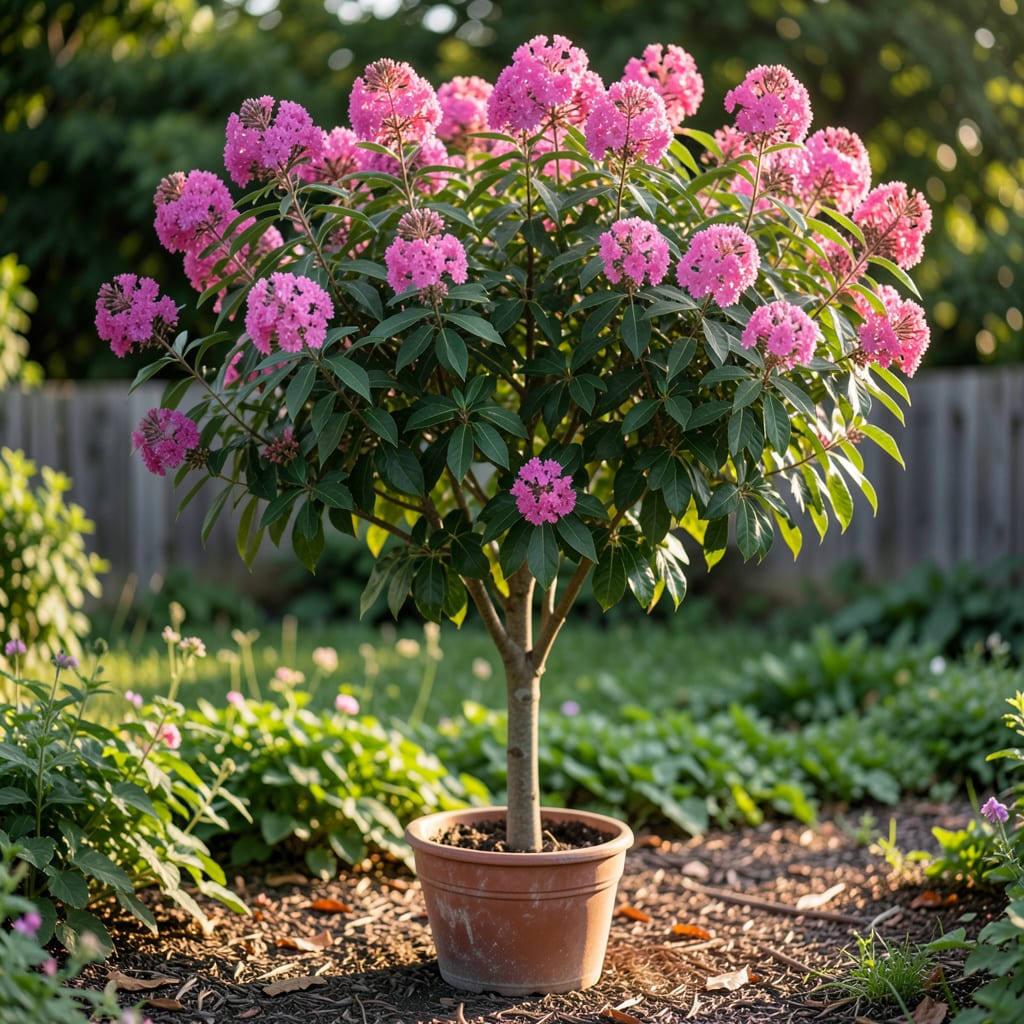
When planting a Crepe Myrtle 🌳 in zone 6a, one of the most common questions is about its mature height. Understanding how tall it will grow is crucial for proper garden planning and placement.
The height of a Crepe Myrtle can vary significantly based on factors like cultivar selection and growing conditions. Let’s explore what influences their growth and how tall you can expect yours to be.


When considering how tall a Crepe Myrtle will grow, several key factors come into play. The cultivar selection is perhaps the most significant determinant, as different varieties have been bred to achieve specific heights.
Other important factors include soil quality, sunlight exposure, watering practices, and pruning techniques. Each of these elements can significantly impact the final height of your Crepe Myrtle 🌳.
The cultivar selection plays a crucial role in determining the mature height of a Crepe Myrtle. Different varieties have been bred to achieve specific heights, ranging from dwarf cultivars that top out at around 3-5 feet, to standard cultivars that can reach heights of 12-20 feet.
Soil quality is another critical factor. Crepe Myrtles thrive in well-drained, nutrient-rich soil. Soil that is too dense or lacking in nutrients can limit the plant’s growth potential.
Sunlight exposure also significantly impacts height. Crepe Myrtles require full sun to achieve their maximum growth potential. Less sunlight can result in reduced height and fewer blooms.
Watering practices can influence growth as well. While Crepe Myrtles are relatively drought-tolerant, consistent moisture during the growing season can promote more vigorous growth and potentially greater height.
Pruning techniques are perhaps the most direct method of controlling a Crepe Myrtle’s height. Regular pruning can help maintain a desired height while also promoting healthy growth and flowering 🌸.
By understanding and manipulating these factors, gardeners can better predict and influence the height of their Crepe Myrtles. Whether you’re looking for a compact shrub or a statement tree, there’s a Crepe Myrtle variety that can fit your needs.
It’s worth noting that younger plants typically require more careful management to ensure they reach their full height potential. As Crepe Myrtles mature, they become more resilient and less demanding in terms of care.
For gardeners in zone 6a, where Crepe Myrtles are well-suited, understanding these growth factors can help in making informed decisions about planting and care.
Ultimately, the height of a Crepe Myrtle is the result of a combination of genetic potential and environmental conditions. By optimizing both, gardeners can enjoy these beautiful plants at their best 🌳.
When selecting a Crepe Myrtle for your garden, understanding the mature height of different varieties is essential for proper planning. The height of Crepe Myrtles can vary significantly based on the cultivar chosen.
Crepe Myrtles come in several varieties, including dwarf, semi-dwarf, and standard cultivars. Each type has a distinct height range and growth pattern 🌳.
The dwarf varieties of Crepe Myrtles are perfect for small gardens or container planting. They typically grow to be around 3-5 feet tall, making them a great choice for spaces where a larger plant might be overwhelming.
Semi-dwarf varieties offer a middle ground, growing to heights of 6-10 feet. These are suitable for smaller gardens or when used as a hedge or border.
Standard Crepe Myrtles are the largest, reaching heights of 12-20 feet. They are often used as a focal point in larger landscapes due to their impressive size and vibrant blooms 🌸.
Understanding these different varieties and their growth patterns can help you choose the right Crepe Myrtle for your garden’s specific needs.
When planting, it’s also important to consider the mature size of the tree to ensure it has enough space to grow without becoming too crowded or requiring excessive pruning.
By selecting the appropriate variety and providing the right growing conditions, you can enjoy the beauty of Crepe Myrtles in your garden for years to come 🌳.
Pruning is a crucial technique for managing the height of Crepe Myrtles while promoting healthy growth and flowering. Proper pruning practices can help maintain a desired height and enhance the overall appearance of the tree 🌳.
The best time to prune Crepe Myrtles is during their dormant season, typically in late winter or early spring. This allows for the removal of dead or damaged branches and helps control the tree’s height before new growth begins 🌸.
Start by removing any dead, diseased, or damaged branches to prevent the spread of disease and encourage healthy growth.
Thin out the center of the tree to allow for better air circulation and sunlight penetration, which can help reduce disease and promote flowering.
To reduce the height, cut back the tallest branches to a lateral bud or a lateral branch that is at least one-third the diameter of the branch being removed.
Pruning techniques can significantly impact the height and overall health of Crepe Myrtles. By following these steps, gardeners can effectively manage their Crepe Myrtle’s height while promoting a healthy and vibrant tree 🌳.
It’s essential to use the right tools for pruning, such as sharp, clean pruning shears or loppers, to make clean cuts and minimize damage to the tree.
Regular pruning not only helps control the height but also encourages more blooms and a fuller canopy, enhancing the tree’s aesthetic appeal 🌸.
For gardeners in zone 6a, understanding and applying proper pruning techniques can make a significant difference in the health and appearance of their Crepe Myrtles.
The mature height of a Crepe Myrtle varies by cultivar, ranging from 3-5 feet for dwarf varieties to 12-20 feet for standard varieties. The height is influenced by factors like soil quality, sunlight, and pruning practices. Proper care can help achieve the maximum potential height.
Crepe Myrtles are generally considered moderate growers, with 1-2 feet of growth per year under optimal conditions. Factors like soil quality, watering, and sunlight exposure can impact growth rate. Regular pruning can also affect overall height.
Yes, regular pruning is an effective way to control the height of your Crepe Myrtle. Prune during the dormant season, typically in late winter or early spring, to maintain desired height and promote healthy growth. Proper pruning techniques can also encourage more blooms.
While Crepe Myrtles are hardy in USDA zones 6-9, the growing zone can impact their growth. In cooler zones like 6a, growth may be slightly slower compared to warmer zones. However, proper care and cultivar selection can still result in healthy, vigorous plants.
