
Beautiful Plants For Your Interior
Beautiful Plants For Your Interior
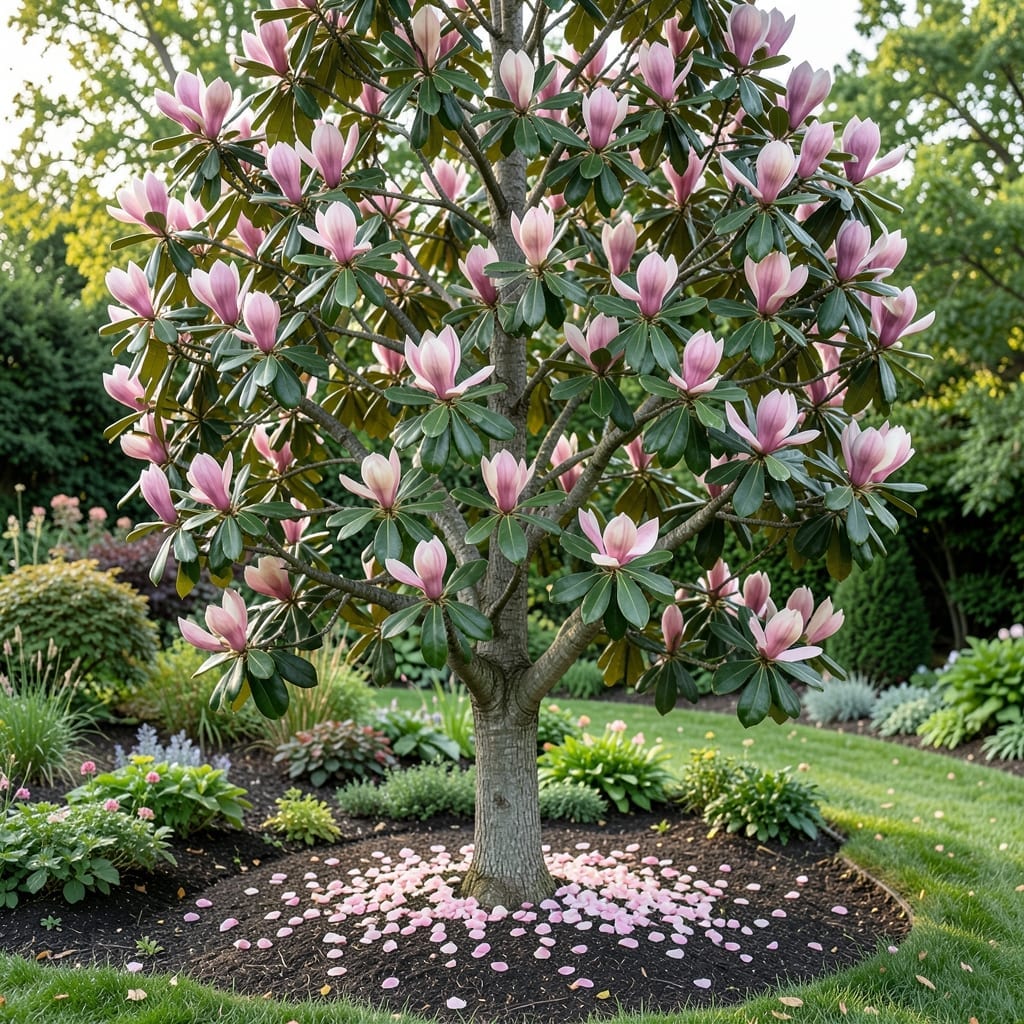
There’s something magical about the Magnolia Tree 🌳 gracing a landscape with its grand presence. But before planting one, you need to know how much space it will command.
From compact dwarf varieties to towering giants, magnolias can reach vastly different heights. This range makes them versatile for any garden size.
Let me guide you through the typical height ranges of these stunning trees and how to choose the perfect variety for your space.

If you’re planning to add a magnolia tree to your landscape, understanding its potential height is essential. These trees can range from compact shrubs to towering giants, depending on the variety.
Factors like soil quality, sunlight exposure, and climate conditions also play a role in how tall your magnolia will grow.
| Variety | Mature Height | Growth Rate |
|---|---|---|
| Southern Magnolia | 60-80 ft | Moderate |
| Saucer Magnolia | 20-25 ft | Fast |
| Star Magnolia | 15-20 ft | Moderate |
| Little Gem Magnolia | 12-20 ft | Slow |
| Jane Magnolia | 10-15 ft | Moderate |
The Southern Magnolia is the giant of the group, often reaching 80 feet tall in ideal conditions. It’s a statement tree that needs plenty of space to thrive.
For smaller gardens, Saucer Magnolias and Star Magnolias are excellent choices. They typically grow 20-25 feet tall, making them more manageable while still offering stunning blooms.
If space is really limited, consider dwarf varieties like Little Gem or Jane Magnolia. These stay under 20 feet and are perfect for patios or small yards.
Growth rates also vary. Fast-growing magnolias like the Saucer Magnolia can add 2-3 feet per year under optimal conditions, while slower varieties may grow just 1 foot annually.
Remember, these are mature height estimates. Your tree’s actual size will depend on care practices, pruning habits, and local environmental factors.
For the best results, I always recommend testing your soil and choosing a variety that matches your space constraints and climate zone.
With the right planning, you can enjoy the beauty of magnolias without overwhelming your garden.
Managing the height of magnolia trees is key to keeping them proportional to your landscape. Even fast-growing varieties can be controlled with the right techniques and planning.
I’ve found that pruning, variety selection, and planting location are the most effective ways to maintain your magnolia at the desired size.
For dwarf varieties, I recommend starting with Little Gem Magnolia, which stays under 20 feet tall. It’s perfect for patios or small yards where space is limited.
Pruning is another great tool. I prune my magnolias in late winter to remove dead branches and shape the tree. This keeps growth in check while maintaining a healthy structure.
If you’re dealing with a larger variety, consider planting it in a container. This restricts the roots and naturally limits the tree’s height. Just ensure the container is large enough to support stable growth.
Root barriers can also help. They prevent the roots from spreading too far, which in turn slows overall growth. This is especially useful for magnolias planted near structures or pathways.
Finally, keep an eye on soil quality and sunlight exposure. Rich soil and full sun can lead to rapid growth, so adjust these factors if you need to slow things down 🌳