
Beautiful Plants For Your Interior
Beautiful Plants For Your Interior
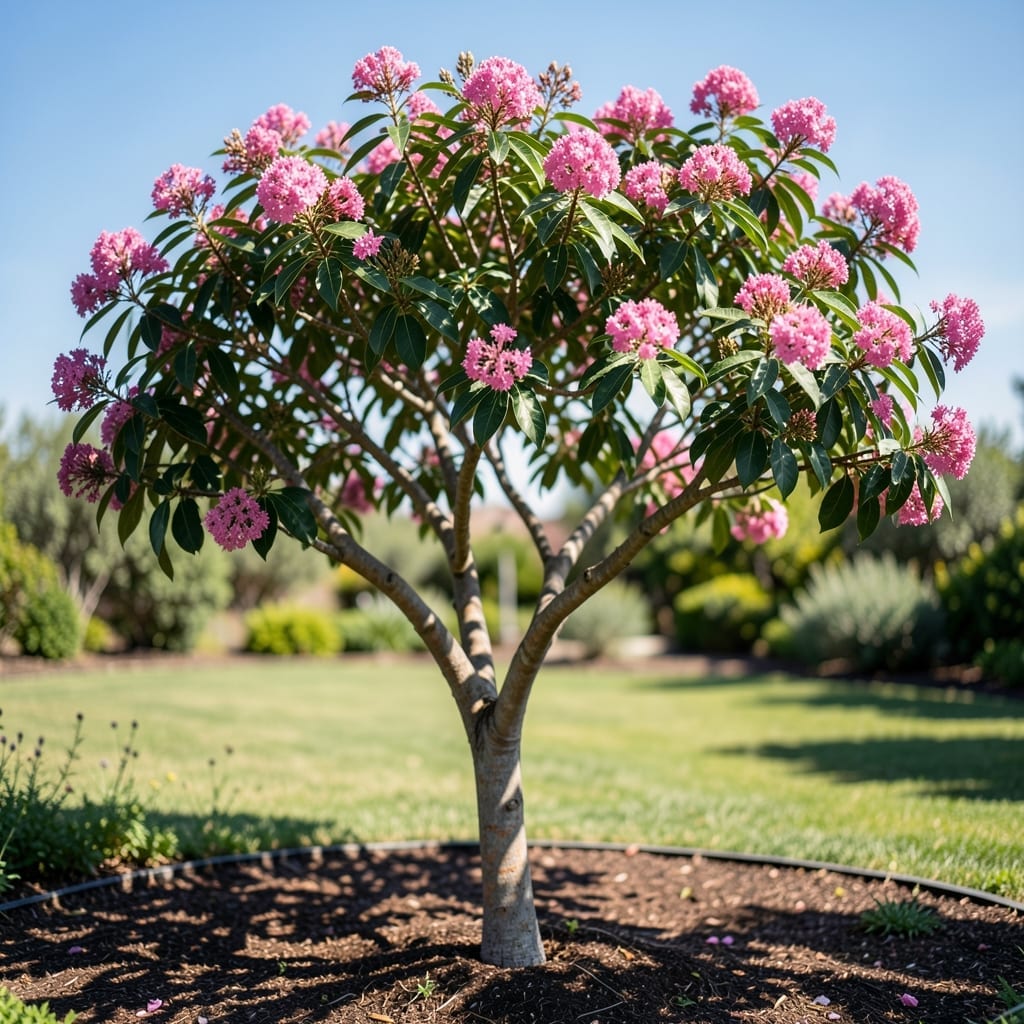
Crepe myrtles 🌳 bring stunning summer color and fall foliage to any garden, but their size can vary more than you might expect. Some stay compact while others reach impressive heights.
From dwarf varieties to towering trees, the range is surprising. I’ll help you understand what to expect from different types of Crepe Myrtle.
Discover how to choose the perfect size for your space and learn the key factors that influence their growth. Let’s get started.


If you’re planning to add crepe myrtles to your landscape, knowing their mature height is crucial. These beautiful trees come in a wide range of sizes, from compact shrubs to tall trees.
I’ve seen gardeners make the mistake of planting a 25-foot variety under a power line. Let’s avoid that by understanding the height categories and their specific varieties.
| Variety Type | Height Range | Example Cultivars |
|---|---|---|
| Dwarf | 3-6 feet | ‘Petite Snow’, ‘Pocomoke’ |
| Semi-Dwarf | 6-12 feet | ‘Centennial’, ‘Acoma’ |
| Standard | 15-20 feet | ‘Natchez’, ‘Muskogee’ |
| Tree-Form | 20-25 feet | ‘Fantasy’, ‘Tonto’ |
The dwarf varieties are perfect for small gardens or container planting. They stay under 6 feet tall and work well in foundation plantings.
Semi-dwarf types reach 6-12 feet, ideal for mid-border accents or as focal points in residential landscapes. I love using them to add vertical interest without overwhelming the space.
Standard crepe myrtles typically grow 15-20 feet tall. These are the classic choices for street trees or large garden specimens. They offer excellent summer shade and stunning blooms.
The tree-form varieties can reach 20-25 feet, rivaling some small shade trees. These are best for large properties or park settings where space isn’t an issue.
Remember that these height ranges are for mature plants under ideal conditions. Your crepe myrtle’s final size may vary based on growing conditions and care practices.
For small spaces, I always recommend starting with dwarf or semi-dwarf varieties. They provide all the beauty and color of larger types without the space commitment. 🌳
While genetics determine the maximum height of your crepe myrtle, several environmental factors can significantly impact how tall it actually grows in your garden.
I’ve found that climate plays one of the biggest roles. Crepe myrtles in warmer zones (7-9) typically grow taller than those in cooler areas (6-7).
Soil conditions also matter. These trees thrive in well-draining soil with a pH of 6.0-6.5. Poor soil can limit growth by 30% or more.
Sunlight exposure is another critical factor. Crepe myrtles need full sun (6+ hours daily) to reach their full height potential. Shade will result in spindly, shorter growth.
Watering practices during the first two years are crucial. I recommend deep watering 1-2 times weekly to establish a strong root system, which supports taller growth.
Interestingly, pruning habits can both help and hinder height. Proper winter pruning encourages stronger branches, while topping (severe cutting) can lead to weak, stunted growth. 🌳