
Beautiful Plants For Your Interior
Beautiful Plants For Your Interior
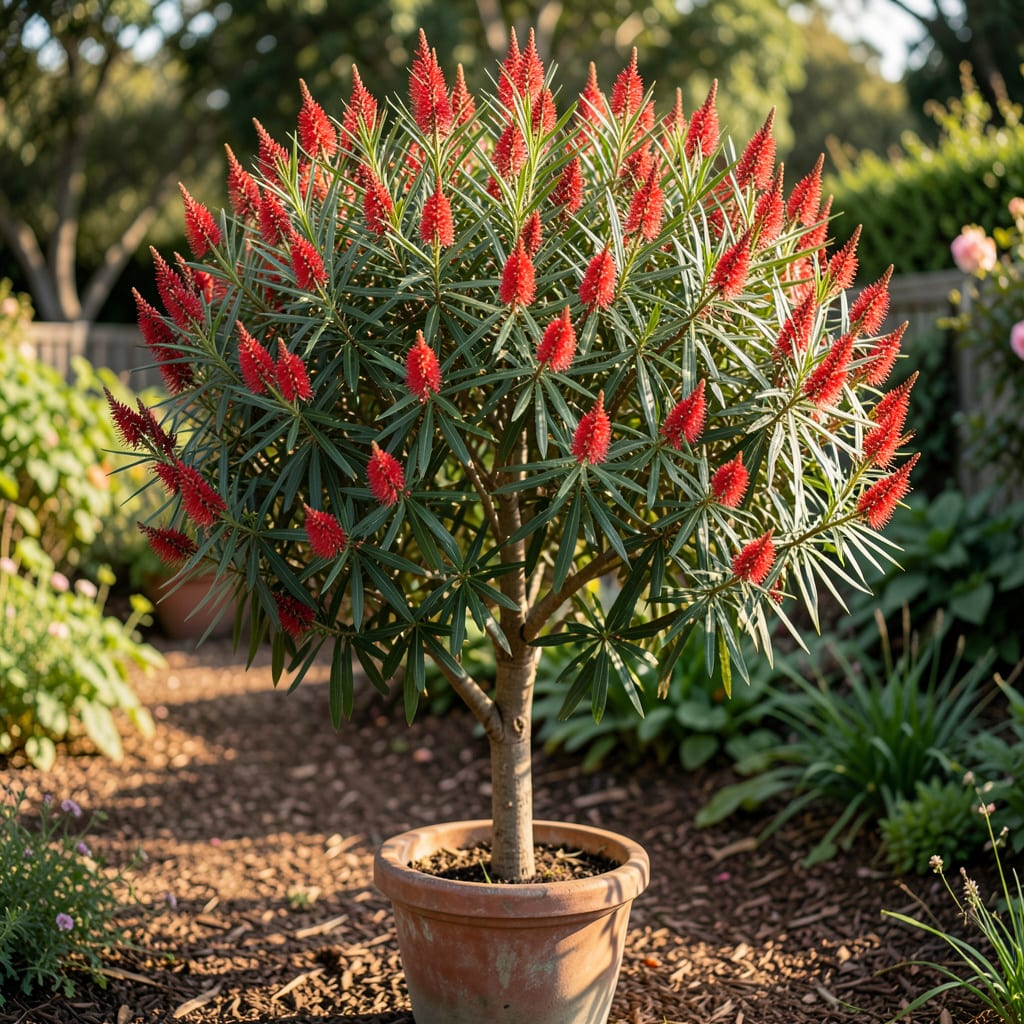
As I gaze at my Bottlebrush Tree 🌳, I’m always amazed by its vibrant blooms and unique shape. But have you ever wondered how tall these stunning trees can actually grow? Understanding their growth patterns is key to choosing the right spot in your garden.
Bottlebrush Trees can reach heights of 15 to 30 feet, depending on the variety and growing conditions. Let’s explore what affects their growth and how you can manage their height to fit your landscape perfectly.


The height of a Bottlebrush Tree is influenced by several key factors. Understanding these elements helps gardeners make informed decisions about planting and care.
Climate, soil quality, and watering practices play crucial roles in determining the ultimate height of these trees. Let’s explore how each factor contributes to their growth.
The climate where your Bottlebrush Tree is planted significantly affects its growth. These trees thrive in warm, frost-free conditions, allowing them to grow more vigorously and reach their maximum potential height.
When it comes to soil quality, Bottlebrush Trees prefer well-draining soil that is rich in organic matter. Poor soil conditions can limit their growth, while optimal soil can support healthy development and maximum height.
Watering practices are also vital, especially during the establishment phase. Consistent moisture helps young trees develop a strong root system, which is essential for achieving their full height potential.
Pruning is another critical factor that can influence the height of Bottlebrush Trees. Regular pruning not only helps control their height but also encourages a fuller, bushier growth pattern, making the tree more manageable and visually appealing.
By understanding and managing these factors, gardeners can optimize the growth of their Bottlebrush Trees, ensuring they reach their desired height while maintaining overall health and beauty 🌳.
The ideal growing conditions for Bottlebrush Trees include full sun and regular watering. These conditions support healthy growth and help the tree achieve its maximum height.
In summary, the height of a Bottlebrush Tree is influenced by a combination of factors including climate, soil quality, watering practices, and pruning techniques. By optimizing these conditions, gardeners can help their trees reach their full potential.
Bottlebrush Trees come in various cultivars, each with its own growth potential. Understanding these differences helps gardeners choose the right variety for their space.
The height of Bottlebrush Trees can vary significantly between different varieties. Let’s explore the average and maximum heights of some common types.
The Dwarf Variety of Bottlebrush Trees is ideal for smaller gardens or containers. These trees typically grow to be 8-12 feet tall, making them a great choice for compact spaces.
Semi-Dwarf Varieties offer a balance between size and flowering profusion. They usually reach heights of 12-18 feet, providing a moderate size that fits many landscape designs.
Standard Varieties are the most common and can grow quite tall, reaching heights of 20-30 feet. These trees make a dramatic statement in larger gardens and landscapes 🌳.
When selecting a Bottlebrush Tree, consider the mature size of the variety to ensure it fits your available space. This helps prevent the need for excessive pruning and maintains the tree’s natural beauty.
By understanding the growth potential of different Bottlebrush Tree varieties, gardeners can make informed decisions about which type to plant in their gardens.
Pruning is a crucial maintenance task for Bottlebrush Trees, helping control their height and maintain their desired shape. Regular pruning encourages healthier growth and enhances the tree’s natural beauty 🌳.
The best time to prune Bottlebrush Trees is after they finish blooming, typically in late spring or early summer. This timing allows you to shape the tree without interfering with its flowering.
Start by removing any dead, diseased, or damaged branches to prevent the spread of disease and encourage healthy growth.
Thin out the center of the tree to allow better air circulation and light penetration, promoting overall health.
Shape the tree by cutting back overgrown branches to maintain the desired height and shape.
Regular pruning not only controls the height of Bottlebrush Trees but also encourages a fuller, bushier growth pattern. This makes the tree more manageable and visually appealing in your landscape.
When pruning, use clean, sharp tools to make precise cuts, and avoid removing more than one-third of the tree’s foliage at a time to prevent stress.
By following these pruning techniques, you can effectively manage the height of your Bottlebrush Tree and enjoy its vibrant blooms for years to come.
Proper pruning techniques are essential for maintaining the health and appearance of Bottlebrush Trees. By pruning regularly, you can keep your tree at a manageable height and promote healthy growth.
In conclusion, managing Bottlebrush Tree height through pruning is a straightforward process that requires regular maintenance and proper techniques. By following these guidelines, you can enjoy a beautiful and thriving tree in your garden 🌿.
Bottlebrush Trees typically grow between 15 to 30 feet tall, depending on the variety. Dwarf varieties reach 8-12 feet, while standard types can grow up to 30 feet or more. Proper care and conditions help them achieve their full height potential .
Bottlebrush Trees are considered moderate growers, adding about 1-2 feet of growth per year under optimal conditions. Factors like climate, soil quality, and watering practices influence their growth rate. Regular care supports healthy development .
Yes, you can manage the height through regular pruning. Prune after blooming in late spring or early summer to maintain shape and encourage bushier growth. Use clean, sharp tools and avoid removing more than one-third of the foliage at once .
Bottlebrush Trees thrive in full sun with well-draining soil and regular watering, especially during their establishment phase. Proper care helps them achieve their maximum height potential. Fertilize during growing seasons for optimal results .
