
Beautiful Plants For Your Interior
Beautiful Plants For Your Interior
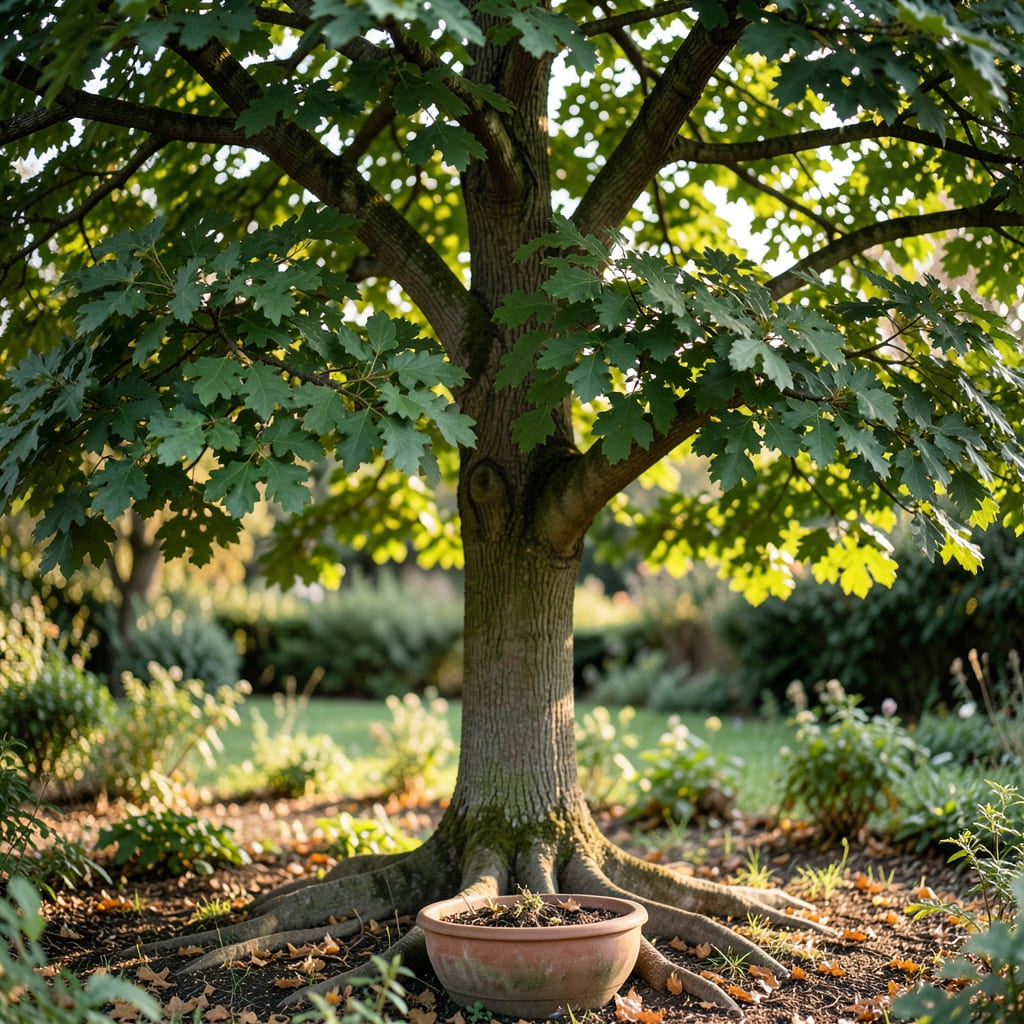
I’ve always been fascinated by the majestic Oak Tree 🌳, known for its impressive height and longevity. Some species can reach extraordinary heights, captivating nature enthusiasts and arborists alike.
Let’s explore the factors that influence how tall these magnificent trees can grow, and what you can expect from different species. Understanding their growth habits will help you appreciate these natural wonders even more.


I’ve always been fascinated by the impressive heights that different oak tree species can achieve. From the towering white oak to the majestic red oak, each species has its unique growth characteristics 🌳.
The maximum height of an oak tree varies significantly across different species. Understanding these variations is crucial for arborists, landscapers, and nature enthusiasts who want to appreciate these trees at their full potential.
The white oak is known for its impressive height, often reaching 80-100 feet. This species is renowned for its longevity and strength, making it a favorite among arborists 🌲.
In contrast, the red oak typically grows to 60-80 feet. While not as tall as the white oak, it still commands respect with its sturdy trunk and expansive canopy 🌳.
Live oak trees, on the other hand, usually reach heights of 40-60 feet. Their broad, spreading branches create a majestic silhouette that is iconic in many landscapes 🌴.
Understanding the maximum heights of different oak tree species helps in appreciating their growth patterns and planning landscapes accordingly. Each species has its unique characteristics that contribute to its overall height and stature 🌲.
By examining the growth habits of various oak trees, we can better appreciate the diversity and complexity of these magnificent trees. Whether you’re an arborist or simply a nature lover, knowing how tall oak trees can grow enhances your appreciation of these natural wonders 🌳.
The height of an oak tree is influenced by a combination of genetic and environmental factors. Understanding these factors is key to appreciating the full potential of these trees 🌲.
From the white oak to the live oak, each species has its own story to tell through its growth and stature. By exploring these differences, we gain a deeper appreciation for the natural world 🌳.
As we continue to explore the world of oak trees, it’s clear that their height is just one of many fascinating aspects of these trees. Their longevity, strength, and beauty make them a true marvel of nature 🌲.
I’ve always been fascinated by the complex factors that influence the growth and height of oak trees. From environmental conditions to genetic predispositions, multiple elements play a crucial role in determining how tall these magnificent trees can grow 🌳.
Understanding these factors is essential for anyone interested in cultivating or appreciating oak trees. By examining the various influences on their growth, we can gain a deeper appreciation for the complexity and beauty of these natural wonders.
The quality of the soil significantly impacts oak tree growth. Well-drained, nutrient-rich soil promotes healthy root development and overall tree health 🌿.
Climate plays a vital role in determining oak tree height. Adequate moisture, moderate temperatures, and sufficient sunlight all contribute to optimal growth 🌞.
The genetic makeup of an oak tree influences its potential height. Different species have varying growth patterns and maximum heights, shaped by their genetic characteristics 🌲.
The interplay of these factors determines the ultimate height of an oak tree. By understanding and managing these influences, we can help ensure that these trees reach their full potential 🌳.
Soil quality is particularly important, as it provides the necessary nutrients and support for root development. Ensuring that the soil is well-drained and rich in organic matter can significantly enhance oak tree growth 🌱.
Climate conditions also play a critical role. Oak trees generally thrive in environments with adequate moisture and moderate temperatures. Extreme weather conditions can stress the trees and limit their growth ⛅️.
By appreciating the various factors that influence oak tree growth, we can better understand the complexity of these magnificent trees. Whether you’re a seasoned arborist or a nature enthusiast, this knowledge enhances your appreciation of the natural world 🌳.
The height of an oak tree is a testament to the intricate balance between genetic and environmental factors. By continuing to explore and understand these influences, we can further appreciate the beauty and majesty of these trees 🌲.
Measuring the height of oak trees is both an art and a science. I’ve found that using various methods can provide accurate measurements, helping us appreciate these natural giants even more 🌳.
There are several techniques for measuring oak tree heights, each with its own advantages. Understanding these methods is crucial for arborists and nature enthusiasts who want to accurately assess the stature of these magnificent trees.
Accurate measurement techniques include using clinometers, laser rangefinders, or simple trigonometry with a tape measure and angle measurements 📏.
One common method involves using a clinometer to measure the angle between the observer’s line of sight and the top of the tree. By combining this angle with the distance from the observer to the tree, we can calculate the height using basic trigonometry 📐.
Laser rangefinders offer another precise method for measuring oak tree heights. These devices emit a laser beam that reflects off the top of the tree, providing a direct measurement of the distance and angle 🌟.
For a more traditional approach, arborists often use a tape measure and basic trigonometry. By measuring the distance from the tree and the angle to the top, they can calculate the height with surprising accuracy 📏.
Comparing the heights of oak trees across different regions and conditions can reveal fascinating insights into their growth patterns. Factors such as soil quality, climate, and available sunlight all play a role in determining the ultimate height of these trees 🌍.
By understanding and applying these measurement techniques, we can gain a deeper appreciation for the majesty and diversity of oak trees. Whether you’re an arborist or simply a nature lover, knowing how to measure and compare tree heights enhances your connection to these natural wonders 🌲.
Mature oak trees typically grow to be between 60-100 feet tall, depending on the species and growing conditions. Some species, like the white oak, can reach heights of up to 100 feet. Proper care and optimal growing conditions can help an oak tree reach its full height potential.
Oak trees are known for their slow to moderate growth rate. It can take 50-100 years or more for an oak tree to reach its maximum height. Factors such as soil quality, climate, and available sunlight can influence the growth rate. Regular maintenance and proper care can support healthy growth.
While oak trees can live for centuries, their height growth typically slows down significantly as they mature. Most oak trees reach their maximum height between 100-200 years of age. After that, they may continue to grow in diameter and develop a broader canopy, but height growth becomes minimal.
Several factors can limit the height of an oak tree, including poor soil quality, inadequate moisture, extreme weather conditions, and genetic predispositions. Regular maintenance, such as pruning and fertilization, can help mitigate some of these factors and support healthy growth. Proper care can make a significant difference in an oak tree’s ability to reach its full potential.
