
Beautiful Plants For Your Interior
Beautiful Plants For Your Interior
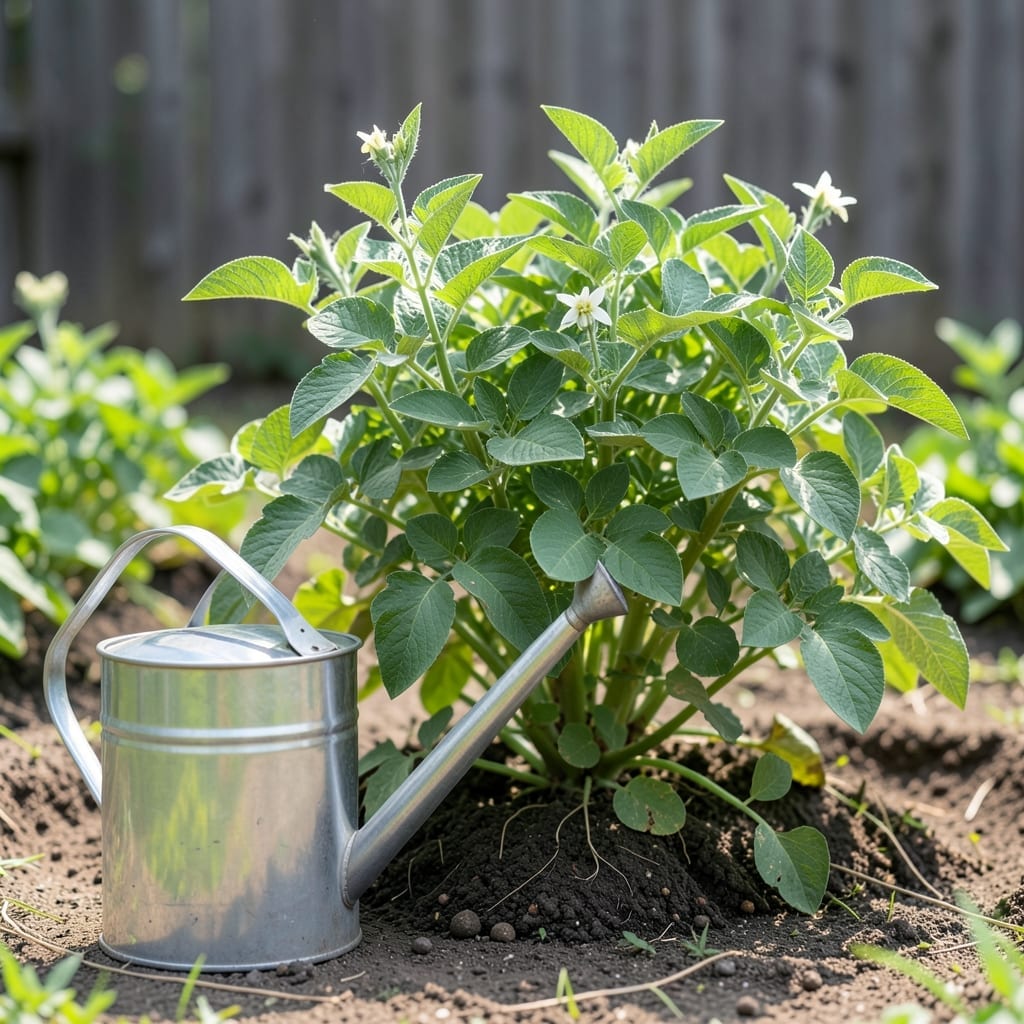
Potatoes are hardy plants, but their watering needs can make or break your harvest. Too little water stunts tuber growth, while too much causes rot—getting it right is the key to a bountiful crop.
The 🥔 Potato thrives when soil moisture stays consistent, especially during critical growth stages. I’ve seen firsthand how small adjustments in watering can transform a mediocre harvest into an abundant one.
Discover how to balance moisture perfectly for your Potato plants, and watch your garden flourish like never before.


Getting your potato watering schedule right is crucial for healthy tuber development. I’ve learned through trial and error that potatoes need consistent moisture but can’t tolerate soggy soil. The key is adjusting water as the plants grow.
Early on, sprouting potatoes need about 1 inch of water per week to establish roots. As they grow, we’ll increase this to support tuber formation and prevent common issues like cracking or rot.
| Growth Stage | Water Needs | Frequency |
|---|---|---|
| Sprouting | 1 inch per week | Every 5-7 days |
| Flowering | 1.5 inches per week | Every 4-5 days |
| Tuber Formation | 2 inches per week | Every 3-4 days |
| Maturity | 1 inch per week | Every 7 days |
During the flowering stage, your potatoes are working hard to form tubers. This is when they need the most water—about 1.5 to 2 inches weekly. I always check soil moisture by sticking my finger 2 inches deep into the soil.
If it feels dry, it’s time to water. In hot climates, you might need to water more frequently, while cooler areas can often get by with less. Remember, morning watering is best to reduce evaporation and prevent disease.
As the plants approach maturity, we can taper off the water. This helps the skins toughen up for harvest. I reduce watering to about 1 inch per week during the final few weeks before harvest.
Soil type matters too. Sandy soils drain quickly and may need more frequent watering, while clay soils hold moisture longer but can become waterlogged. I’ve found that adding organic compost improves both drainage and moisture retention.
Watch for signs of overwatering, like yellowing leaves or a foul smell from the soil. Conversely, underwatered potatoes may show wilted leaves or cracked soil. Adjust your schedule based on these visual cues.
Using mulch around your potato plants can help maintain consistent soil moisture. I prefer straw or shredded leaves, which also suppress weeds and regulate soil temperature.
With this approach, you’ll give your potatoes the perfect balance of water they need at every stage 🌱
Even experienced gardeners can make watering mistakes with potatoes that cost them their harvest. I’ve seen it happen too often—what seems like a small oversight can lead to stunted tubers or rotten crops.
One of the biggest errors is overwatering during early growth. Potatoes need moisture, but soggy soil suffocates roots and invites disease. I always remind myself that consistent moisture beats frequent soaking.
Another common pitfall is inconsistent watering. Potatoes thrive on routine—dry spells followed by heavy watering cause tubers to split or grow irregularly. I maintain a schedule and stick to it.
Evening watering is a mistake I made early on. Water sitting on leaves overnight creates the perfect environment for fungal diseases. Now, I water in the early morning to allow foliage to dry.
Soil type plays a huge role too. I learned the hard way that clay soil holds too much moisture, while sandy soil drains too quickly. Testing and amending your soil can prevent many watering issues.
Finally, don’t cut off water too early. Potatoes need moisture until the foliage yellows. Stopping too soon results in small tubers. I taper off gradually, not abruptly.
By avoiding these mistakes, you’ll set your potatoes up for healthy growth and a bumper harvest 🌱