
Beautiful Plants For Your Interior
Beautiful Plants For Your Interior
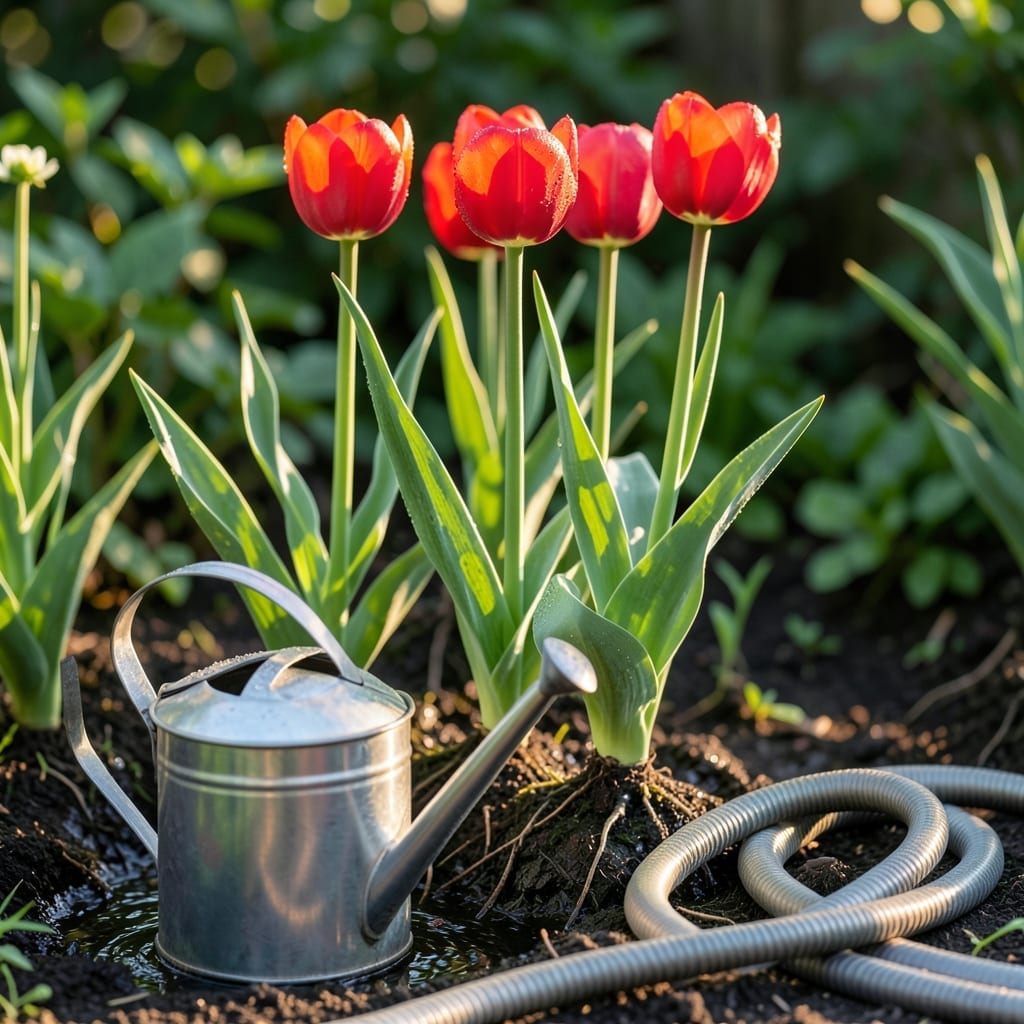
There’s nothing quite like watching 🌷 Tulips burst into vibrant blooms each spring. But here’s the catch: those gorgeous flowers demand just the right amount of water to thrive.
Too much, and you’ll drown their roots. Too little, and they’ll never reach their full potential. Finding that sweet spot is easier than you might think.
Let me walk you through the simple yet most important watering practices that will keep your Tulips healthy and stunning year after year.
Getting your tulip watering right starts with understanding their seasonal needs. These spring bloomers have different requirements at each growth stage, from planting to dormancy.
I’ve found that tulips are most forgiving in fall when they’re establishing roots, but they need precise care during their spring growth phase to produce those vibrant blooms.
| Stage | Frequency | Amount |
|---|---|---|
| Planting (Fall) | Once | Deep soak after planting |
| Active Growth (Spring) | Weekly | 1 inch per week |
| Blooming | Weekly | Keep soil moist |
| Post-Bloom | Weekly | Taper off as leaves yellow |
| Dormancy (Summer) | Only if drought | Light watering |
In fall planting season, give your bulbs a thorough watering right after planting to help them settle. This encourages root growth before winter dormancy sets in.
As spring arrives, increase to weekly watering. Tulips need consistent moisture during their active growth phase, especially as stems and buds develop.
During blooming season, maintain that weekly schedule. The key is to keep the soil evenly moist but never waterlogged, as tulips hate soggy roots.
After the flowers fade, continue watering for 6 weeks while the leaves photosynthesize. This feeds the bulb for next year’s blooms. I always mark my calendar to remember this crucial period.
Once the leaves turn yellow, you can gradually reduce watering. By summer dormancy, tulips need very little water – only during extreme drought should you intervene.
Remember, morning watering is always best. It allows the soil to absorb moisture before the heat of the day and prevents fungal diseases that thrive in damp evening conditions.
For potted tulips, check soil moisture more frequently as containers dry out faster. Aim for moist but not soggy soil, watering every 5-7 days in active growth periods.
Even with good intentions, it’s easy to make watering mistakes that can harm your tulips. I’ve seen many gardeners overwater their bulbs, leading to rot and poor blooming.
Another common issue is inconsistent watering during the growing season, which can stress the plants and reduce flower quality.
Avoid waterlogging tulip bulbs—this causes root rot and stunts growth. Always ensure proper drainage in planting areas.
The biggest mistake I see is watering at night. This creates the perfect environment for fungal diseases to develop, as moisture sits on leaves and stems overnight.
Many gardeners also forget to water after blooms fade. Those 6 critical weeks post-bloom are when bulbs store energy for next year’s flowers.
Using overhead sprinklers can lead to water pooling on petals, causing flower damage. I always recommend soaker hoses or drip irrigation for tulips.
Finally, don’t assume rainfall is enough. In dry spells, even spring rains may not provide the 1 inch per week tulips need during active growth.
Remember, well-draining soil is your first defense against overwatering. If your soil retains too much moisture, consider adding compost or sand to improve drainage.