
Beautiful Plants For Your Interior
Beautiful Plants For Your Interior
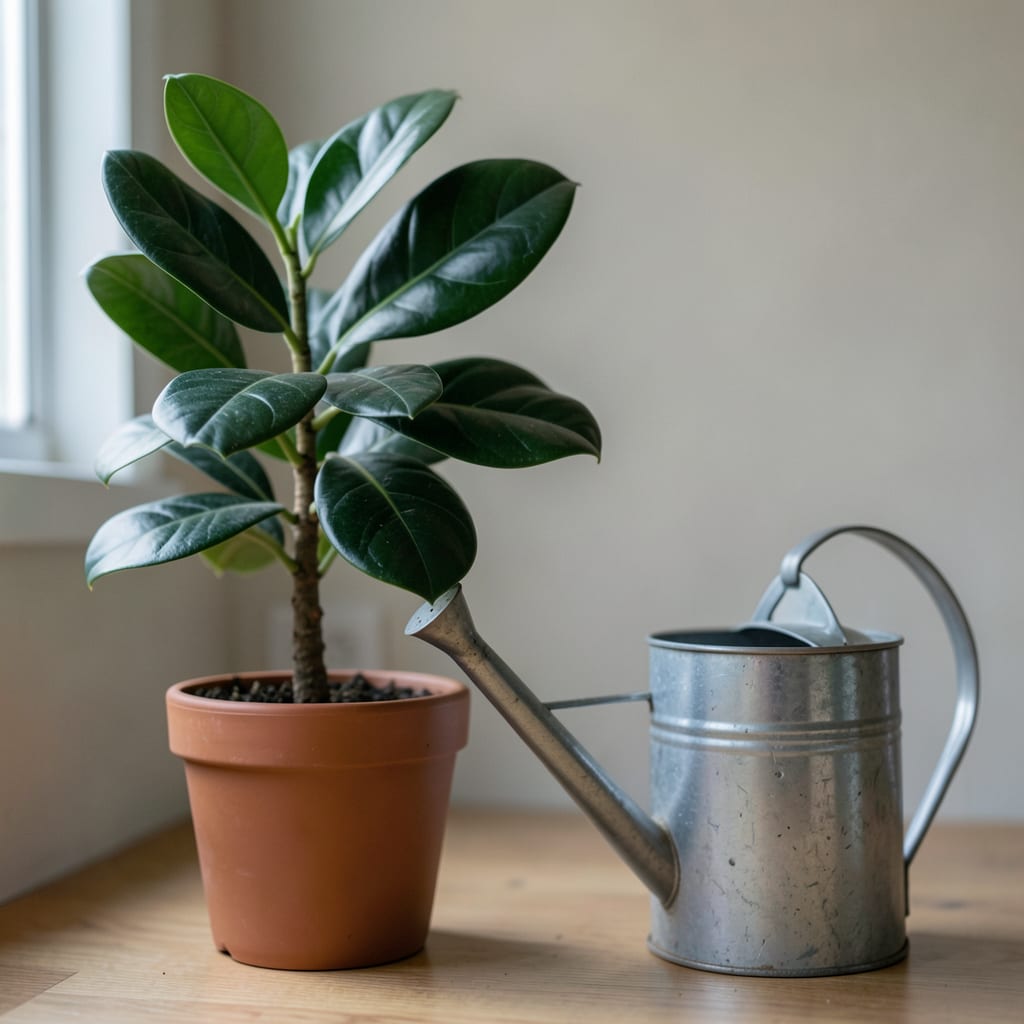
I’ve struggled with keeping my Rubber Plant 🌿 thriving, especially when it comes to watering. Too much or too little water can be detrimental, but getting it right is easier than you think.
Understanding how to water your Rubber Plant properly is crucial for its health and longevity. In this guide, I’ll share expert tips on how to determine the right watering schedule for your plant in zone 6a.
Every 5-7 days
Every 6 days
Low
Prefers consistently moist soil but not soggy
Morning
Before 10 AM
Deep soak
~500ml
I’ve found that understanding the watering needs of my Rubber Plant is crucial for its health. The frequency of watering depends on several key factors: light exposure, temperature, soil type, and plant size. Each of these elements plays a significant role in determining how often to water 🌿.
Rubber Plants prefer consistently moist soil but not soggy conditions. The ideal watering schedule varies based on the plant’s environment and size. For instance, a plant in a brighter location may need more frequent watering than one in a dimmer spot 🔥.
The watering frequency for Rubber Plants typically ranges from every 5 to 7 days. However, this can vary based on the factors mentioned above. It’s essential to check the soil moisture regularly to determine if your plant needs water 💧.
One effective method is to insert your finger about 1-2 inches deep into the soil. If it feels dry, it’s time to water. If it’s still moist, wait another day or two before checking again 🌱.
Seasonal changes also impact watering needs. During the growing season (spring and summer), Rubber Plants require more frequent watering due to active growth. In contrast, during the dormant season (fall and winter), they need less water as their growth slows down 🔄.
Understanding these needs helps you create a more effective watering schedule. By adjusting your watering based on these factors, you can ensure your Rubber Plant remains healthy and thrives 🌟.
Proper watering is just one aspect of caring for your Rubber Plant. In the next section, we’ll explore practical tips for determining the right watering schedule 🔜.
By mastering the art of watering, you’ll be well on your way to becoming a successful Rubber Plant parent 🌿.
Remember, every plant is unique, so it’s crucial to observe your plant’s responses to different watering schedules and adjust accordingly 🔍.
With the right approach, your Rubber Plant will continue to grow and flourish, bringing beauty and life to your indoor space 🏠.
I’ve found that determining the right watering schedule for my Rubber Plant requires a combination of understanding its needs and observing its responses. To start, it’s essential to check the soil moisture regularly, as this will give you the most accurate indication of when your plant needs water 🌱.
One effective method for checking soil moisture is to insert your finger about 1-2 inches deep into the soil. If it feels dry, it’s time to water. If it’s still moist, wait another day or two before checking again. This simple technique helps prevent both overwatering and underwatering 🔍.
Water your Rubber Plant when the top inch of soil feels dry to the touch. Adjust based on seasonal changes and environmental conditions 🌟.
Seasonal changes significantly impact the watering needs of your Rubber Plant. During the growing season (spring and summer), your plant will require more frequent watering due to active growth. In contrast, during the dormant season (fall and winter), it will need less water as its growth slows down 🔄.
To adjust your watering schedule accordingly, you should monitor your plant’s environment and observe its responses to different conditions. This might involve checking the soil moisture more frequently during hot, dry spells or reducing watering during cooler, more humid periods 🔥.
Another critical factor is the type of soil your Rubber Plant is in. Well-draining soil can help prevent root rot, a common issue caused by overwatering. Ensure your pot has adequate drainage holes to allow excess water to escape 🌿.
By combining these strategies, you can develop a tailored watering schedule that meets the specific needs of your Rubber Plant. Remember, the key is to be observant and flexible, adjusting your care routine as needed to keep your plant healthy and thriving 🌟.
With the right watering schedule in place, your Rubber Plant will be well on its way to becoming a lush, vibrant addition to your indoor space 🏠.
Regularly checking your plant’s condition and adjusting your care accordingly is crucial for its long-term health. By doing so, you’ll be able to identify any potential issues early on and take corrective action 🔍.
By following these guidelines and staying attentive to your plant’s needs, you can enjoy the many benefits of having a thriving Rubber Plant in your home 🌿.
I’ve learned that proper watering is crucial for the health of my Rubber Plant. One of the most common mistakes is overwatering, which can lead to root rot and other issues 🌱.
To avoid this, it’s essential to check the soil moisture regularly. I make it a point to insert my finger about 1-2 inches deep into the soil to determine if it’s time to water 🔍.
Avoid overwatering your Rubber Plant, as it can cause root rot and other problems. Check soil moisture regularly to determine the right watering schedule ⚠️.
Underwatering is another common issue that can cause stress to the plant. To avoid this, I ensure that my Rubber Plant receives a deep soak when it’s time to water 💧.
The frequency of watering depends on several factors, including light exposure, temperature, and soil type. By understanding these factors and adjusting my watering schedule accordingly, I can keep my Rubber Plant healthy and thriving 🌟.
Some other common watering mistakes to avoid include using cold water, which can shock the roots, and gettting water on the leaves, which can cause spotting and other issues ❌.
By being mindful of these potential pitfalls and taking steps to avoid them, I can help my Rubber Plant thrive and enjoy its beautiful, glossy leaves 🌿.
Regularly checking my plant’s condition and adjusting my care routine as needed is crucial for its long-term health. By doing so, I can identify any potential issues early on and take corrective action 🔍.
With the right approach to watering, my Rubber Plant will continue to be a stunning addition to my indoor space 🏠.
Water your Rubber Plant every 5-7 days during the growing season (spring and summer) and less frequently during the dormant season (fall and winter). Check the soil moisture by inserting your finger 1-2 inches deep into the soil. If it feels dry, it’s time to water .
The most effective method is to check the soil moisture by inserting your finger 1-2 inches deep into the soil. If it feels dry, it’s time to water. This simple technique helps prevent both overwatering and underwatering .
No, it’s best to avoid using cold water as it can shock the roots. Instead, use room temperature water to keep your Rubber Plant healthy and thriving. Cold water can cause stress to the plant, leading to potential issues .
Give your Rubber Plant a deep soak when it’s time to water. The exact amount of water may vary depending on the plant’s size and environment, but a general rule of thumb is to water until you see water coming out of the drainage holes .
