
Beautiful Plants For Your Interior
Beautiful Plants For Your Interior
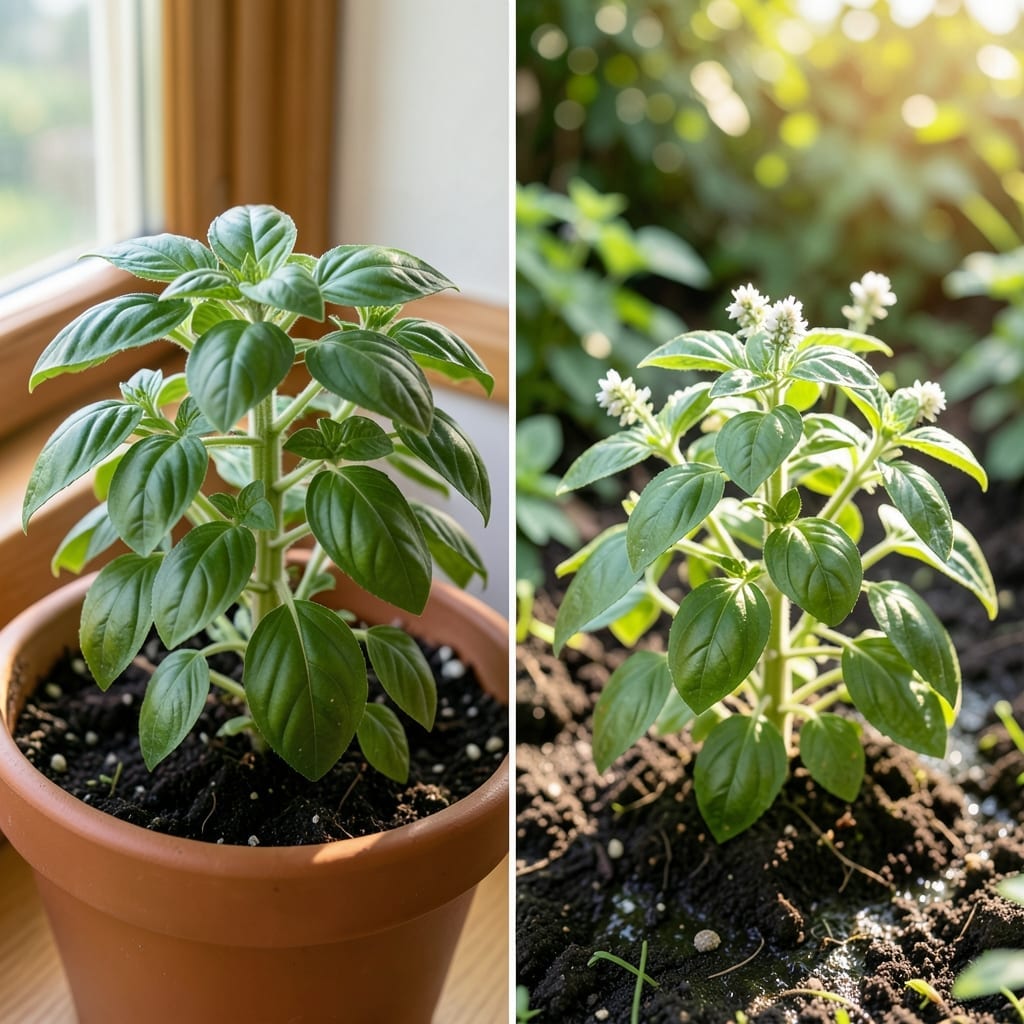
There’s nothing worse than watching your 🌿 Basil struggle because it’s not getting the right light. I’ve seen firsthand how the wrong amount of sunlight can turn a thriving plant into a sad, wilted mess.
Getting this right means the difference between a healthy, flavorful harvest and a disappointing one. The good news? It’s simpler than you might think to provide exactly what your Basil needs.
Discover the straightforward approach to sunlight that will have your Basil flourishing in no time. Let’s break it down.

I’ve found that basil thrives best with 6-8 hours of direct sunlight each day. This herb is a sun-lover, and full sun exposure brings out its richest flavors and most abundant leaves. Without enough light, basil can grow leggy and weak.
Whether you’re growing sweet basil, Thai basil, or purple basil, the sunlight needs are quite similar. Each variety benefits from that golden 6-8 hour window, though some can tolerate slightly less in hotter climates.
| Basil Type | Ideal Sunlight | Notes |
|---|---|---|
| Sweet Basil | 6-8 hours | Needs full sun for best flavor |
| Thai Basil | 6-8 hours | Tolerates partial afternoon shade |
| Purple Basil | 6-8 hours | Color intensifies with more sun |
The quality of sunlight matters just as much as the quantity. Morning sun is gentler and ideal, while harsh afternoon sun can sometimes scorch leaves in very hot regions. I always recommend east-facing windows for indoor basil.
If you’re growing basil outdoors, a south-facing garden bed is perfect. For containers, place them where they’ll get that full sun exposure throughout the day.
In my experience, 6 hours is the absolute minimum for healthy growth. With 8 hours, you’ll see bushier plants and larger leaves. Less than 6 hours often results in spindly stems and pale leaves, which we want to avoid.
For indoor gardeners, a south-facing window typically provides the most light. If that’s not available, west-facing windows can work with 6 hours of sun. North-facing windows usually don’t provide enough light for basil to thrive.
I’ve noticed that basil grown in full sun develops a stronger aroma and more intense flavor. The leaves tend to be larger and more abundant too. This is why commercial growers always prioritize maximum sunlight for their crops.
If you’re in a very hot climate (think Zone 9+), your basil might appreciate some afternoon shade to prevent leaf scorch. In these cases, 6 hours of morning sun plus dappled afternoon shade works beautifully.
Remember that seedlings need a bit less intense light than mature plants. Start them with 4-6 hours of gentle light and gradually increase as they grow. This prevents transplant shock and helps them acclimate.
Lastly, don’t forget that watering needs increase with more sunlight. Basil in full sun will need more frequent watering than those in partial shade. Always check the top inch of soil before watering.
☀️
I’ve learned that basil plants are quite vocal about their sunlight needs if you know what to look for. Yellowing leaves often signal too much sun, while leggy growth with small leaves means it’s not getting enough.
Leaf scorch appears as brown crispy edges when basil gets excessive sunlight. On the flip side, pale leaves and weak stems indicate your plant is light-starved and needs more exposure.
In my garden, I notice afternoon wilting is often the first sign of sun stress. If your basil perks up in the evening, it might just need some afternoon shade during peak heat.
For indoor basil, if you see it leaning toward the light, that’s a clear sign it needs more. I recommend rotating the pot weekly for even growth and balanced exposure.
Stunted growth with long stem gaps between leaves is another classic symptom of insufficient light. The plant stretches toward any available light source, creating that spindly appearance we want to avoid.
I’ve found that morning sun is gentler and better tolerated than harsh afternoon sun. If you’re in a hot climate, consider dappled shade during the hottest part of the day to prevent heat stress.
☀️