
Beautiful Plants For Your Interior
Beautiful Plants For Your Interior
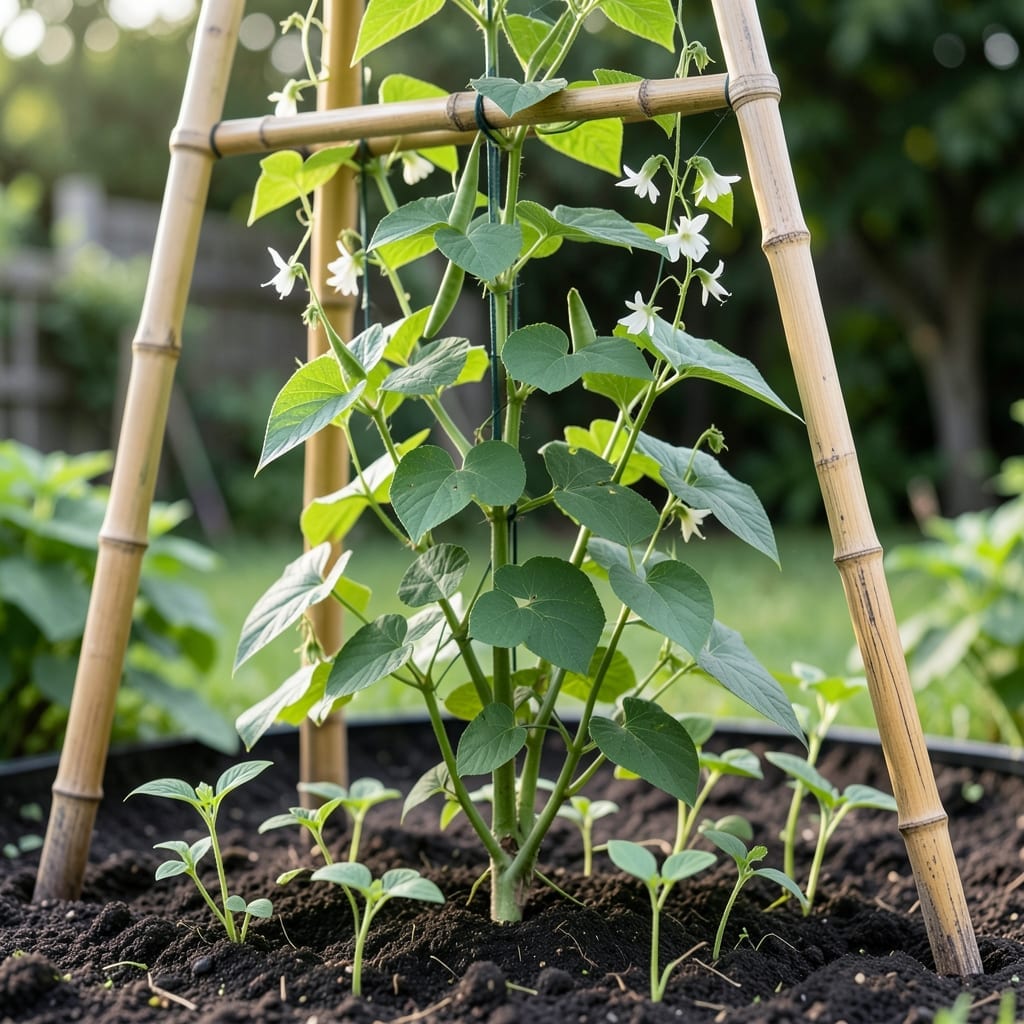
Pole beans are a garden favorite for their vertical growth and high yields, but crowded plants can lead to poor airflow and reduced harvests. Knowing the ideal planting density is key to maximizing your space and productivity.
I’ve seen too many gardeners struggle with overcrowded 🌱 Pole Bean patches that never reach their full potential. The solution starts with proper spacing from day one.
Discover how to balance plant count with square footage for healthier vines and bigger harvests. Let me show you exactly how to get it right.
Getting the right planting density for pole beans ensures healthy growth and maximum yield. Overcrowding leads to poor air circulation, increasing disease risk and reducing pod production. I always recommend starting with the basics.
For pole beans, the ideal spacing is 4-6 plants per square foot. This allows each vine enough room to climb while maintaining good sunlight exposure and airflow.
| Requirement | Specification |
|---|---|
| Plants per sq ft | 4-6 |
| Plant spacing | 4-6 inches apart |
| Row spacing | 18-24 inches |
| Trellis height | 6-8 feet |
| Sunlight needs | Full sun (6+ hours) |
I’ve found that 4-inch spacing between plants works best for most varieties. This gives each vine enough room to twine up its support without competing for light or nutrients. Trellises should be at least 6 feet tall to accommodate mature vines.
For raised beds, you can push the density slightly higher. I often plant 6 pole beans per square foot in my raised beds because the loose soil promotes better drainage and root growth.
Remember that companion planting can affect spacing too. Pole beans grow well with corn (as a natural trellis) or cucumbers, but these combinations may require wider row spacing to prevent shading.
If you’re using a teepee trellis, plant 4-5 beans at the base of each pole. This creates a balanced structure as the vines grow upward, and the plants support each other. 🌱
Soil preparation is just as important as spacing. Pole beans thrive in well-draining soil with a pH of 6.0-7.0. I always mix in compost before planting to give my beans a nutrient boost.
Watering plays a role in density too. Denser plantings may require more frequent watering, especially during dry spells. Aim for 1 inch of water per week, either from rainfall or irrigation.
Finally, don’t forget about vertical space. The beauty of pole beans is their ability to grow upward, saving ground space. With proper trellis support and spacing, you can grow more beans in less area while keeping plants healthy. ☀️
Not all pole bean varieties have the same spacing needs. While the general rule is 4-6 plants per square foot, some types thrive with slight adjustments. I’ve tested various approaches in my garden.
For example, Kentucky Wonder beans are vigorous climbers and can handle 4 plants per square foot with 6-inch spacing. Meanwhile, Blue Lake varieties often do better with 5-6 plants in the same space.
| Variety | Plants per sq ft | Spacing |
|---|---|---|
| Kentucky Wonder | 4 | 6 inches |
| Blue Lake | 5-6 | 4-5 inches |
| Fortex | 4-5 | 5 inches |
Container gardening changes the equation. In pots, I limit it to 2-3 plants per square foot to prevent root competition. Ensure containers are at least 12 inches deep for proper growth.
For in-ground planting, you can push densities slightly higher in fertile soil. I’ve successfully grown 6 plants per square foot in amended garden beds with compost-enriched earth.
Trellis type also impacts spacing. A teepee trellis supports 4-5 plants at its base, while a cattle panel arch can accommodate 6 plants per foot along its length.
Remember that climate conditions play a role. In hotter climates, I give plants a bit more room for airflow. In cooler areas, tighter spacing can help retain warmth.
🌱