
Beautiful Plants For Your Interior
Beautiful Plants For Your Interior
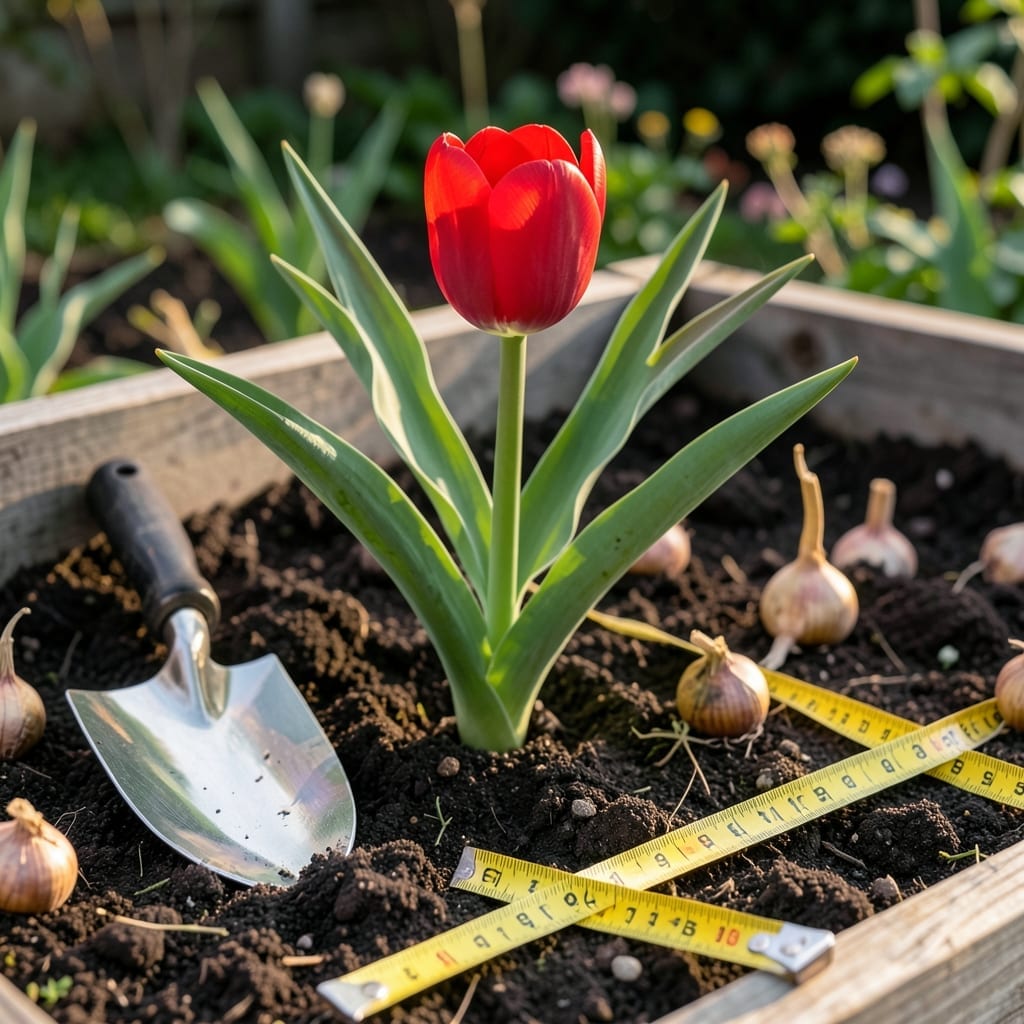
Planting Tulip bulbs at the right depth is the secret to vibrant spring blooms year after year. Get it wrong, and you risk weak stems, blind buds, or bulbs that never emerge.
I’ve seen it happen too often – gardeners excitedly plant their 🌷 only to be disappointed come spring. The depth of your planting hole makes all the difference in how your tulips perform.
Discover the simple rule that ensures your tulips come back stronger each season. Let me show you exactly how to get it right the first time.
Getting the planting depth right is crucial for healthy tulip growth. The general rule is to plant bulbs 2-3 times deeper than their height. This protects them from freezing and ensures strong root development.
For most standard tulips, this means a 6-8 inch depth. However, species tulips and smaller varieties may only need 4-6 inches. Climate plays a role too, as colder regions benefit from deeper planting.
| Tulip Type | Planting Depth | Climate Adjustment |
|---|---|---|
| Standard Tulips | 6-8 inches | Deeper in cold zones |
| Species Tulips | 4-6 inches | Standard depth works |
| Parrot Tulips | 8-10 inches | Extra depth for support |
| Double Late Tulips | 6-8 inches | Standard depth |
In cold climates (USDA zones 3-5), I always recommend planting at the deeper end of the range. This extra inch or two provides insulation against harsh winter freezes that could damage or kill the bulbs.
For warmer climates (zones 7-8), you can plant slightly shallower, but I’d still suggest staying within the recommended ranges. The soil temperature needs to drop below 60°F for proper root development.
The 2-3x rule works for all bulb sizes. Measure your bulb from base to tip, then multiply by 2 or 3. A 2-inch bulb should go 4-6 inches deep, while a 3-inch bulb needs 6-9 inches of soil above it.
Remember that soil type affects planting depth too. In sandy soil, bulbs may need an extra inch of depth for stability. In clay soil, planting slightly shallower can prevent waterlogging and rot.
I’ve found that using a bulb planter tool helps maintain consistent depth. Mark your tool with depth indicators for different bulb sizes to make the process faster and more accurate.
Proper depth planting ensures your tulips will have strong stems, vibrant blooms, and the energy to return year after year. It’s the foundation for all your spring garden success.
Take the time to measure each hole carefully – your future self will thank you when those colorful blooms emerge perfectly in spring 🌷
Even experienced gardeners sometimes get tulip depth wrong. Planting too shallow exposes bulbs to freeze damage and can cause weak stems that flop over in spring winds.
On the other hand, planting too deep may prevent bulbs from sprouting at all. The shoots exhaust their energy trying to reach the surface, resulting in blind bulbs with no flowers.
⚠️ Warning: Planting tulips at the wrong depth leads to poor blooms. Too shallow causes frost damage. Too deep prevents sprouting. Always follow the 2-3x bulb height rule for best results.
I’ve seen flopping tulips that couldn’t support their blooms because they were planted just 2-3 inches deep. The solution? Dig them up and replant at proper depth before winter sets in.
Another common issue is uneven depth across a bed. This creates a patchy bloom effect. Use a measuring stick or bulb planter with depth markings to maintain consistency.
In heavy clay soil, bulbs planted too deep may rot. If your soil drains poorly, plant at the shallower end of the recommended range and amend with compost for better drainage.
Remember that container tulips need slightly different treatment. They require less depth (about 2x bulb height) because containers don’t insulate as well as ground soil. Use a well-draining potting mix to prevent waterlogging.
With proper depth, your tulips will stand tall and bloom beautifully every spring 🌷