
Beautiful Plants For Your Interior
Beautiful Plants For Your Interior
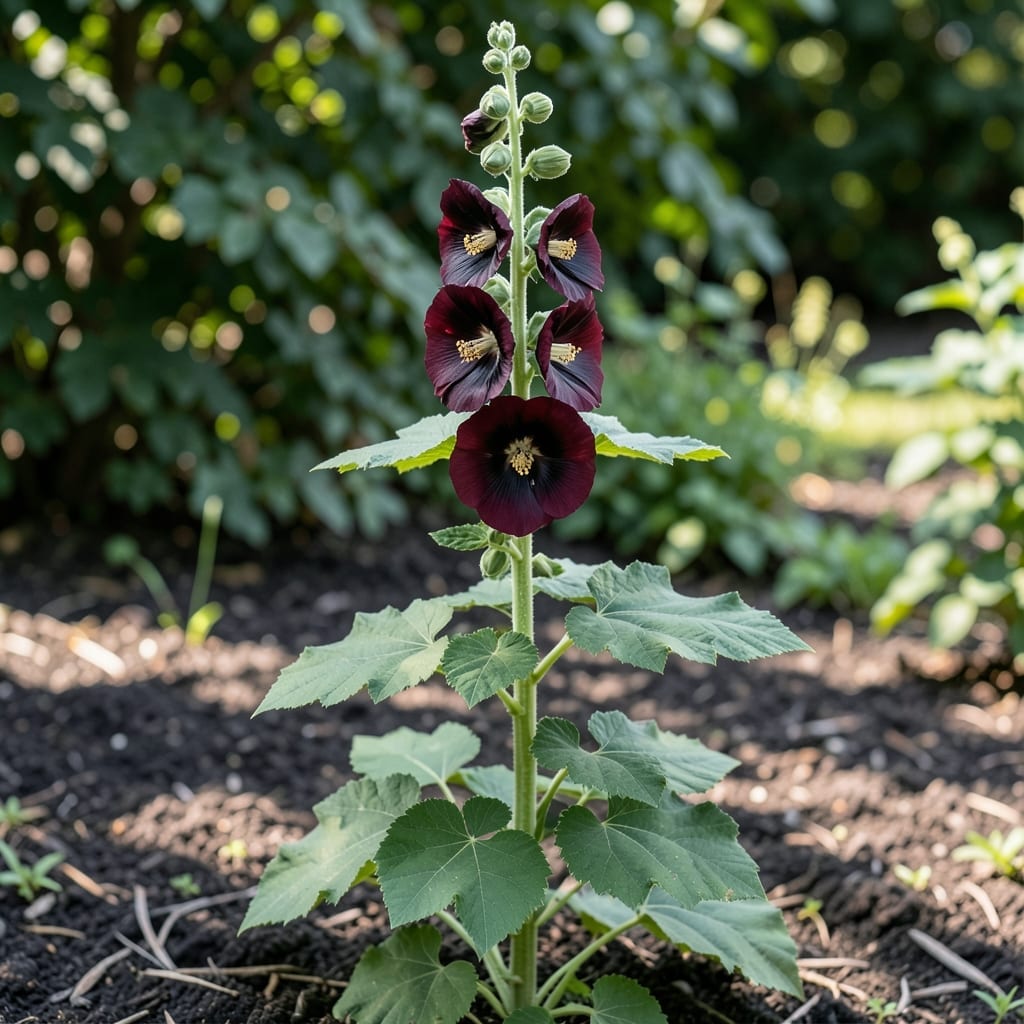
Dark as midnight with a velvety texture that stops visitors in their tracks. Black Watchman hollyhocks turn any garden into a dramatic stage with their deep maroon blooms climbing 5-6 feet tall.
I planted my first row along a plain fence—now it’s the most photographed spot in my yard. These towering beauties thrive in full sun and well-drained soil, rewarding you with blooms from midsummer through fall with minimal fuss.
📚 In This Guide
These striking flowers are simpler to grow than they look—here’s my reliable method.
Select a spot with full sun exposure, as these hollyhocks need at least 6-8 hours of direct sunlight daily to produce their deep, velvety blooms. I’ve found they tolerate partial shade but the flowers lose some of their dramatic intensity.
The soil should be well-draining with a pH between 6.0-7.5. If your garden bed has heavy clay, amend it with compost to improve drainage. Avoid low spots where water pools—root rot will quickly kill young plants.
Sow seeds directly outdoors in early spring or fall, about ¼ inch deep and 12-18 inches apart. If starting indoors, begin 6-8 weeks before your last frost and transplant when seedlings have 3-4 true leaves.
Press the seeds lightly into the soil but don’t cover too deeply—they need light to germinate. I always mark the planting area because the seeds are tiny and easy to forget. Keep the soil consistently moist until germination, which typically takes 10-14 days.
These hollyhocks can reach 5-6 feet tall, so they’ll need support to prevent toppling. Install stakes or a trellis when plants are about 1 foot high—waiting until they’re taller risks damaging the roots.
I use bamboo stakes tied with soft garden twine, spacing them about 6 inches from the stem to allow for growth. As the plants develop, gently tie the main stem to the support every 12-18 inches of height.
Water at the base of the plant, keeping the soil evenly moist but not soggy. Once established, they’re fairly drought-tolerant, but you’ll get the best blooms with 1-1.5 inches of water per week.
Apply a balanced fertilizer every 4-6 weeks during the growing season. I stop fertilizing once the flower buds form to encourage blooming rather than leafy growth. Remove spent flowers to encourage more blooms and prevent self-seeding if you don’t want volunteers next year.
Watch for rust fungus, which appears as orange-brown spots on leaves. If you notice this, remove affected foliage immediately and avoid overhead watering. Good air circulation helps prevent this issue.
Japanese beetles love these plants, so check daily during summer. Handpick them in the morning when they’re sluggish, or use neem oil for control. With proper care, you’ll enjoy those stunning dark blooms from mid-summer to early fall.
These simple adjustments will help you grow the healthiest, most dramatic blooms possible.
Sunlight Strategy: The 6-8 hours of direct sunlight mentioned in Step 1 isn’t just a suggestion—it’s essential for those deep, velvety blooms. I learned this the hard way after planting some in partial shade. The flowers were smaller and paler, losing that signature drama. If your garden has limited sun, consider containers you can move to follow the light.
Planting Precision: When sowing seeds in Step 2, that ¼ inch depth is critical. Press them lightly into the soil but don’t bury them—they need light to germinate. I mark my planting rows with popsicle sticks so I don’t accidentally dig them up while weeding. And those 12-18 inches apart aren’t arbitrary; crowded plants compete for nutrients and air circulation, leading to weaker stems and more disease issues.
Support Timing: Don’t wait until your hollyhocks are toppling over to add support, as mentioned in Step 3. Install stakes or trellises when plants reach about 1 foot tall. Waiting longer risks damaging the developing root system. I use soft garden twine to tie the main stem every 12-18 inches as it grows—this prevents the tall stems from snapping in wind or rain.
Watering Wisdom: The 1-1.5 inches of water per week in Step 4 seems like a lot, but it’s the sweet spot for maximum blooms. Water deeply at the base rather than frequent shallow watering, which encourages shallow root systems. And always water in the morning so foliage dries before evening—this helps prevent the rust fungus mentioned in Step 5.
Sow seeds indoors 8-10 weeks before the last frost or directly outdoors in early spring. Lightly cover seeds with soil, keep moist, and ensure full sun. Germination takes 10-14 days. Thin seedlings to 18-24 inches apart for strong, healthy plants.
These dramatic blooms typically appear in mid to late summer, often in their second year if grown from seed. With proper care, they may produce flowers the first year if started early indoors.
For similar dark, velvety blooms, try Hollyhock ‘Nigra’ or Tulip ‘Queen of Night”. For height and drama, consider Delphinium ‘Black Knight‘ or Dahlia ‘Arabian Night’.
Yellowing leaves often signal overwatering, poor drainage, or fungal diseases like rust. Ensure well-draining soil, avoid overhead watering, and remove affected leaves promptly. Spacing plants properly improves air circulation.