
Beautiful Plants For Your Interior
Beautiful Plants For Your Interior
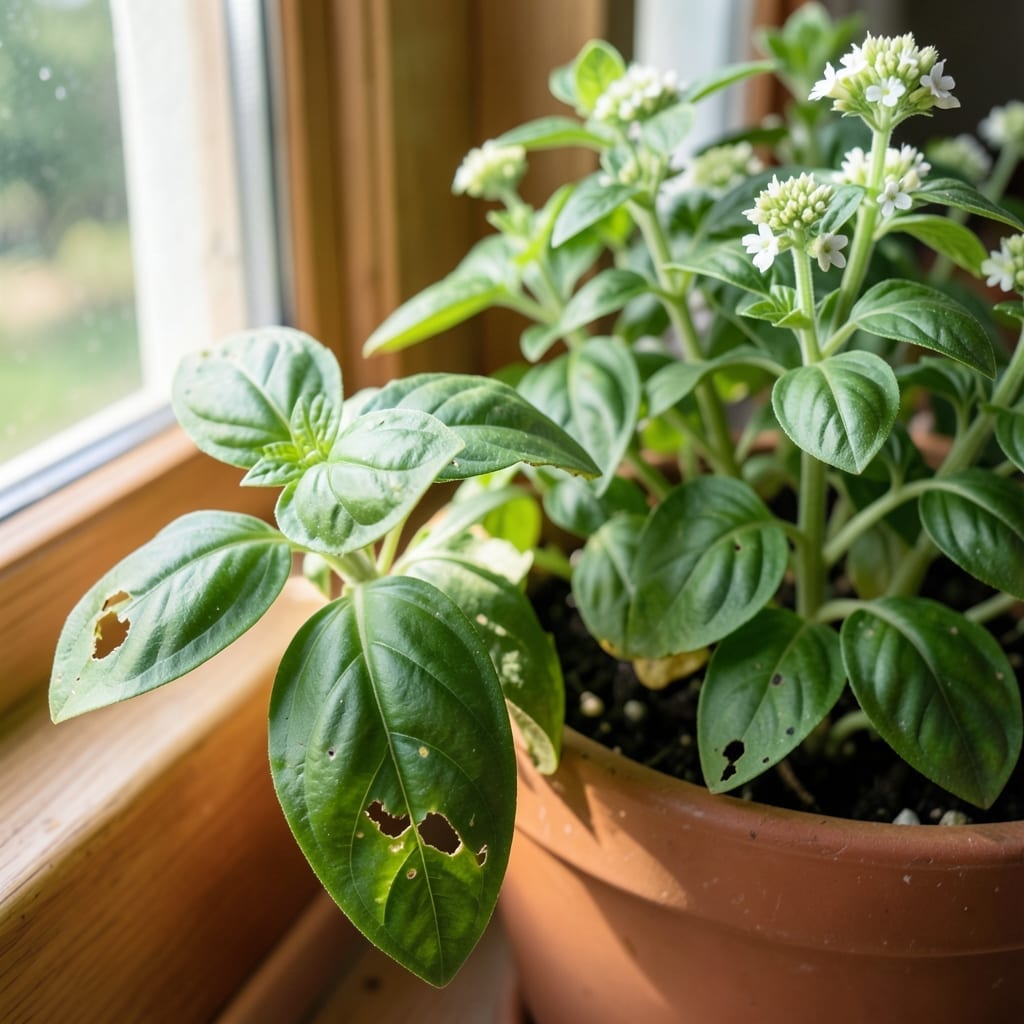
Nothing ruins basil faster than mysterious holes overnight. I’ve lost entire plants to unseen pests while assuming it was just “normal damage” — it’s not.
Basil leaves get chewed by slugs, beetles, or caterpillars, each leaving distinct patterns. The good news: organic solutions work fast without harming your plants or the ecosystem.
You’ll spot the culprits by checking undersides of leaves at dawn. Once identified, a simple spray or barrier method stops the damage within 24-48 hours.
Prevention is easier than cure. Healthy soil and companion plants create an environment where pests don’t stand a chance.
Basil leaves with holes are usually a sign of pest activity or environmental stress. Here are the most common causes, explained clearly:
Small, irregular holes often point to beetles, caterpillars, or grasshoppers. These pests have mandibles that physically tear through leaf tissue. Japanese beetles, for example, skeletonize leaves by eating the soft tissue between veins. Slugs and snails also leave larger, ragged holes, often with a slime trail.
While they don’t create holes directly, pests like aphids and spider mites weaken plants, making them more susceptible to secondary damage. Their feeding can cause stunted growth or curled leaves, which may later develop holes from opportunistic chewers.
Extreme heat, drought, or over-fertilization can cause leaf edges to dry out and form small, irregular holes. This is often mistaken for pest damage. Basil thrives in consistent moisture and moderate temperatures—fluctuations can lead to physical leaf degradation.
Diseases like bacterial leaf spot or downy mildew create small, water-soaked lesions that may eventually perforate. These holes often have a yellow or brown halo, distinguishing them from mechanical or pest-related damage.
Identifying the exact cause helps you choose the right organic solution, whether it’s hand-picking pests, improving watering habits, or applying neem oil.
Dealing with holes in your basil leaves can be frustrating, but the right approach can restore your plant’s health. Below are targeted solutions for the most common causes, paired with prevention tips to keep your basil thriving.
Prevention Tip: 💡 Regularly inspect the undersides of leaves and use row covers to block pests.
Prevention Tip: 🌡️ Space plants properly for airflow and avoid overcrowding.
Prevention Tip: ✨ Mulch around the base to retain moisture and reduce soil-borne stress.
Act quickly at the first sign of trouble, and your basil will bounce back with lush, hole-free leaves!
Japanese beetles, slugs, and caterpillars are the most common culprits. Beetles create jagged holes, while slugs leave larger, irregular tears with slime trails.
Yes, overwatering leads to root rot, which stresses the plant and may cause leaf edges to dry out and form holes. Basil prefers consistently moist but well-drained soil.
Inspect leaves daily, especially undersides, and use row covers. Companion planting with marigolds or garlic can deter pests naturally.
Neem oil is effective against many pests, including aphids and beetles. Apply in the evening and reapply after rain for best results.