
Beautiful Plants For Your Interior
Beautiful Plants For Your Interior
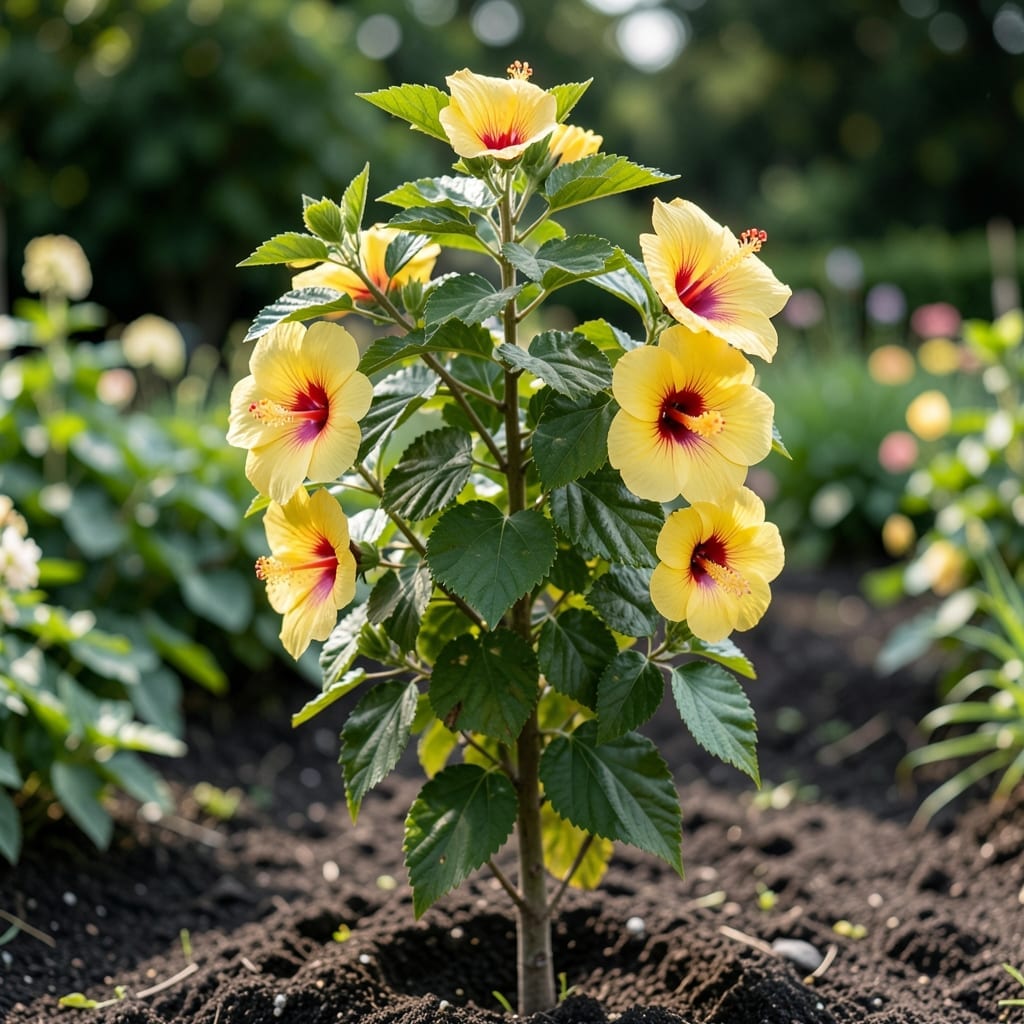
Bright yellow blooms that stop neighbors in their tracks. I planted my first Hibiscus syriacus ‘Yellow’ three summers ago, and it’s been the centerpiece of my garden ever since.
This hardy shrub thrives in full sun with minimal fuss, producing vibrant flowers from midsummer to fall. Give it well-drained soil, occasional water, and it rewards you with years of stunning color.
📚 In This Guide
This method delivers vibrant, long-lasting blooms with minimal fuss in any garden setting.
Choose a site with full sun exposure—at least 6-8 hours of direct sunlight daily. Hibiscus syriacus yellow thrives in bright conditions but tolerates partial shade in hotter climates. Avoid low-lying areas where cold air settles, as this species prefers good air circulation to prevent fungal issues.
Test your soil drainage by digging a 12-inch deep hole, filling it with water, and observing how quickly it drains. Ideal soil should empty within 1-2 hours. If water pools, amend with organic matter or choose a raised bed to improve drainage before planting.
Hibiscus syriacus yellow prefers slightly acidic to neutral soil with a pH between 6.0 and 7.0. Conduct a soil test to verify your conditions. If the pH is too high, amend with elemental sulfur; if too low, add lime to balance it.
Loosen the soil to a depth of 18-24 inches and mix in 2-3 inches of compost or well-rotted manure. This improves both drainage and fertility. The goal is a loose, crumbly texture that allows roots to establish quickly while retaining enough moisture to sustain the plant through dry spells.
Dig a hole twice as wide as the root ball but no deeper. Position the plant so the top of the root ball sits 1-2 inches above the surrounding soil level—this accounts for settling. Backfill with the amended soil, gently firming it around the base to eliminate air pockets.
Water deeply immediately after planting, using 5-10 gallons of water per shrub to settle the soil and hydrate the roots. Apply a 2-3 inch layer of mulch around the base, keeping it 3 inches away from the stem to prevent rot. This conserves moisture and suppresses weeds that compete for nutrients.
Water newly planted hibiscus 2-3 times per week for the first 4-6 weeks, ensuring the soil stays consistently moist but not waterlogged. Once established, reduce watering to 1-2 times per week, increasing frequency during droughts or extreme heat.
Fertilize in early spring with a balanced, slow-release fertilizer, such as a 10-10-10 formula, applying it according to package instructions. Repeat in mid-summer to encourage continuous blooming. Avoid high-nitrogen fertilizers, which promote leafy growth at the expense of flowers.
Prune hibiscus syriacus yellow in late winter or early spring, just as new growth begins. Remove dead, damaged, or crossing branches first. Then, shape the shrub by cutting back one-third of the oldest stems to the ground to encourage new growth and more abundant blooms.
Thin out crowded areas to improve air circulation, which reduces the risk of pests and diseases. Always use clean, sharp pruning shears to make precise cuts at a 45-degree angle just above a leaf node or bud. This minimizes stress on the plant and promotes faster healing.
These insights will help you avoid pitfalls and grow stunning blooms effortlessly.
Sunlight Requirement: The 6-8 hours of full sun daily in Step 1 isn’t just a suggestion—it’s essential for vibrant blooms. In hotter climates, afternoon shade can prevent scorching, but don’t skimp on morning sun. I learned this after my first attempt in partial shade produced sparse, pale flowers.
Drainage Test: That 12-inch deep hole test in Step 1 is your best insurance against root rot. If water doesn’t drain within 1-2 hours, raised beds or amended soil aren’t optional—they’re mandatory. Trust me, soggy roots are the fastest way to kill this otherwise hardy plant.
Planting Depth: In Step 3, positioning the root ball 1-2 inches above soil level might feel counterintuitive, but it accounts for settling. My first hibiscus sank too low after rain and suffered from stem rot. The extra height gives roots room to establish without suffocating.
Pruning Precision: The 45-degree angle cuts in Step 5 aren’t just for aesthetics—they prevent water from pooling on the cuts, which can invite disease. And that one-third reduction of oldest stems? It forces new growth where blooms are most abundant. I was hesitant to cut so much at first, but the results were dramatic.
Yellow Hibiscus syriacus thrives in full sun and well-drained soil. Water regularly, especially during dry spells, and prune in late winter to encourage new growth and abundant blooms. Fertilize lightly in spring for best results.
This hardy shrub typically blooms from mid to late summer, producing vibrant yellow flowers that last until early fall. Consistent care and proper pruning can extend the blooming season.
Watch for aphids, Japanese beetles, and leaf spots. Treat pests with insecticidal soap and prevent diseases by ensuring good air circulation and avoiding overhead watering.
Yes! Choose a large container with drainage holes, use potting mix, and place it in a sunny spot. Container-grown plants may need more frequent watering and feeding.
Lack of blooms can stem from insufficient sunlight, improper pruning, or nutrient deficiencies. Ensure it gets 6+ hours of sun daily, prune correctly, and fertilize as needed.