
Beautiful Plants For Your Interior
Beautiful Plants For Your Interior
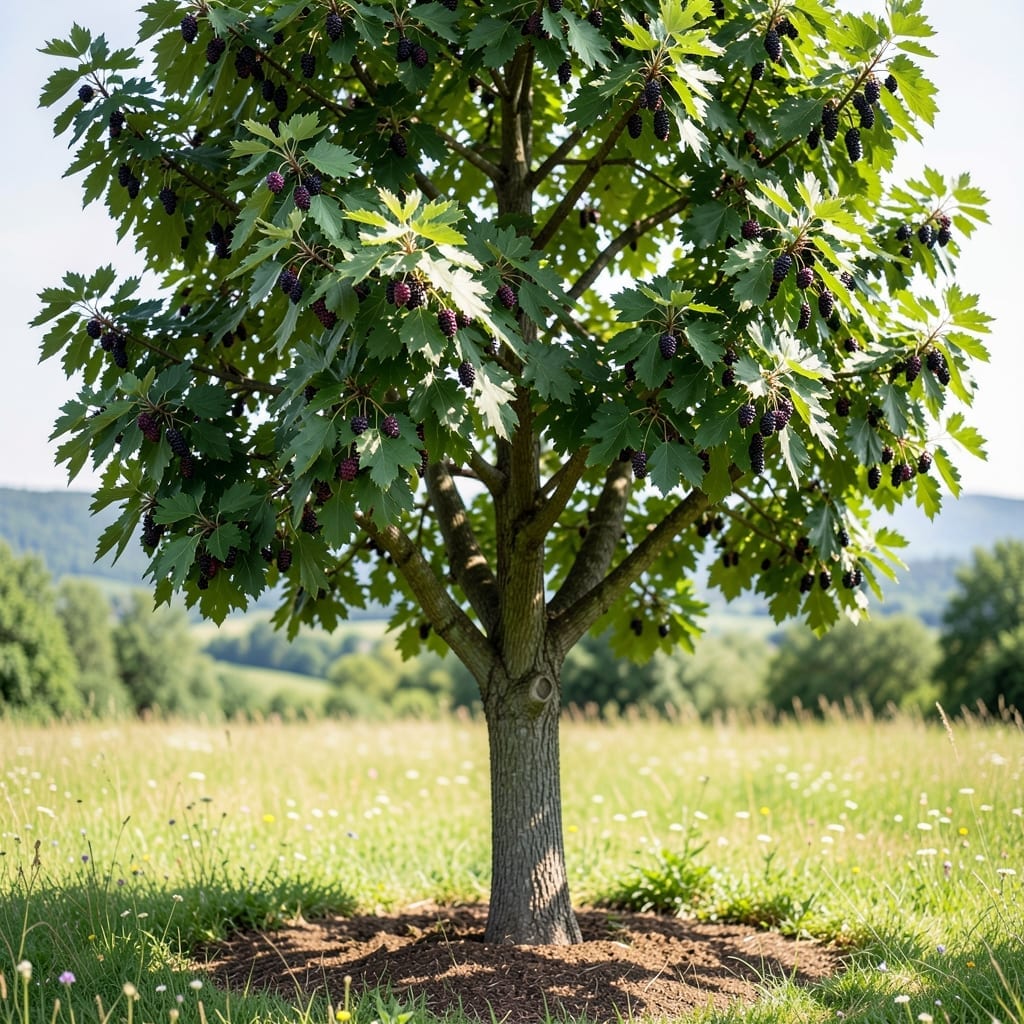
Mulberry trees can transform from humble saplings into impressive specimens that command attention in any landscape. The 🌳 Mulberry Tree often surprises gardeners with its potential to reach substantial heights.
What many don’t realize is how much their final size can vary based on species and growing conditions. Some varieties stay compact while others soar to stunning heights that rival mature oaks.
I’ll show you exactly what to expect from these adaptable trees and how to manage their growth. Whether you have acres or a small backyard, you can cultivate the perfect Mulberry Tree for your space.

When planting a mulberry tree, one of the first questions I get is about its potential size. The answer isn’t simple because these trees vary dramatically by species and variety. Some stay compact while others can dominate a landscape.
In my experience, the standard white mulberry often reaches 30 to 80 feet tall in ideal conditions. That’s taller than a 3-story building, which can surprise new gardeners expecting a modest fruit tree.
| Variety | Mature Height | Notes |
|---|---|---|
| White Mulberry | 30-80 ft | Fast grower, invasive potential |
| Black Mulberry | 20-30 ft | Slower growth, prized fruit |
| Red Mulberry | 35-50 ft | Native to North America |
| Dwarf Varieties | 10-15 ft | Perfect for small spaces |
The black mulberry typically stays more manageable at 20 to 30 feet, making it better for smaller yards. Its slower growth rate also gives gardeners more control over shaping and pruning.
For those with limited space, I always recommend dwarf mulberry varieties. These compact versions usually max out at 10 to 15 feet tall while still producing delicious fruit. They’re ideal for container gardening or small urban lots.
The native red mulberry falls in the middle, typically reaching 35 to 50 feet. This species does well in a variety of soil types and climates, making it a versatile choice for many gardeners.
Climate plays a huge role in final height. In warmer zones with long growing seasons, mulberries often exceed their expected maximum. Cooler climates may result in slightly smaller trees, but they’ll still produce abundant fruit.
Soil quality matters too. I’ve seen mulberries in rich, well-draining soil grow significantly taller than those struggling in poor conditions. Regular watering during the first few years helps establish a strong root system for maximum height.
Pruning can also influence size. While you can’t make a standard mulberry stay dwarf-sized, regular structural pruning helps control shape and can limit height somewhat. Just be careful not to over-prune, as this can reduce fruit production.
For gardeners concerned about space, I suggest starting with a dwarf variety or planting in a large container. This gives you the mulberry experience without the commitment to a potentially massive tree.
Remember that these height ranges are for mature trees in ideal conditions. Most mulberries take 10-15 years to reach their full size, giving you time to adjust your care approach as they grow 🌳
Watching a mulberry tree grow from a tiny seedling to its mature height is fascinating. The first year often brings 3 to 5 feet of growth, which can surprise new gardeners with its rapid pace.
By the second year, you’ll typically see your tree reach 8 to 12 feet. This is when the tree starts developing its characteristic shape and branch structure. The growth rate during these early years is impressive.
In the third year, expect your mulberry to grow another 7 to 8 feet, reaching 15 to 20 feet. This is when the tree really starts looking like a proper tree rather than a large shrub.
By year five, most mulberries will be 25 to 30 feet tall and start producing their first substantial fruit crop. The growth rate begins to slow as the tree puts energy into fruit production.
The most dramatic growth occurs in the first 5 to 7 years. After that, growth continues but at a slower pace until the tree reaches its mature height between years 10 and 15.
Remember that these are averages. Your tree’s growth may vary based on soil quality, water availability, and climate conditions. I’ve seen well-cared-for mulberries exceed these estimates in ideal conditions.
For best results, I recommend consistent watering during the first few years and annual fertilizing to support this rapid growth phase 🌳