
Beautiful Plants For Your Interior
Beautiful Plants For Your Interior
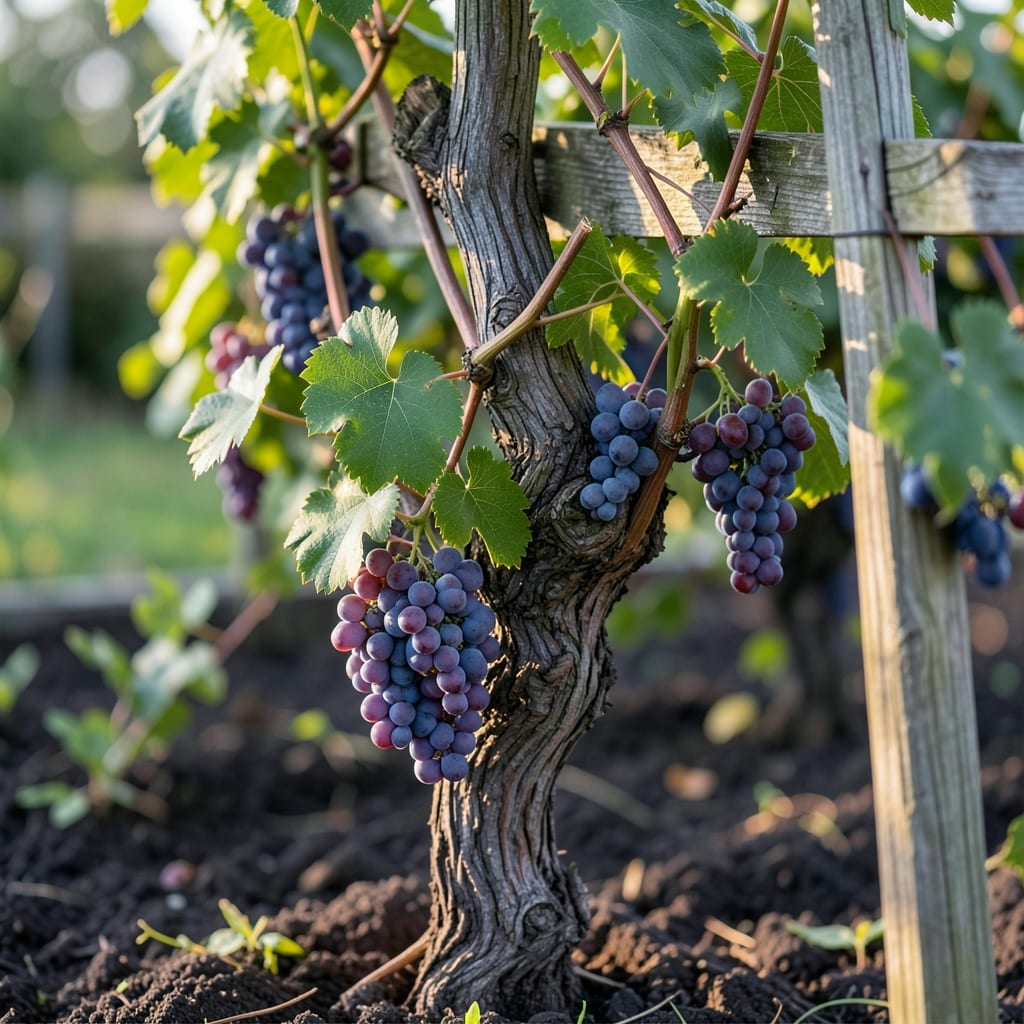
Healthy vines start underground. I learned the hard way that ignoring root health means weak growth and poor fruit, no matter how much you baby the leaves.
Strong roots anchor the plant, absorb nutrients, and store energy for next season. The right soil, watering, and care make all the difference—deep roots mean resilient vines that thrive for years.
📚 In This Guide
Here’s how I cultivate deep, resilient grape roots that anchor vines for decades of productivity.
Choose a location with full sun and well-draining soil—grape roots suffocate in waterlogged conditions. I test drainage by digging a 12-inch hole, filling it with water, and ensuring it empties within 2-3 hours. Amend heavy clay with compost or sand to improve aeration.
Grapes thrive in slightly acidic to neutral soil (pH 6.0-6.5). Conduct a soil test before planting to adjust as needed. Loosen the soil to a depth of 2 feet to encourage deep root penetration, as shallow roots struggle during drought.
Soak bare-root vines in lukewarm water for 2-3 hours before planting to rehydrate the roots. Dig a hole wide enough to spread the roots horizontally without bending. For potted vines, gently tease the roots apart if they’re circling the container—this prevents girdling as the plant matures.
Place the vine in the hole so the bud union (the swollen area where the rootstock meets the scion) sits 2-3 inches above soil level. Backfill with native soil, tampering lightly to eliminate air pockets. Water deeply after planting to settle the soil around the roots.
Water newly planted vines 2-3 times per week for the first month, then taper to once weekly as roots establish. Deep, infrequent watering forces roots to grow downward in search of moisture. Use a drip irrigation system to deliver water directly to the root zone without wetting the foliage.
Check soil moisture by digging 6-8 inches deep—if it feels dry, it’s time to water. Overwatering is just as harmful as drought; grapes tolerate dry conditions better than soggy roots. Mulch with 2-3 inches of organic material to retain moisture and suppress weeds.
Prune aggressively in the first year to direct energy toward root growth rather than foliage. Remove all but 2-3 strong canes and shorten these to 2-3 buds. This may feel counterintuitive, but it ensures the vine builds a robust underground system before focusing on fruit production.
In subsequent years, maintain balanced pruning to sustain root health. A vine with a well-developed root system can support more foliage and fruit, so avoid over-pruning once the roots are established. Monitor growth—vigorous shoots indicate a healthy root foundation.
Grapes are perennial, and their root systems can live for 50+ years if cared for properly. Avoid tilling or disturbing the soil near the base, as this damages shallow feeder roots. Instead, use hand weeding or mulch to control competition.
Fertilize sparingly—over-fertilization, especially with nitrogen, leads to excessive leafy growth at the expense of root development. Apply a balanced 10-10-10 fertilizer in early spring, but only if soil tests indicate a deficiency. Healthy roots will anchor the vine and sustain it through droughts and harsh winters.
Understanding these nuances will help you map and manage your vineyard’s foundation effectively.
Soil Temperature Clue: In Step 2, when monitoring for new white root tips, remember that 50°F soil temperature is your threshold. Use a soil thermometer at 4-6 inches depth for accuracy, as surface temps can be misleading. This is when root activity truly begins.
Root Depth Strategy: For young vines in Step 1, focus your attention on that top 1-2 feet of soil where feeder roots concentrate. This is where your irrigation and fertilization efforts will have maximum impact during the first 1-3 years.
Seasonal Timing Insight: Step 2 reveals that fall is ideal for root evaluation. I always schedule my most thorough assessments during this period when the system is at peak extensiveness, making it easier to trace both taproot and feeder root patterns.
Soil Composition Tip: As noted in Step 3, sandy loams encourage the most extensive root networks. If working with clay soils, consider amending with organic matter to improve drainage and root penetration potential over time.
Grape roots can extend 10–20 feet deep, with most active roots in the top 3–5 feet. Depth varies by soil type, water availability, and grape variety. Drought-tolerant varieties often develop deeper roots.
Yellowing leaves, stunted growth, or wilting may indicate root issues like rot, pests, or nutrient deficiencies. Check for brown, mushy roots or foul odors, which signal fungal infections.
Yes, but they may need frequent irrigation and nutrient boosts. Shallow-rooted vines are more susceptible to drought and temperature swings. Consider drought-resistant rootstocks for better adaptation.
Ensure proper drainage, avoid overwatering, and plant in well-aerated soil. Fungicides or resistant rootstocks can help. Remove infected plants to prevent spread.
Fertilize in early spring before bud break and again post-harvest. Use balanced fertilizers (e.g., 10-10-10) and soil tests to guide nutrient needs. Avoid late-season nitrogen, which can delay dormancy.