
Beautiful Plants For Your Interior
Beautiful Plants For Your Interior
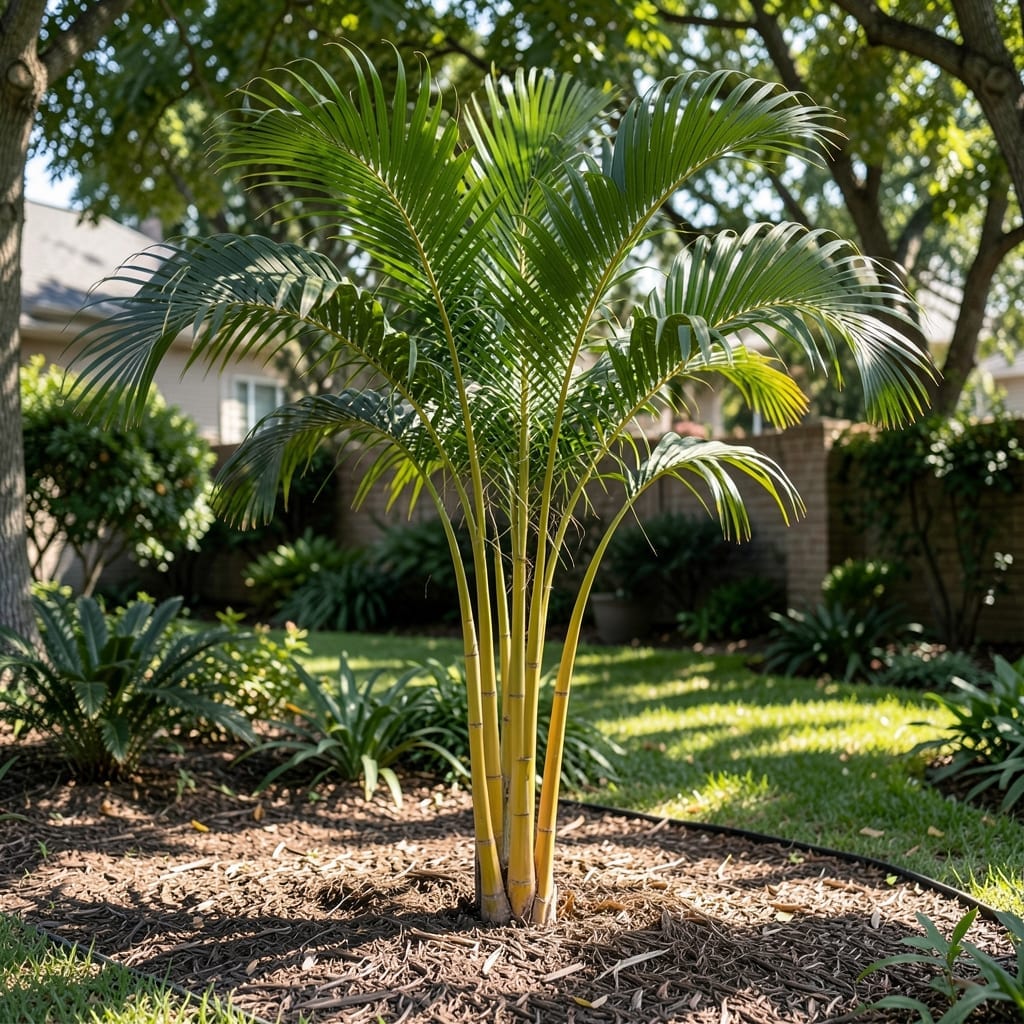
Golden cane palm brings tropical vibes to any garden without the fuss. I’ve grown these for years in Zone 9, and they thrive with minimal effort once established.
Fast-growing and foolproof, they handle partial shade and bounce back from neglect. You’ll get lush, arching fronds that create instant privacy and that classic resort feel.
📚 In This Guide
This reliable method delivers lush, tropical foliage in your garden with minimal fuss.
Select a spot that receives bright, indirect light to partial shade. Golden cane palms thrive in locations protected from harsh afternoon sun, which can scorch their delicate fronds. I always look for an area with dappled sunlight under taller trees or along the east side of a building.
Ensure the site has well-draining soil—these palms hate sitting in soggy roots. If your soil is heavy clay, amend it with compost or sand before planting. Test drainage by digging a 1-foot-deep hole and filling it with water. If it empties within an hour, you’re good to go.
Dig a hole that’s twice as wide as the root ball but no deeper. Golden cane palms are sensitive to being planted too deep, which can lead to root rot. Place the plant in the hole so the top of the root ball sits 1-2 inches above the surrounding soil level.
Backfill with native soil and press down gently to remove air pockets. Water thoroughly to settle the soil around the roots. I always create a small 2-3 inch high soil berm around the base to help direct water to the roots during the first few weeks.
Water deeply after planting, then maintain consistent moisture during the first 2-3 weeks. After establishment, golden cane palms are surprisingly drought-tolerant. I water mine when the top 1-2 inches of soil feel dry to the touch.
Avoid overhead watering to prevent fungal issues. Instead, water at the base using a soaker hose or drip irrigation. During extreme heat, you might need to water 2-3 times per week, but always check soil moisture first—overwatering is a more common problem than underwatering.
Apply a balanced, slow-release palm fertilizer (8-8-8 or 10-10-10) in early spring and again in mid-summer. I use about 1 pound per 100 square feet of garden space, scattering it evenly around the base and working it lightly into the soil.
Supplement with micronutrients like magnesium and manganese, which palms need for healthy fronds. Yellowing leaves often indicate a deficiency. If this happens, I apply a palm-specific micronutrient spray every 4-6 weeks until the plant recovers.
Remove dead or brown fronds as they appear using clean, sharp pruners. Cut them off at the base where they meet the trunk. I do this every 2-3 months to keep the plant looking tidy and to prevent pest issues.
Avoid over-pruning—never remove more than 20% of the fronds at once, as this can stress the palm. Also, resist the urge to prune green fronds just because they’re older. They’re still contributing to the plant’s health and energy production.
Here’s what I’ve learned from growing these palms to keep them thriving.
Lighting Secret: Golden cane palms need that balance of partial to full shade—I’ve seen them struggle in deep shade where they get lanky, or in harsh sun where fronds burn. Morning sun with afternoon shade is ideal, or dappled light under taller trees works beautifully.
Soil Preparation: Don’t skip amending the soil in Step 2. These palms hate soggy roots, so if your soil is clay-heavy, mixing in perlite or coarse sand is non-negotiable. For containers, that 20% perlite or orchid bark blend mimics their natural habitat perfectly.
Watering Wisdom: The first 2-3 months are critical—keep the soil consistently moist but not soggy. I check by sticking my finger into the top 1-2 inches of soil. If it feels dry, it’s time to water. Overwatering shows up as yellow fronds, not brown!
Planting Precision: In Step 3, planting the root ball slightly above soil level prevents water from pooling around the trunk, which is a death sentence for these palms. And that 6-8 inch pot size rule for containers? Trust me, they’ll outgrow smaller pots faster than you think.
Water your golden cane palm deeply 2-3 times a week during warm months, ensuring the soil stays moist but not soggy. Reduce watering in cooler months to once a week.
Yes! Golden cane palms thrive indoors with bright, indirect light and consistent moisture. Ensure good drainage and mist the leaves to mimic tropical humidity.
Watch for spider mites, mealybugs, and scale insects. Overwatering can lead to root rot, while yellowing leaves may indicate nutrient deficiencies or poor drainage.
Outdoors, it can reach 6-12 feet tall, while indoor plants typically stay between 4-6 feet. Regular pruning helps control height and promotes bushier growth.
Consider bamboo palm, areca palm, or kentia palm for similar tropical vibes. Each has unique care needs but offers lush, vibrant foliage for gardens or interiors.