
Beautiful Plants For Your Interior
Beautiful Plants For Your Interior
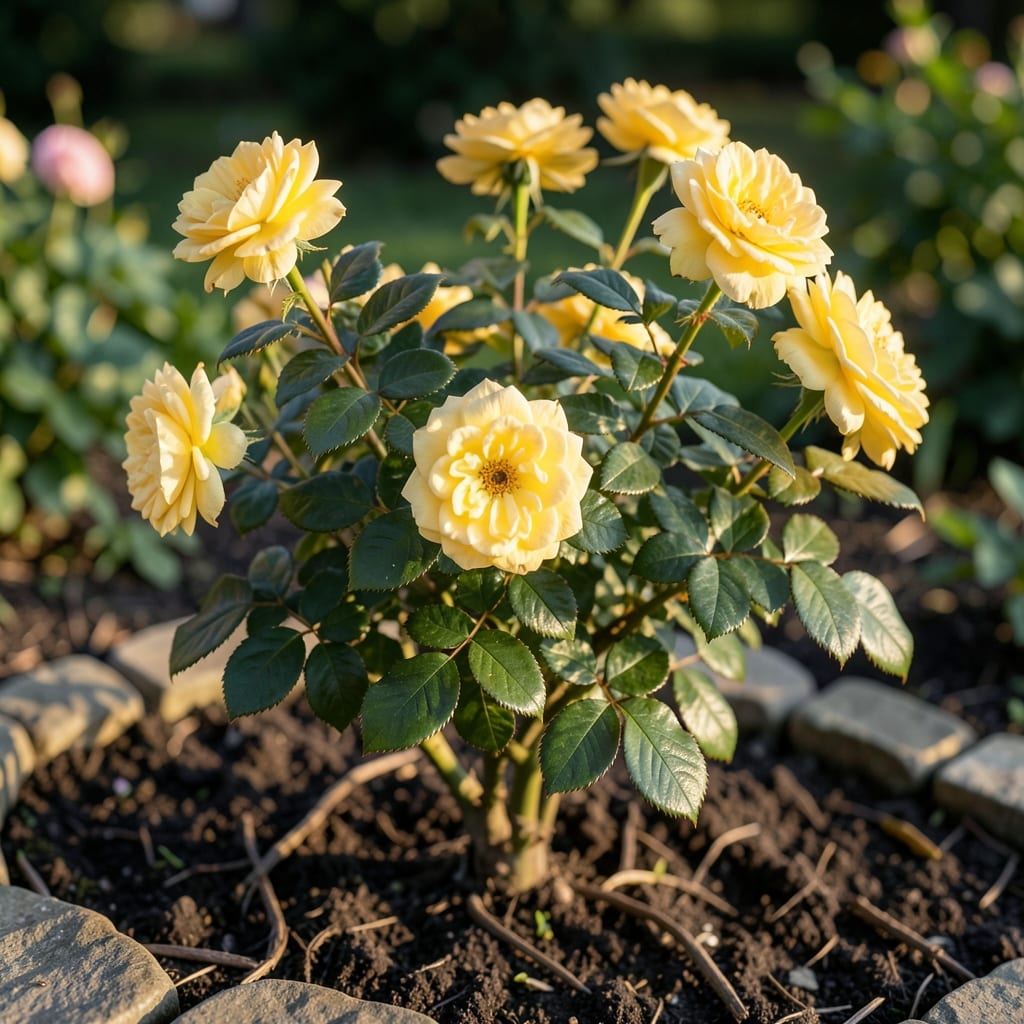
I still remember the first time I saw gold yellow roses glowing in morning light. Nothing beats that warm, sun-kissed color brightening up a garden corner.
These roses thrive with 6+ hours of sunlight and well-draining soil. With proper care, you’ll get vibrant blooms from late spring through fall, and they’re surprisingly resilient against common diseases.
📚 In This Guide
This method delivers vibrant spring blooms with minimal fuss, even in less-than-ideal conditions.
Gold yellow roses thrive in full sun, which means at least 6-8 hours of direct sunlight daily. I always choose a spot with morning sun exposure—it dries dew from the leaves quickly, reducing the risk of fungal diseases like black spot. The location should also offer some afternoon shade in extremely hot climates to prevent petal scorch.
Avoid low-lying areas where cold air settles, as these can create frost pockets that damage tender new growth. The soil should drain well; if water pools on the surface after rain, consider building a raised bed or amending the area with organic matter to improve drainage.
Roses are heavy feeders and prefer slightly acidic to neutral soil with a pH between 6.0 and 6.5. I test my soil every spring and amend it accordingly. Work in plenty of well-rotted compost or aged manure to a depth of 12-18 inches—this improves both drainage and fertility.
Add a 2-3 inch layer of organic mulch around the base of the plant after planting, but keep it 6 inches away from the stem to prevent rot. The mulch helps retain moisture, suppresses weeds, and keeps the root zone cool during hot summer months.
Dig a hole that’s twice as wide and just as deep as the root ball. If planting bare-root roses, soak the roots in lukewarm water for 2-3 hours before planting to rehydrate them. Place the plant in the hole, ensuring the bud union (the swollen area where the canes meet the roots) sits 1-2 inches below the soil surface in cold climates or at soil level in warmer regions.
Backfill the hole with the amended soil, pressing gently to remove air pockets. Water thoroughly to settle the soil around the roots. I always prune any damaged or diseased canes immediately after planting to redirect the plant’s energy toward healthy growth.
Gold yellow roses need consistent moisture, especially during their first growing season. Water deeply at the base 2-3 times per week, providing about 1-2 gallons per plant each time. The goal is to keep the soil evenly moist but not waterlogged—check the top 2-3 inches of soil before watering; if it feels dry, it’s time to water again.
Begin fertilizing in early spring as new growth appears, using a balanced rose fertilizer with a ratio like 10-10-10 or 12-12-12. I apply fertilizer every 4-6 weeks throughout the growing season, stopping 6-8 weeks before the first expected frost to allow the plant to harden off for winter.
Prune established roses in late winter or early spring, just as the buds begin to swell. Remove any dead, diseased, or crossing canes first, then shape the plant by cutting back the remaining canes by about one-third of their height. Always make cuts at a 45-degree angle just above an outward-facing bud to encourage open, airy growth.
Deadhead spent blooms regularly to encourage continuous flowering. I do this by cutting just above the first 5-leaflet leaf below the spent flower. This not only tidies up the plant but also redirects energy into producing more blooms rather than setting seed.
These small adjustments make a big difference in achieving those vibrant blooms.
Sunlight Strategy: The 6-8 hours of direct sunlight daily is non-negotiable for gold yellow roses. I’ve found that morning sun is particularly crucial—it evaporates dew quickly, which significantly reduces the risk of black spot disease. In scorching climates, a bit of afternoon shade prevents petal burn without sacrificing vibrancy.
Soil Preparation Insight: When amending soil to that 12-18 inch depth in Step 2, don’t skimp on the organic matter. Well-rotted compost or aged manure dramatically improves drainage and fertility. I test my soil pH every spring—maintaining that 6.0 to 6.5 range keeps nutrients available to the roots.
Planting Precision: For bare-root roses, soaking the roots in lukewarm water for the full 2-3 hours before planting rehydrates them thoroughly. In Step 3, ensure the bud union sits 1-2 inches below the soil surface in cold climates—this protects against winter damage. Press the soil gently to eliminate air pockets, which can hinder root establishment.
Watering Wisdom: The 2-3 times per week watering schedule works best when you check the top 2-3 inches of soil first. If it feels dry, it’s time to water. Deep watering at the base encourages strong root growth, while keeping mulch 6 inches from the stem prevents rot as mentioned in Step 2.
Keep them in well-draining soil with full sunlight (6+ hours daily). Water deeply 1-2 times weekly, avoiding overhead watering to prevent fungal diseases. Prune dead blooms and fertilize monthly during growing season.
Plant bare-root roses in early spring or fall. Container-grown roses can be planted anytime during the growing season. Avoid extreme heat or frost for best results.
Black spot, powdery mildew, and rust are frequent issues. Prevent with proper spacing, good airflow, and fungicide sprays if needed. Remove infected leaves promptly.
Yes! Choose a large container (18+ inches deep) with drainage holes. Use quality potting mix and ensure consistent watering. Dwarf varieties work best for containers.
This could signal underwatering, overwatering, or disease. Check soil moisture (1-2 inches down should be damp) and inspect for pests or fungal issues. Adjust care as needed.