
Beautiful Plants For Your Interior
Beautiful Plants For Your Interior
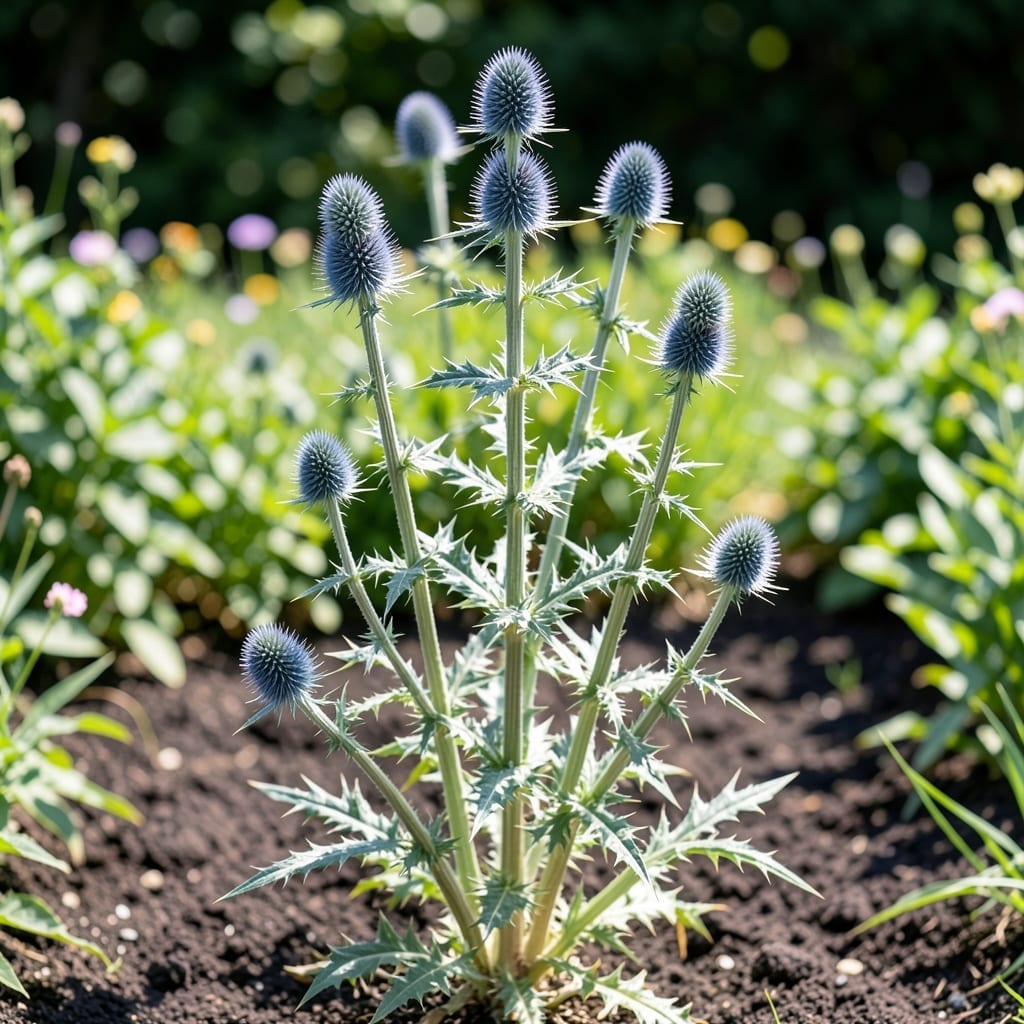
Those silvery, spiny globe thistle leaves are more than just striking—they’re the plant’s secret weapon. 🌿 I’ve watched them transform a garden bed from ordinary to extraordinary with their textured, almost metallic sheen.
They thrive in full sun and well-drained soil, asking for little more than occasional water once established. The foliage stays vibrant all season, forming a perfect backdrop for those iconic blue globes.
📚 In This Guide
Small details make all the difference between struggling plants and thriving foliage.
Sunlight Strategy: That 6-8 hours of full sun isn’t just a suggestion—it’s critical. I learned this the hard way when my first planting in partial shade produced weak, yellowing leaves. Morning sun is especially valuable as it dries dew quickly, preventing fungal problems that can ruin your foliage overnight.
Drainage Test: Don’t skip the 12-inch hole drainage test from Step 1. If water doesn’t drain in under 2 hours, you’ll see yellowing leaves within days. I’ve found raised beds work wonders in heavy clay soil, giving roots the drainage they desperately need.
Pruning Timing: That 4-6 weeks hardening time for new growth in Step 4 is non-negotiable. Cutting back too late in the season leaves tender new foliage vulnerable to frost damage. I mark my calendar to ensure I don’t miss this window.
Airflow Secret: The 18-24 inches spacing in Step 5 isn’t just about aesthetics—it’s your first line of defense against powdery mildew. In humid summers, I’ve seen crowded plants develop that white coating overnight, while properly spaced ones stay pristine.
No, globe thistle (Echinops) leaves are not typically consumed. While not highly toxic, they can cause mild stomach upset. Stick to ornamental use to avoid risks!
Yellow leaves often signal overwatering, poor drainage, or nutrient deficiencies. Check soil moisture and ensure good drainage. Trim affected leaves to encourage healthy growth.
Prune in early spring or after flowering to shape the plant and remove dead or damaged foliage. Avoid heavy pruning in fall, as it can reduce winter hardiness.
Yes! The spiky, silvery leaves add texture and contrast to dried or fresh arrangements. Harvest stems in the morning for the best longevity.
Improve air circulation, avoid overhead watering, and apply a fungicide or neem oil. Remove infected leaves promptly to prevent spread.