
Beautiful Plants For Your Interior
Beautiful Plants For Your Interior
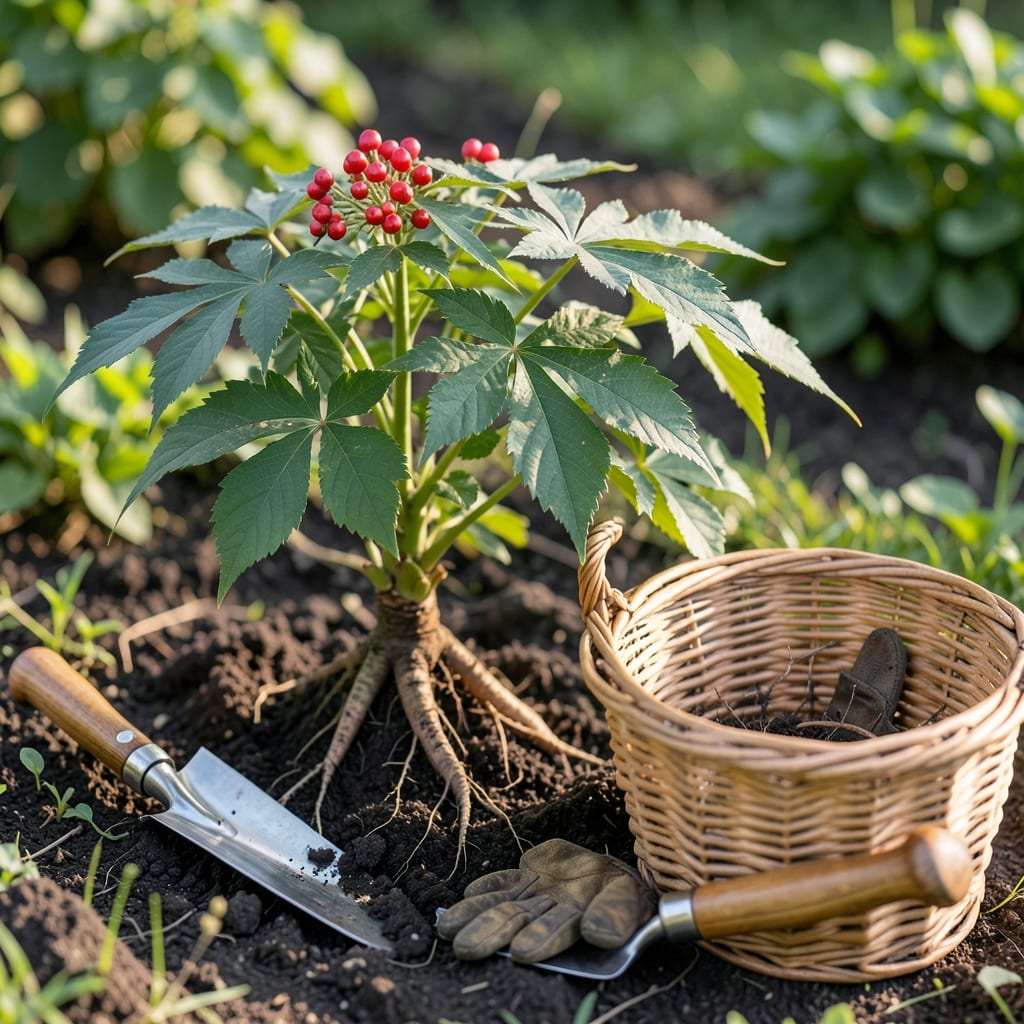
Wild ginseng thrives in the shaded forest floors of the eastern U.S., where it grows undisturbed for years. This elusive plant prefers rich, well-drained soil and the dappled light of hardwood forests, often under maple or oak trees.
Patience is key—wild ginseng takes 5-10 years to mature. Unlike cultivated varieties, it develops a deeper, more potent root. The reward is a plant that’s perfectly adapted to its natural environment, requiring minimal intervention once established.
📚 In This Guide
Here’s the method I rely on to locate and harvest this valuable root sustainably.
Wild ginseng thrives in mature hardwood forests with rich, well-drained soil, particularly on north or east-facing slopes. Look for areas with deep shade and a thick layer of leaf litter. The best time to forage is in late summer through early fall, when the plant’s distinctive red berries and compound leaves are most visible.
I focus on regions with 70-80% canopy cover, as direct sunlight inhibits growth. Avoid disturbed areas or recent clearings—ginseng prefers undisturbed forest floors with minimal human activity. The presence of companion plants like trillium, bloodroot, and goldenseal often indicates suitable habitat.
Scan the forest floor for the plant’s signature palmate compound leaves—each stem typically has 3-5 leaflets arranged in a circular pattern. The leaves are dark green, slightly serrated, and grow in a whorl at the top of the stem. In late summer, look for clusters of bright red berries in the center of the leaf whorl.
Before digging, confirm the plant is mature (at least 5-7 years old). Younger plants have fewer leaflets and smaller berry clusters. I always cross-reference with a field guide to avoid confusing ginseng with look-alikes like Virginia creeper or wild carrot, which can be dangerous if ingested.
Use a small hand trowel to gently loosen the soil around the plant’s base, working in a 6-inch radius to avoid damaging the root. Ginseng roots are fragile and can snap easily, so dig slowly and lift the root with the surrounding soil intact. The root should resemble a small, forked human figure—this is the prized part.
I always dig at an angle, starting about 4-6 inches away from the stem to prevent severing the root. If the soil is compacted, moisten it slightly with water to make digging easier. Once exposed, brush off excess soil but leave some attached to protect the root during transport.
Never harvest more than 10% of the ginseng plants in a given area to ensure the population remains viable. If you find a dense patch, take only a few plants and leave the rest to mature and reproduce. Always replant any berries you find to encourage future growth—this simple step helps sustain the wild population.
I carry a small notebook to mark GPS coordinates of productive spots, so I can return in future years to check on the population. Avoid harvesting near trails or roads, as these areas are more likely to be over-foraged. Always follow local regulations, as some regions require permits or have strict harvesting limits.
Rinse the roots gently under cool running water to remove soil, taking care not to scrub off the outer skin, which contains valuable compounds. Pat them dry with a clean cloth and spread them out on a mesh screen or paper towel in a well-ventilated, shaded area.
Drying typically takes 1-2 weeks, depending on humidity levels. The root is fully dry when it snaps cleanly rather than bending. Store the dried root in a cool, dark place in a breathable container like a paper bag. I check the roots daily during drying to ensure even air circulation and prevent mold growth.
Here’s what I’ve learned from years of foraging to help you avoid the most common pitfalls.
The Season Factor: The late summer to early fall window is non-negotiable. I once searched in June and found nothing but lookalikes. By August, those red berries are your best identifier—skip this timing and you risk misidentification or missing the plant entirely.
Shade Precision: That 70-80% shade requirement means you’ll rarely find ginseng in sunny clearings. I’ve had the best luck under dense maple canopies where dappled light barely reaches the forest floor. If your site gets more than a couple hours of direct sun daily, keep walking.
Root Depth Reality: The 4-8 inch root depth means your trowel needs to go deep. I’ve snapped more roots than I’d like to admit by digging too shallow. Angle your tool and work in a circular motion around that 6-inch radius to lift the entire root system intact.
Sustainability Rule: That 10% harvest limit isn’t just ethical—it’s practical. I’ve revisited patches where I took too much and found nothing but bare soil years later. Mark your GPS coordinates and rotate harvest sites to give populations time to recover.
While wild ginseng is generally safe, consuming it raw may cause mild digestive upset. It’s best dried or cooked to enhance safety and absorption. Always consult a healthcare provider before use, especially if you have underlying conditions or take medications.
Look for plants with 3-5 leaflets in a circular pattern, red berries in fall, and a forked root. Wild ginseng thrives in shaded, moist areas of deciduous forests. Confirm with a local expert to avoid misidentification with toxic look-alikes.
Late summer to early fall (August–October) is ideal, as the plant’s energy is concentrated in the root. Avoid harvesting before the berries turn red, as this can harm the plant’s reproductive cycle.
Yes! Cultivated ginseng (Panax ginseng or American ginseng) offers comparable benefits and is more accessible. Other adaptogens like ashwagandha or eleuthero can also support energy and immunity.
Mold often occurs due to improper airflow or moisture. Ensure roots are cleaned, sliced thinly, and dried in a well-ventilated, low-humidity area. A food dehydrator can help prevent spoilage.