
Beautiful Plants For Your Interior
Beautiful Plants For Your Interior
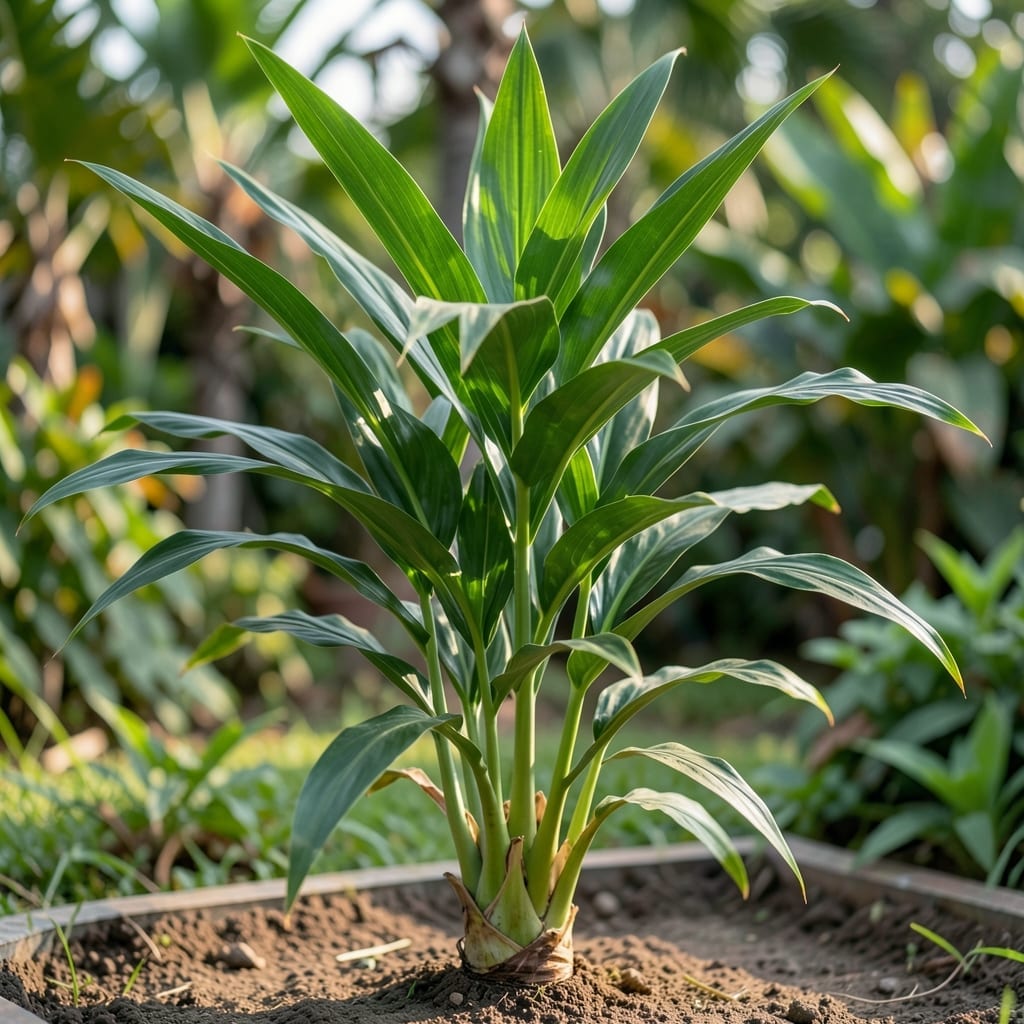
Ginger leaves give you two crops for the effort of one. I started growing it for the roots and discovered the foliage is just as valuable—fragrant, edible, and surprisingly ornamental.
Healthy leaves mean healthy rhizomes below. Give them warm shade, consistent moisture, and rich soil, and you’ll have lush green growth that tells you the roots are thriving too.
📚 In This Guide
Here’s my proven method for growing and harvesting ginger leaves with reliable results every time.
Choose fresh, plump ginger rhizomes with visible eye buds (small bumps where shoots emerge). I always pick pieces that feel firm and heavy for their size, avoiding any with wrinkled skin or soft spots. These buds are your starting point—without them, the rhizome won’t sprout.
Soak the selected rhizomes in lukewarm water overnight to hydrate the dormant buds and remove any growth inhibitors on the skin. This simple step can cut germination time in half. After soaking, pat them dry with a clean towel to prevent rot when planted.
Fill a shallow, wide container with rich potting mix that drains well—ginger despises soggy roots. I use a blend with 30% perlite or coarse sand to ensure excess water moves away quickly. The container should be at least 6 inches deep to accommodate root growth.
Lay the rhizomes horizontally just beneath the soil surface, with the eye buds facing upward. Cover them with ½ inch of soil—any deeper and the shoots may struggle to break through. Space pieces 4-6 inches apart to give each plant room to spread. Water lightly after planting to settle the soil.
Ginger thrives in warm, humid conditions with temperatures between 75-85°F. Place the container in a spot with bright, indirect light—direct sun can scorch the emerging leaves. A heated propagation mat can help maintain consistent soil warmth if your home runs cool.
Keep the soil consistently moist but never waterlogged. I check daily by pressing my finger ½ inch into the soil—if it feels dry, it’s time to water. Mist the surface lightly to maintain humidity without soaking the rhizomes. You’ll see the first green shoots pushing through in 2-4 weeks.
Once the plants reach 8-12 inches tall with multiple sets of leaves, you can begin harvesting. I use clean, sharp scissors to snip 1-2 leaves per stem, always cutting just above a node (the point where leaves or branches emerge). This encourages bushier growth and more leaves for future harvests.
Avoid removing more than 30% of the foliage at once, as this can stress the plant. The leaves have a mild ginger flavor, perfect for teas, stir-fries, or garnishes. Younger leaves are more tender, while mature ones develop a slightly spicier kick. Harvest in the morning for the best flavor and aroma.
To propagate new plants, carefully dig up a mature ginger clump after 6-8 months of growth. Gently separate the rhizomes, ensuring each piece has at least one healthy eye bud. Replant these sections immediately, following the same steps as your initial planting.
This method ensures a continuous supply of both leaves and rhizomes. I’ve found that ginger grown from propagated pieces establishes faster than from store-bought rhizomes, likely because they’re already adapted to your growing conditions. Keep the newly planted divisions in the same warm, humid environment to encourage quick sprouting.
Took me a while to figure these out, so here goes.
The Heat Factor: Maintain that 75-85°F range religiously in Step 3. I learned this the hard way after my first batch struggled in a cooler room. A propagation mat can save you from inconsistent results, especially in colder climates.
Planting Precision: In Step 2, that ½ inch soil coverage is non-negotiable. Any deeper and your shoots will waste energy pushing through. Also, that 6-inch container depth prevents root crowding—I once used a shallow pot and the rhizomes had nowhere to go.
Watering Wisdom: The finger test in Step 3 (pressing ½ inch into soil) is your best moisture gauge. Ginger hates soggy roots but will sulk if too dry. Mist daily to maintain humidity—this mimics its tropical origins.
Harvesting Strategy: For Step 4, morning harvesting isn’t just tradition. The leaves contain the most aromatic oils at dawn. And that 30% foliage limit? Critical. I over-harvested once and the plant took weeks to recover.
Yes! Ginger leaves are edible and often used in Asian cuisines. They have a mild, peppery flavor and can be finely chopped for soups, stir-fries, or teas. Ensure they’re fresh and free from pesticides.
Harvest ginger leaves when the plant is 4-6 months old, typically in late summer or early fall. Younger leaves are more tender, while mature leaves pack a stronger flavor.
If unavailable, try galangal leaves, lemongrass, or a pinch of ground ginger. For freshness, Thai basil or kaffir lime leaves can add a similar aromatic touch.
Yellowing leaves often indicate overwatering, poor drainage, or nutrient deficiency. Check soil moisture and ensure the plant has well-draining soil and adequate sunlight.