
Beautiful Plants For Your Interior
Beautiful Plants For Your Interior
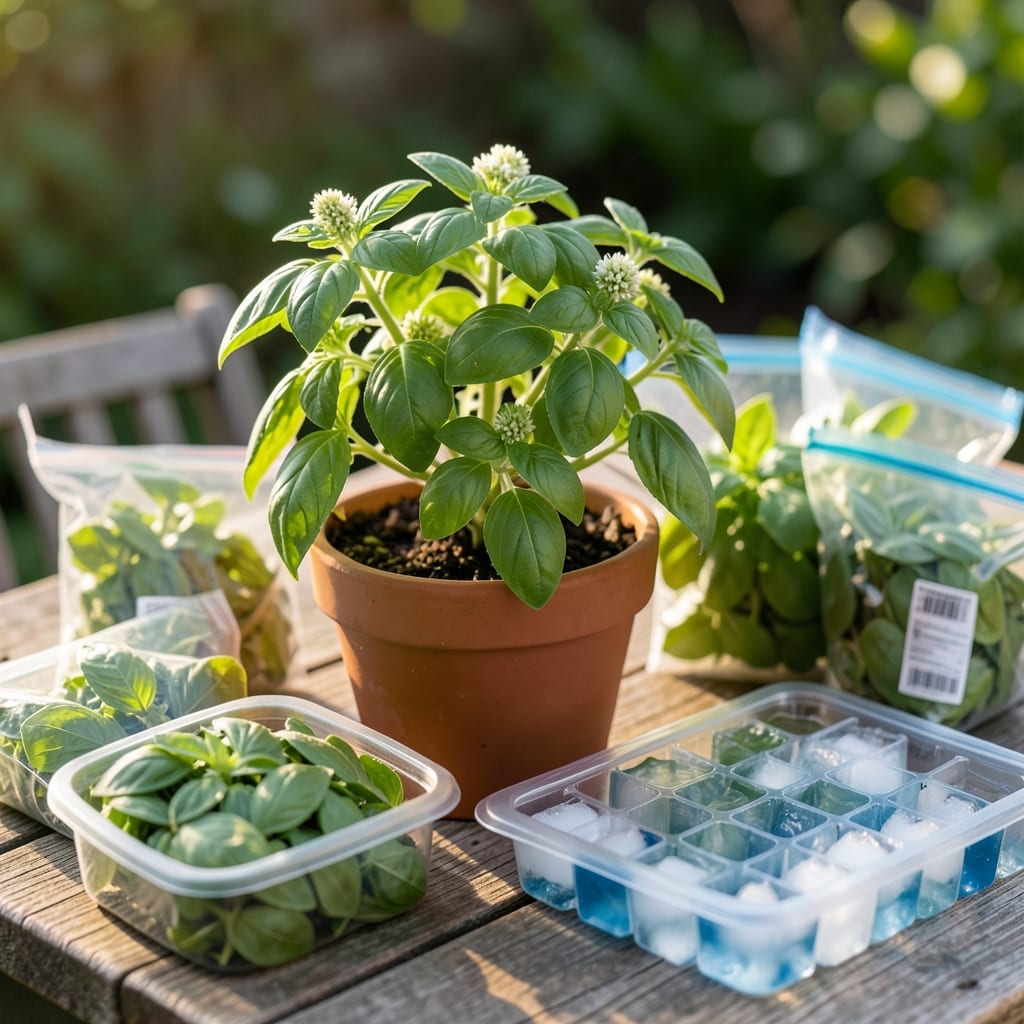
Last summer, I froze 20 cups of basil and used it all winter. This method locks in the summer-fresh flavor without fancy equipment or hours of prep time.
Perfect for gardeners drowning in harvest. You’ll have pesto-ready leaves ready in 5 minutes of prep, and they keep their color and taste for 6+ months in the freezer.
📚 In This Guide
This method locks in summer flavor perfectly, and I’ve used it for years without losing aroma or color.
Pick basil in the morning after the dew has dried but before the heat of midday. This is when the essential oils are most concentrated. Choose healthy, mature leaves without signs of wilting or yellowing. Avoid stems—they can turn bitter when frozen.
Rinse the leaves gently under cool water to remove dirt or insects, then pat them completely dry with a clean kitchen towel. Excess moisture causes ice crystals, which damage cell walls and lead to mushy leaves after thawing. I lay them out on a paper towel for 10-15 minutes to air-dry further.
Bring a pot of water to a rolling boil. While it heats, fill a large bowl with ice water. Working in small batches, submerge the leaves in boiling water for exactly 10-15 seconds. This process, called blanching, stops enzyme activity that would otherwise degrade color and flavor.
Immediately transfer the leaves to the ice water to halt the cooking process. Once cooled—usually after 1-2 minutes—remove and pat dry again. Skipping this step results in dark, dull leaves that lack freshness.
Lay the blanched leaves in a single layer on a baking sheet lined with parchment paper. Place the sheet in the freezer for 1-2 hours or until the leaves are firm to the touch. This initial freezing prevents them from sticking together in storage.
Transfer the frozen leaves to airtight containers or heavy-duty freezer bags, removing as much air as possible to prevent freezer burn. I portion them in 1/4 cup increments for easy use in recipes. Label each container with the date—frozen basil retains peak quality for 8-12 months.
Store the containers in the coldest part of the freezer, ideally at 0°F or below. Avoid placing them near the door, where temperature fluctuations can cause thawing and refreezing. This consistency preserves texture and prevents ice crystal formation.
When ready to use, remove the desired amount and add directly to hot dishes like soups, sauces, or stews—no need to thaw. For cold applications, such as pesto or salads, thaw the leaves in the refrigerator for 30-60 minutes and drain any excess liquid before using.
Small details make the difference between vibrant, fresh-tasting basil and a sad, mushy disappointment.
Timing Secret: Those 10-15 seconds in boiling water during Step 2 are non-negotiable. Any longer and you’ll cook the leaves, turning them dull and soft. I set a timer to ensure I don’t exceed 15 seconds—this brief blanch preserves color and halts enzyme activity without compromising texture.
Drying is Critical: In Step 1, the 10-15 minutes of air-drying after patting with a towel isn’t optional. Even a little moisture leads to ice crystals that rupture cell walls, leaving you with limp, waterlogged leaves. I use a salad spinner first, then spread them on paper towels to guarantee they’re bone dry.
Freezer Placement: The 1-2 hours on the baking sheet in Step 3 must happen in the coldest part of your freezer, ideally at 0°F or below. If your freezer door is warmer, the leaves won’t firm up evenly, and you’ll risk them clumping together when stored.
Portioning Wisdom: Labeling each container with the date ensures you use the oldest basil first. Since frozen basil retains peak quality for 8-12 months, this practice prevents waste and guarantees you always have the best flavor on hand.
Yes! Basil leaves can be frozen raw. Simply wash, dry thoroughly, and place them in a single layer on a tray before transferring to a freezer bag. Blanching (dipping in boiling water) is optional but helps preserve color and texture.
Frozen basil stays fresh for up to 6 months in an airtight container. For best flavor, use within 3-4 months. Label your storage with the date to keep track!
Yes, they may darken due to oxidation, but they’re still safe to eat. To minimize discoloration, blanch briefly or toss leaves in a little lemon juice or olive oil before freezing.
Absolutely! Frozen basil works great in pesto, soups, sauces, or stews. Avoid using it raw in salads, as freezing softens the texture. Thaw only what you need for recipes.