
Beautiful Plants For Your Interior
Beautiful Plants For Your Interior
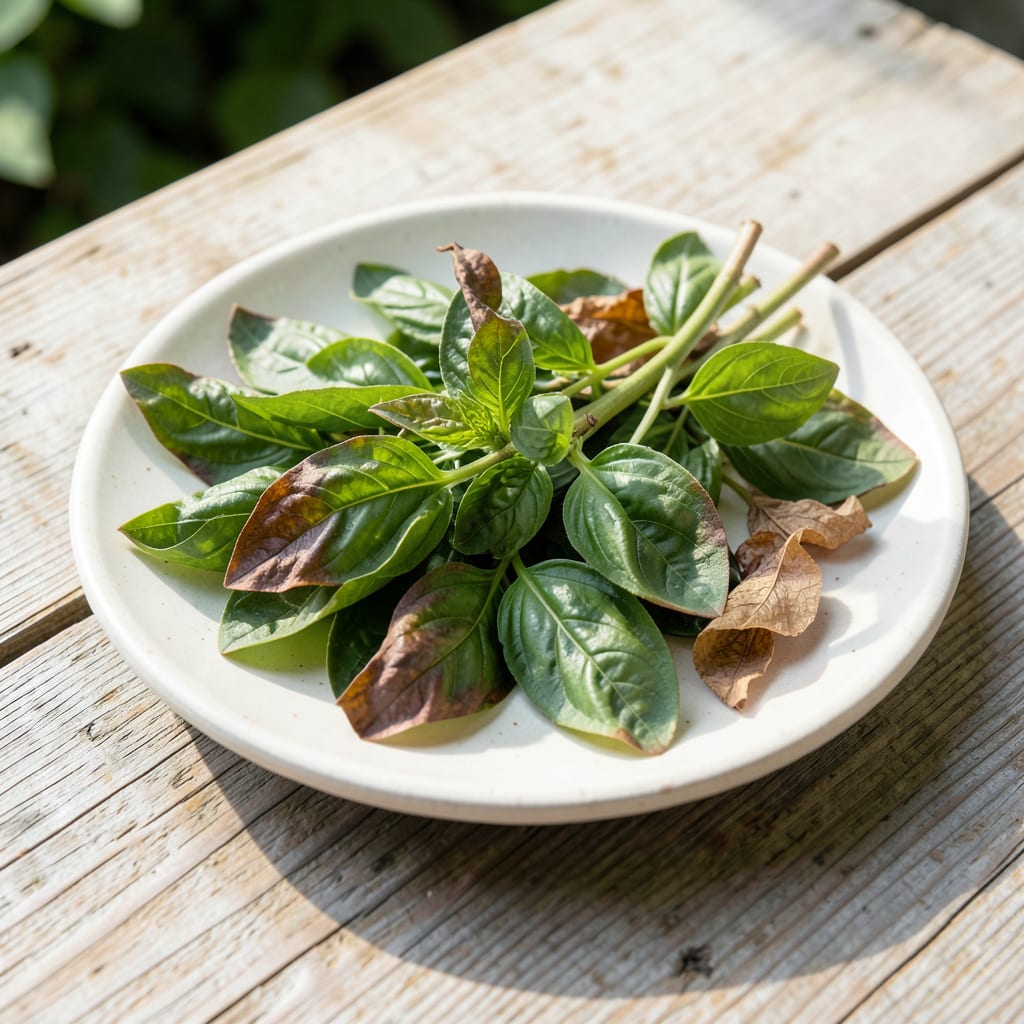
Brown spots on your basil leaves don’t always mean the whole plant is done for. I’ve saved plenty of basil by figuring out what’s causing the issue before it spreads.
Sometimes it’s too much water, other times it’s pests or a fungus setting in. The good news is, you can often fix it with a few simple adjustments to your care routine.
Not all brown leaves are unsafe—some are just stressed. But if the damage is widespread or the leaves feel slimy, it’s best to toss them and focus on saving the rest.
Here’s how to diagnose the problem and keep your basil healthy and productive for the rest of the season.
Basil leaves turning brown can be alarming, but understanding the root causes helps you prevent it—and decide if the leaves are still safe to consume. Here’s why it happens:
Basil thrives in warm, consistent temperatures (70–90°F). Exposure to cold drafts (below 50°F) or heat spikes (above 90°F) disrupts cellular function, leading to brown, crispy edges or full leaf browning. Cold stress causes chlorosis (loss of chlorophyll), while heat stress accelerates water loss, resulting in scorching.
Overwatering suffocates roots, promoting fungal growth (e.g., Fusarium or Rhizoctonia) that turns leaves brown from the bottom up. Underwatering, meanwhile, causes xylem failure—the plant’s water transport system collapses, leading to dry, brittle browning starting at the tips.
Pathogens like Downy Mildew (Peronospora belbahrii) or Bacterial Leaf Spot (Pseudomonas cichorii) create dark brown or black spots with yellow halos. These thrive in humid, poorly ventilated conditions and spread rapidly, often rendering leaves unsafe to eat.
While basil loves sunlight, intense, direct UV rays (especially in midday heat) can bleach and burn leaves. This appears as white or tan patches that later turn brown. Indoor plants near south-facing windows are particularly vulnerable.
A deficiency in potassium, magnesium, or calcium can cause interveinal browning (between leaf veins). Conversely, excess fertilizer (especially nitrogen-heavy) leads to salt burn, where leaf margins turn brown and crisp due to osmotic stress.
If your basil leaves are turning brown, don’t panic—most cases are fixable with a few simple adjustments. Below are targeted solutions for the most common causes, along with prevention tips to keep your plant thriving.
Basil loves warmth but can scorch in intense sunlight. Move potted basil to a spot with bright, indirect light (4–6 hours of morning sun is ideal). For garden plants, use shade cloth during peak afternoon hours. Prevention tip: 💡 Acclimate basil gradually to outdoor conditions if moving it from indoors.
Brown, crispy edges often signal underwatering. Check soil moisture 1 inch deep—if dry, water thoroughly at the base (avoid wetting leaves). Overwatering causes yellowing first, but prolonged soggy soil can lead to brown, mushy leaves. Fix: Let the topsoil dry slightly between waterings, and ensure pots have drainage holes. Prevention tip: 🌱 Use a well-draining potting mix with perlite.
Brown spots with yellow halos? It’s likely fungal leaf spot. Remove affected leaves immediately and avoid overhead watering. Spray remaining foliage with a baking soda solution (1 tsp baking soda + 1 quart water + a drop of dish soap). For bacterial leaf spot, prune infected parts and disinfect tools with rubbing alcohol. Prevention tip: ✨ Space plants for airflow and water early in the day.
Brown tips may indicate salt buildup from tap water or over-fertilizing. Flush the soil with distilled water to leach excess salts. Switch to filtered or rainwater for watering. Prevention tip: 🎯 Fertilize lightly (half-strength liquid fertilizer every 4–6 weeks).
Pests like aphids or spider mites can cause brown, curled leaves. Blast off pests with a strong water spray, or apply neem oil (mix 1 tsp oil + 1 quart water + ½ tsp dish soap). Prevention tip: 🔍 Inspect leaves weekly and introduce beneficial insects like ladybugs.
Note: If only a few leaves are brown and the rest look healthy, you can trim the damaged parts and use the remaining leaves—they’re safe to eat as long as there’s no mold or slimy texture.
Check for slimy texture or mold—these mean discard. If leaves are just dry and crispy from underwatering or sunburn, they’re safe if the rest of the plant looks healthy.
This is usually a fungal or bacterial infection. Remove affected leaves immediately and avoid overhead watering. These leaves are not safe to eat once infected.
Only if the browning is from environmental stress (not disease). Trim off the brown parts and use the green portions. Avoid leaves with odd textures or strong odors.
Yes! Remove damaged foliage to redirect energy to healthy growth. Use clean scissors and cut just above a leaf node. This also improves air circulation.
