
Beautiful Plants For Your Interior
Beautiful Plants For Your Interior
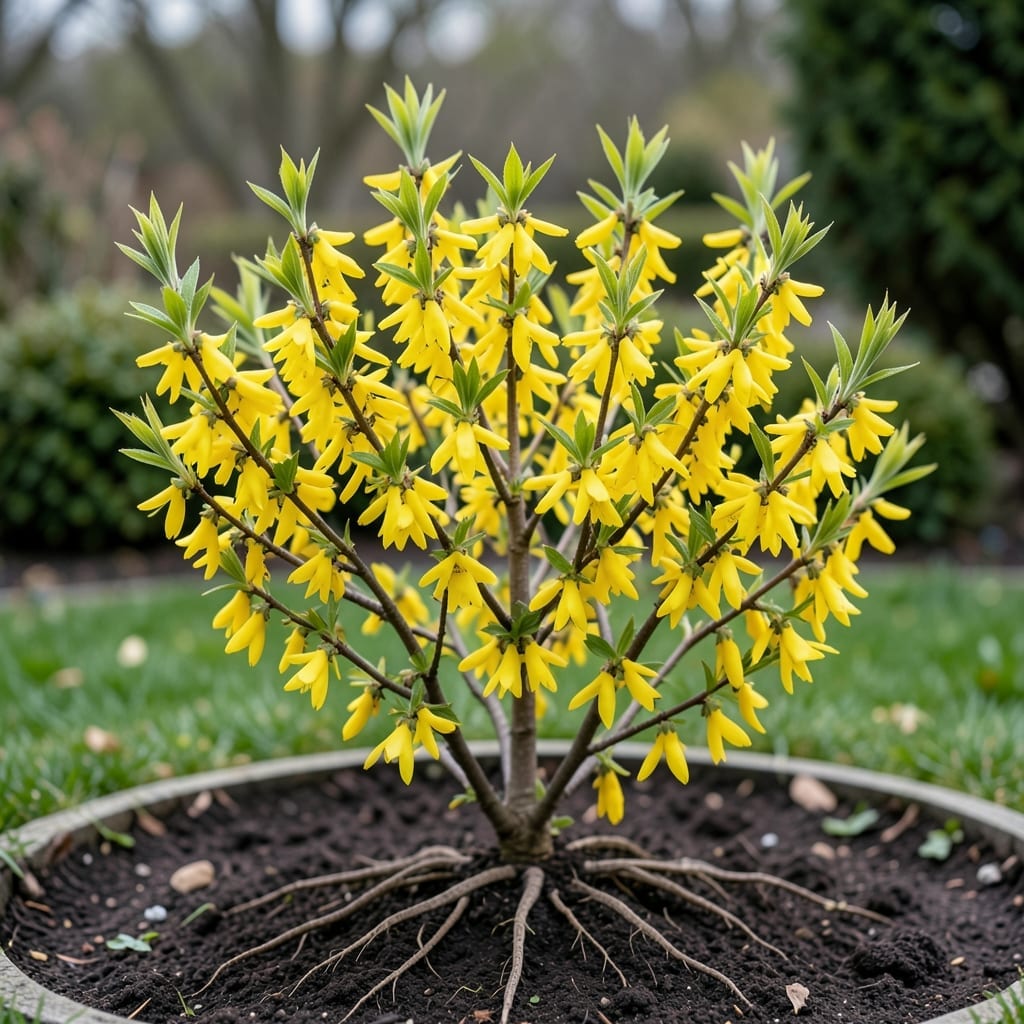
Forsythia roots run shallow but spread wide—often 2-3 feet beyond the shrub’s edge. This surprises most gardeners expecting deep taproots.
Understanding this pattern helps with proper spacing, planting depth, and avoiding root competition. Healthy shrubs start with healthy roots, and these plants reward good care with vibrant spring blooms.
📚 In This Guide
Understanding what’s happening below ground is the key to keeping these shrubs vigorous and long-lived.
Forsythia develops an extensive fibrous root system rather than a deep taproot. This network of fine, branching roots spreads widely just beneath the soil surface, typically within the top 12-18 inches of soil. I’ve observed this in my own garden where mature shrubs maintain stability without deep anchoring.
The fibrous nature means these roots are incredibly efficient at absorbing water and nutrients from a broad area. This explains why established forsythia can tolerate brief droughts better than many garden plants. You’ll notice the surface roots become more pronounced as the shrub matures.
Real talk: This shallow rooting habit makes forsythia particularly sensitive to soil compaction. Avoid heavy foot traffic around the base, as compacted soil restricts root expansion and water penetration.
The root system often extends well beyond the shrub’s canopy, sometimes reaching 1.5 to 2 times the width of the above-ground growth. In my experience, a 6-foot-wide forsythia may have roots exploring an 8-12 foot diameter underground.
This wide spread is why forsythia does so well in mass plantings for erosion control. The interlocking root systems from multiple shrubs create a living net that holds soil effectively. You’ll see this in action on slopes where forsythia hedges prevent soil washout during heavy rains.
Here’s the thing—this lateral spread means you should plant new shrubs at least 4-6 feet apart to prevent root competition. Closer spacing leads to stunted growth as the root systems battle for resources.
Forsythia roots exhibit two primary growth flushes: one in early spring as temperatures rise, and another in early fall before dormancy. During these periods, the fine feeder roots become particularly active, absorbing nutrients to support the shrub’s vigorous growth.
I’ve found that spring is when the root system expands most dramatically. This is why I always apply compost or mulch in early spring—it provides fresh nutrients just as the roots are gearing up for growth. The fall flush helps the plant store energy for winter and next year’s bloom.
Don’t skip this (I learned the hard way): Avoid major pruning or transplanting during these active growth periods. Disturbing the roots when they’re rapidly expanding can set back the shrub’s development significantly.
Because the roots are shallow, soil conditions near the surface are critical. Forsythia thrives in well-draining soil with a pH between 6.0 and 7.5. I test my soil annually and amend with lime if it becomes too acidic, as this can inhibit nutrient uptake.
The shallow root system also means these shrubs benefit enormously from mulching. I maintain a 2-3 inch layer of organic mulch around the base, keeping it a few inches away from the stems to prevent rot. This moderates soil temperature and retains moisture where the roots can access it.
This is the moment that matters: During prolonged droughts, water deeply at the dripline rather than near the trunk. This encourages roots to spread outward, creating a more stable and drought-resistant plant.
These insights will help you nurture the most robust root system for your shrubs.
Root Depth Awareness: Remember that the fibrous roots stay within the top 12-18 inches of soil. This means surface-level care is critical—avoid deep cultivation that could damage this vital network. I’ve seen gardens where shallow, careful tending makes all the difference.
Spacing Strategy: Given the roots can spread 1.5 to 2 times the width of the shrub’s canopy, planting new shrubs 4-6 feet apart prevents competition. In my garden, a 6-foot-wide forsythia has roots reaching an 8-12 foot diameter, so proper spacing ensures each plant thrives without fighting for resources.
Seasonal Care Timing: The two growth flushes in early spring and early fall are when roots are most active. Avoid pruning or transplanting during these periods, as disturbing the roots then can stunt development. I learned this the hard way after setting back a shrub by pruning at the wrong time.
Soil and Mulch Maintenance: With shallow roots, maintaining a pH between 6.0 and 7.5 and a 2-3 inch layer of organic mulch is non-negotiable. This keeps the soil environment stable, moist, and nutrient-rich where the roots need it most. I test my soil annually to ensure it stays in this optimal range.
Forsythia roots generally grow 12–18 inches deep, with a wide-spreading network that can extend beyond the shrub’s canopy. This shallow but expansive system helps stabilize the plant while absorbing water and nutrients efficiently.
Forsythia roots are not aggressive like invasive species (e.g., bamboo). However, if planted too close to structures, their spreading roots may cause minor cracks over time. Keep them at least 6–10 feet away from foundations or pavements.
Late fall or early spring (dormant seasons) is ideal for transplanting. This timing reduces stress on the root system, allowing it to establish in cooler, moist conditions before active growth resumes.
Yellowing leaves, stunted growth, or wilting can indicate root issues like rot or poor drainage. Check for soggy soil or visible root decay, and adjust watering or soil conditions to revive the plant.
Yes! Shrubs like potentilla or spirea have comparable root depths and spread while being more drought-resistant. They’re great low-maintenance options for similar landscapes.