
Beautiful Plants For Your Interior
Beautiful Plants For Your Interior
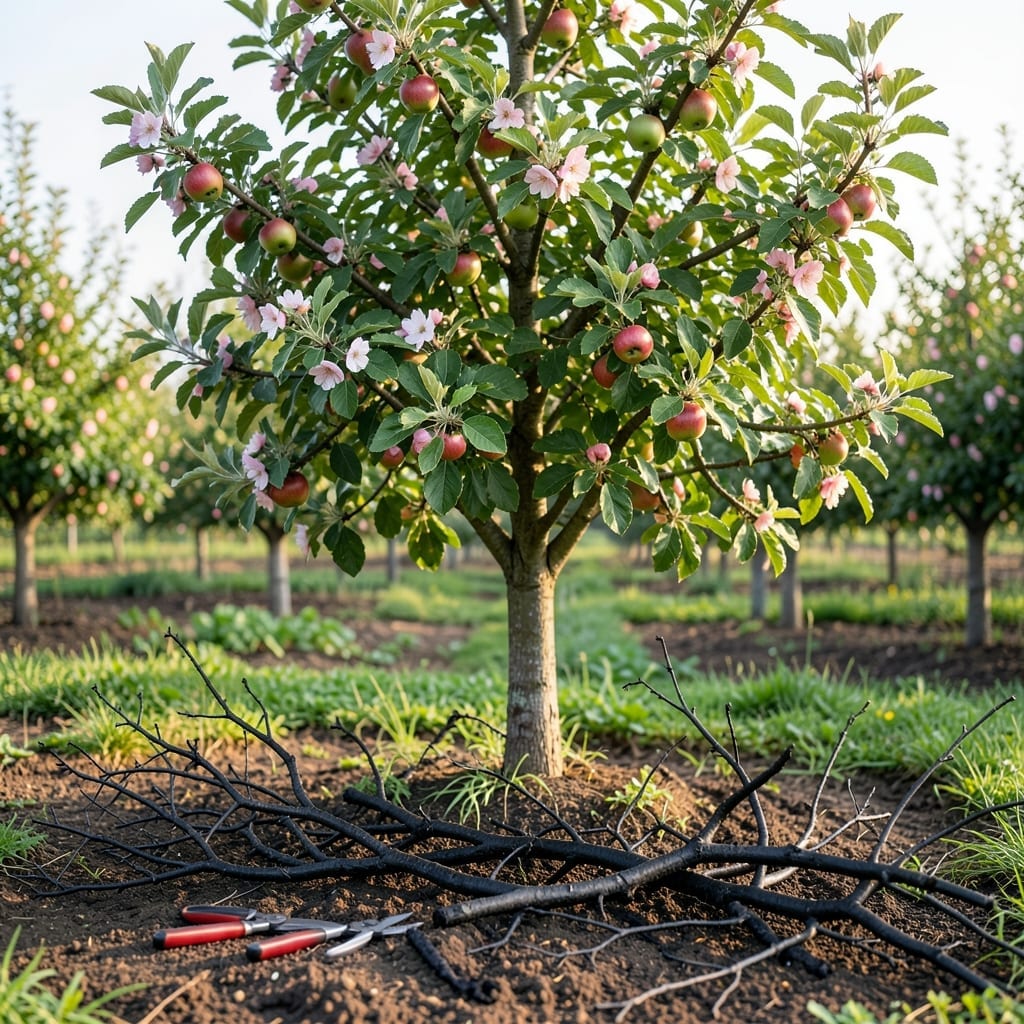
That first brown, withered branch last spring nearly broke my heart. Fire blight moves fast, turning healthy apple trees into skeletal remains if left unchecked. I learned the hard way that early action is everything.
Pruning infected wood 12-18 inches below visible damage stops the spread. Sanitizing tools between cuts prevents reinfection. The difference between a dying tree and a saved one often comes down to these two steps.
Left untreated, the disease spreads through the vascular system, killing branches and eventually the entire tree. With prompt treatment, most trees recover fully within a season, producing healthy fruit the following year.
Works for young saplings and mature orchards alike. Here’s how to fight back effectively.
Fire blight, a destructive disease affecting apple trees, is primarily caused by the bacterium Erwinia amylovora. This pathogen thrives in warm, wet conditions, making spring the peak season for infections. Below are the key causes behind its occurrence:
Warm temperatures (65–80°F) combined with rain or high humidity create the perfect environment for E. amylovora to spread. The bacteria enter through natural openings like flowers, wounds, or pruning cuts, especially during blooming seasons.
The bacteria can overwinter in cankers (sunken, diseased areas) on branches or trunks. Pruning tools, insects, or even wind can spread the pathogen from these infected tissues to healthy parts of the tree or neighboring plants.
Bees and other pollinators play a role in transmitting the bacteria as they move from infected flowers to healthy ones. This is why fire blight often starts in blossoms before spreading to shoots and branches.
Improper pruning, such as making cuts during wet weather or using contaminated tools, can introduce or spread the bacteria. Always sterilize pruning tools with a 10% bleach solution or rubbing alcohol between cuts to prevent contamination.
Fire blight can be managed with the right approach. Below are actionable solutions mapped to specific causes, along with prevention tips to keep your apple trees healthy.
Remove affected branches immediately to stop the spread. Cut at least 8–12 inches below visible damage, and sterilize pruning tools with 70% isopropyl alcohol between cuts. Thin out dense growth to improve airflow, which reduces humidity—a key factor in fire blight development.
Use streptomycin or copper-based sprays during bloom or when conditions favor infection (temperatures between 60–80°F with rain or dew). Reapply after heavy rain. Note: Rotate bactericides to prevent resistance.
💡 Pro Tip: Avoid high-nitrogen fertilizers in early spring, as they promote tender new growth that’s more susceptible.
Disinfect pruning shears, saws, and even gloves with bleach (1:10 dilution) or rubbing alcohol after each use. Avoid working on trees when they’re wet, as this spreads bacteria through open wounds.
✨ Key: Consistency is critical—fire blight thrives on neglect but falters with vigilance!
There’s no cure, but early pruning and sanitizing can stop its spread. Remove infected branches 8–12 inches below visible damage and sterilize tools between cuts.
Prune during dry weather to prevent spreading bacteria. Avoid wet conditions, as moisture helps the disease move through open wounds.
Yes! Cultivars like Liberty and Akane are bred for resistance. Planting these reduces risk, but vigilance is still key.
Look for blackened, withered branches and oozing cankers. Blossoms may turn brown and remain attached. Early signs often appear in spring.