
Beautiful Plants For Your Interior
Beautiful Plants For Your Interior
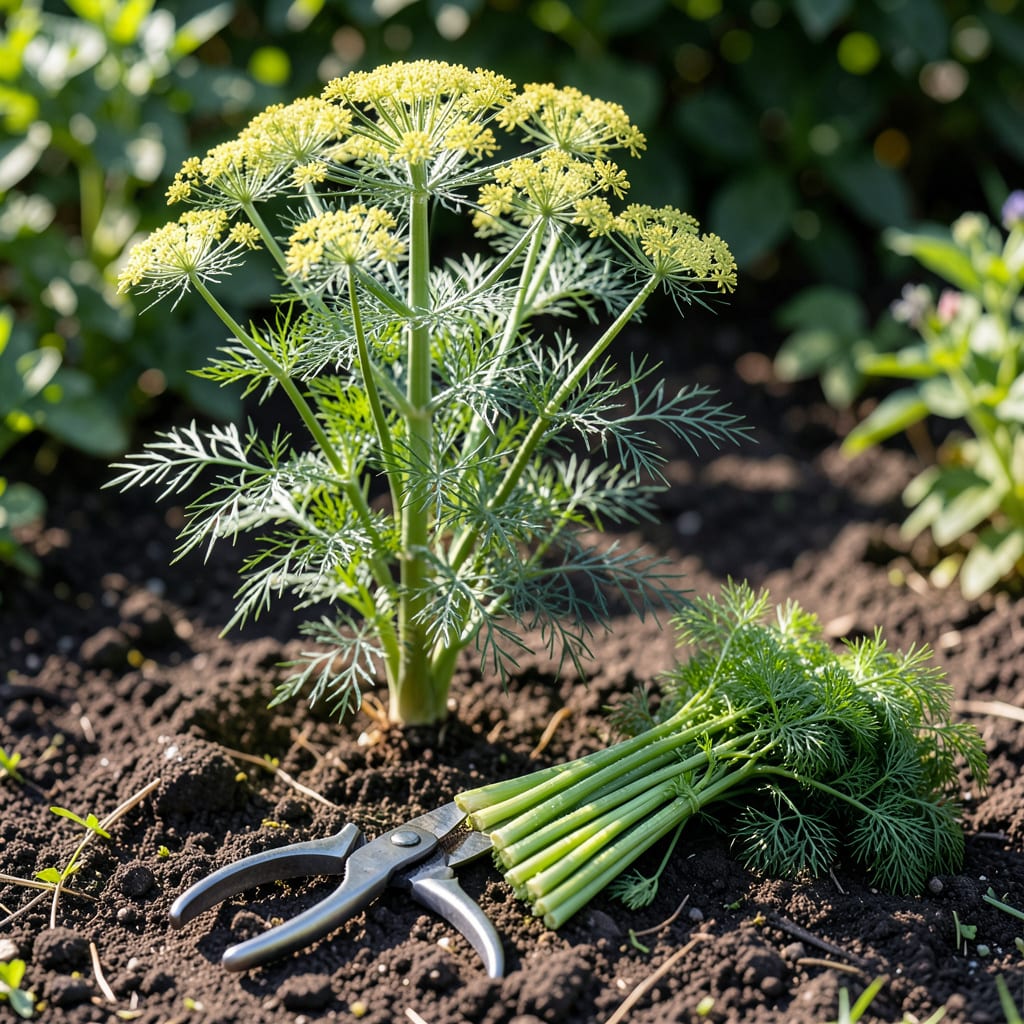
Struggling with wispy, sparse 🌿 Dill plants that just won’t fill out? The trick to transforming them into lush, productive herbs is all in your pruning technique.
I’ve discovered that harvesting at the right time and in the right way can actually stimulate bushier growth. Let me show you how to do it properly.


Timing is everything when harvesting dill to promote growth. I always start when my plants reach 12-18 inches tall, with vibrant green leaves. This is the sweet spot when they can handle pruning while encouraging new shoots.
Early morning is the best time to harvest, as the essential oils are most concentrated. This also gives the plant time to recover during the day, reducing stress and promoting lateral growth.
When I harvest, I focus on the outer stems first. This allows the center of the plant to keep growing and producing new foliage. Always cut just above a leaf node to encourage branching from that point.
Using sharp tools is non-negotiable. Dull scissors can crush stems, making the plant more susceptible to disease. I keep a pair of bypass pruners dedicated just for my herbs to ensure clean cuts every time.
A 45-degree angle cut might seem like a small detail, but it makes a big difference. This angle helps water run off the stem rather than pooling, which can lead to rot. It’s a simple step that protects your plant’s health.
Never remove more than one-third of the plant in a single harvest. Over-harvesting stresses the dill and can stunt its growth. I like to take a little from each plant in my garden, rotating which ones I prune each time.
Regular harvesting is key to a bushy dill plant. I aim to prune every 2-3 weeks during the growing season. This consistent attention signals the plant to keep producing new stems and leaves, rather than focusing on flowering.
If you notice your dill starting to flower, it’s time to act. Pinching off the flower buds early redirects the plant’s energy back into leaf production. This keeps your harvests lush and leafy for much longer.
Finally, always observe your plants after harvesting. Healthy dill should show new growth within a week. If you don’t see this, you might be pruning too heavily or at the wrong time of day.
✂️Even with good intentions, it’s easy to make pruning mistakes that can harm your dill plants. One of the most common errors I see is over-harvesting, which can shock the plant and stunt its growth.
Another frequent misstep is cutting at the wrong node. If you snip below a leaf node instead of above it, you’re actually removing potential growth points rather than encouraging new ones.
Using dull tools is another mistake that can cause more harm than good. When you use dull scissors or pruners, you’re more likely to crush the stems rather than make a clean cut, which can invite disease.
Timing matters too. I’ve learned that harvesting during the hottest part of the day can stress the plant. Early morning is ideal, as the plant has time to recover during the cooler parts of the day.
Some gardeners make the mistake of ignoring flower buds. If you want to maximize leaf production, it’s crucial to pinch off these buds as soon as you see them. Otherwise, the plant will focus its energy on flowering rather than growing new leaves.
Lastly, remember that consistency is key. Irregular harvesting can lead to uneven growth. I recommend setting a regular pruning schedule every 2-3 weeks to maintain healthy, bushy plants.
✂️Not all dill varieties respond the same to pruning. I’ve found that choosing the right type can make a big difference in how bushy and productive your plants become after harvesting.
Some varieties are naturally more compact, making them ideal for container gardening, while others grow taller and benefit from more aggressive pruning to maintain their shape and encourage lateral growth.
| Variety | Growth Habit | Harvesting Tip |
|---|---|---|
| Bouquet | Compact, bushy | Prune outer stems weekly |
| Fernleaf | Dwarf, slow bolting | Harvest lightly every 2 weeks |
| Mammoth | Tall, vigorous | Prune top third regularly |
Bouquet dill is my top pick for container gardens. Its naturally bushy growth habit responds beautifully to regular pruning, making it perfect for small spaces where you want maximum leaf production.
Fernleaf dill stays compact and is slower to bolt, which means you can enjoy its leaves for longer. I recommend a gentler harvesting approach with this variety, as it’s more sensitive to over-pruning.
For garden beds, Mammoth dill is a great choice. It grows tall quickly, so I prune it more aggressively, focusing on the upper third of the plant to encourage branching and prevent it from becoming too leggy. ✂️
Prune every 2-3 weeks during the growing season. This regular schedule encourages continuous new growth and prevents the plant from becoming leggy or flowering prematurely.
Cutting just above a leaf node stimulates new shoots to grow from that point. If you cut below it, you remove potential growth sites, which can stunt the plant’s development.
Yes, but the leaves may taste bitter. For the best flavor, pinch off flower buds early to redirect the plant’s energy into producing tender, aromatic foliage.
Early morning is ideal. The essential oils are most concentrated then, and the plant has the rest of the day to recover from the stress of pruning.
