
Beautiful Plants For Your Interior
Beautiful Plants For Your Interior
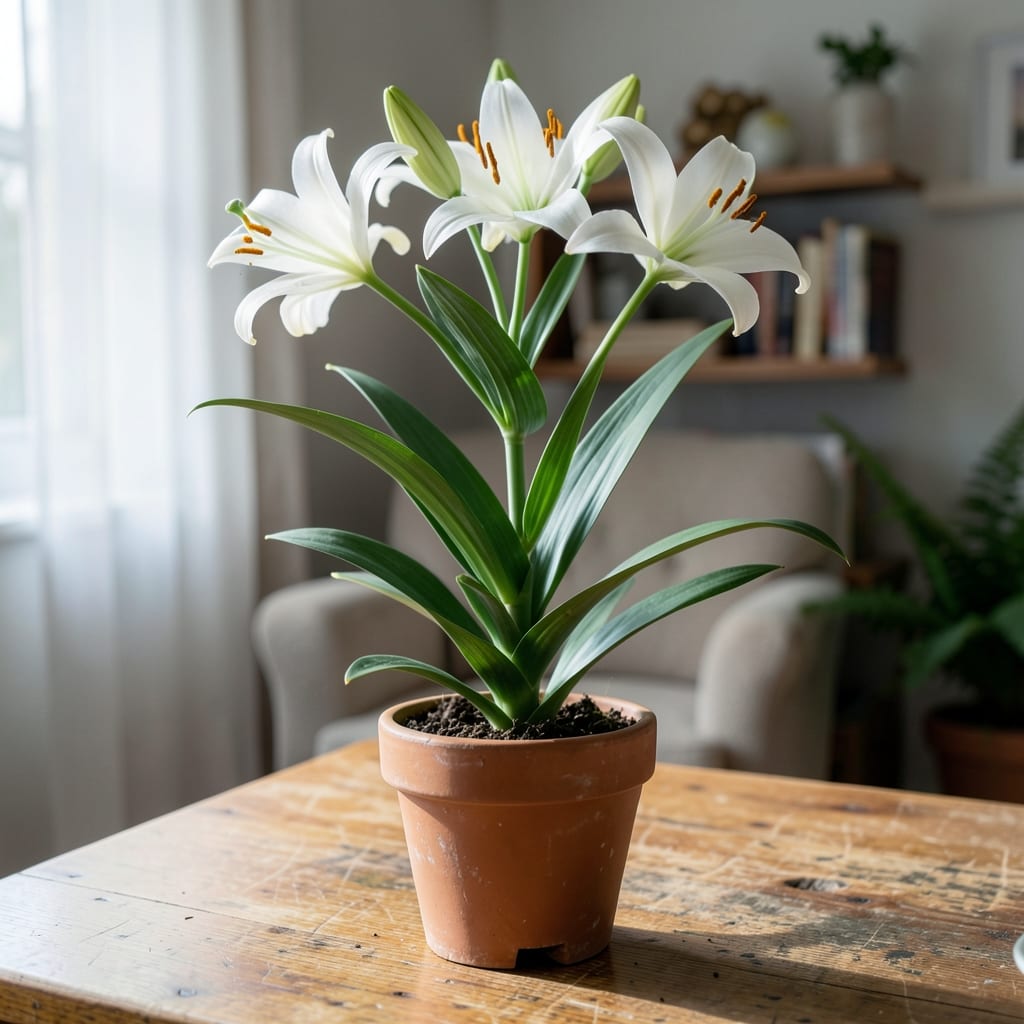
Those pure white trumpets in spring never fail to impress. I’ve found Easter lilies thrive with just a little extra attention to their growing conditions.
They need well-draining soil, 6-8 hours of sunlight, and consistent moisture. The reward is stunning, fragrant blooms that light up your garden or home.
📚 In This Guide
Here’s the refined method I use to cultivate these elegant plants with minimal fuss and maximum impact.
Easter white lilies thrive in well-draining soil with a pH between 6.0 and 6.5. I always select a location that receives partial to full sun, as these plants need at least 6 hours of sunlight daily to produce their iconic blooms. Avoid low-lying areas where water pools—root rot is a silent killer here.
Amend the soil with organic matter like compost or well-rotted manure to improve fertility and drainage. Work it into the top 12 inches of soil. If your soil is heavy clay, consider planting in raised beds or containers to ensure proper drainage. A light, loose soil encourages strong root development.
Plant bulbs in early spring or fall, placing them 4-6 inches deep and spacing them 12-18 inches apart. I dig the hole three times the depth of the bulb to allow room for root expansion. Place the bulb with the pointed end facing upward—this ensures the shoot emerges in the right direction.
Backfill the hole with soil and water thoroughly to settle the earth and eliminate air pockets. Mulch with 2-3 inches of organic material, like straw or shredded bark, to retain moisture and suppress weeds. Keep the soil consistently moist but not waterlogged, especially during the first few weeks after planting.
Water the plants deeply once a week, or more often during dry spells. I check the soil moisture by sticking my finger 1 inch deep—if it feels dry, it’s time to water. Avoid wetting the foliage to reduce the risk of fungal diseases. Easter lilies are relatively drought-tolerant once established, but consistent moisture is key during the growing season.
Fertilize lightly with a balanced, water-soluble fertilizer every 4-6 weeks during the growing season. I stop fertilizing once the plants begin to bloom, as over-fertilizing can lead to excessive foliage at the expense of flowers. Stake tall varieties if needed to prevent them from toppling over in wind or rain.
Watch for common pests like aphids, lily beetles, and slugs. I inspect the plants regularly, especially the undersides of leaves, for signs of infestation. A strong blast of water can dislodge aphids, while handpicking or neem oil works for beetles. Slugs are best controlled with organic baits or barriers like copper tape.
Fungal diseases such as botrytis and powdery mildew can be problematic in humid conditions. Ensure good air circulation around the plants by spacing them properly and avoiding overhead watering. Remove and destroy any infected foliage immediately to prevent the spread of disease. A preventive spray of fungicide can also help, especially in wet seasons.
Deadhead spent blooms to encourage the plant to redirect its energy into bulb growth rather than seed production. However, do not remove the foliage until it turns yellow and dies back naturally—this process allows the bulb to store energy for the next growing season. I mark the location of the bulbs to avoid accidentally digging them up during other garden tasks.
In colder climates, apply a thick layer of mulch, about 4-6 inches, over the planting area after the first frost to protect the bulbs from freezing temperatures. Easter lilies are hardy in USDA zones 4-8, but a little extra protection ensures they’ll return year after year with vibrant, pristine blooms.
Small adjustments make a big difference when cultivating these elegant flowers.
Soil Preparation: Work that organic matter deep—those 12 inches of amended soil create the perfect foundation. Confession: I skipped this step once and spent the season battling waterlogged roots. A light, loose texture prevents bulb rot and encourages robust growth.
Sunlight Strategy: That 6 hours of daily sun isn’t negotiable for pristine blooms. I learned this the hard way after planting in partial shade and getting leggy stems with sparse flowers. South-facing spots work best, but east or west exposure can work if it meets the minimum.
Planting Depth: The 4-6 inches depth rule exists for a reason. Too shallow and bulbs dry out; too deep and they struggle to emerge. I dig each hole three times the bulb’s height, which gives roots room to expand without the shoot getting lost underground.
Winter Protection: That 4-6 inches of mulch after first frost saved my bulbs during an unexpected cold snap. In USDA zones 4-8, this extra layer acts like a blanket, preventing freeze-thaw cycles that can heave bulbs out of the soil.
Plant bulbs in early spring (March-April) for summer blooms, or fall for the following year. They thrive in well-drained soil with full sun to partial shade.
Keep soil moist but not soggy, and place in bright, indirect light. After blooming, reduce watering and move to a cooler spot to encourage dormancy.
Yes! All parts of the plant are highly toxic to cats and dogs. Keep them out of reach or opt for pet-safe alternatives like orchids.
Overwatering or poor drainage is often the culprit. Check soil moisture and ensure pots have drainage holes. Yellowing can also signal nutrient deficiencies.
Yes, but they prefer cool temperatures (60-65°F at night). Use a well-draining potting mix and provide bright light. They may need stakes for support as they grow.