
Beautiful Plants For Your Interior
Beautiful Plants For Your Interior
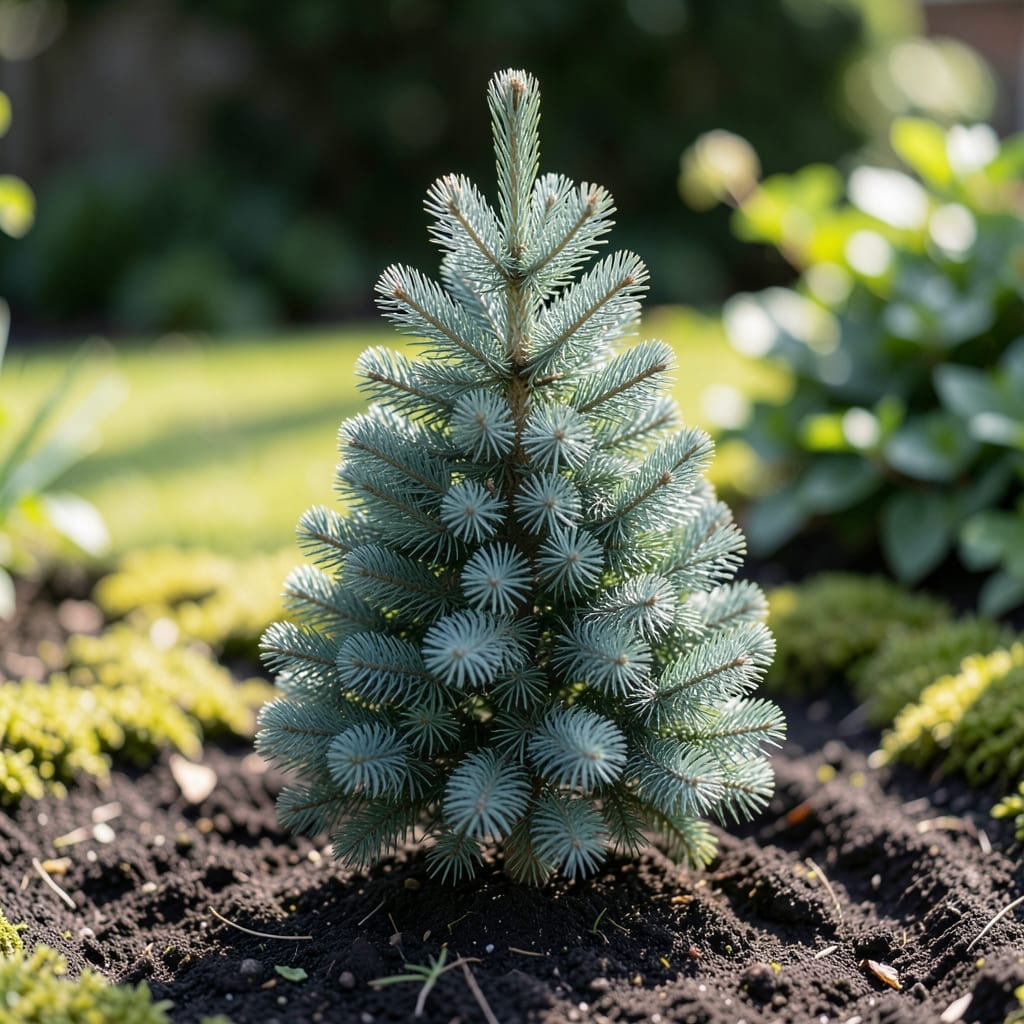
I planted my first dwarf white spruce ten years ago, and it’s still the most reliable plant in my yard. This compact evergreen stays lush green all winter, no matter how harsh the weather gets.
It thrives in full sun with minimal care, growing just a few inches each year. Perfect for small spaces, borders, or as a low-maintenance focal point that never needs pruning.
📚 In This Guide
Here’s the method I trust to establish vibrant, healthy evergreens that thrive for years.
Choose a spot with full sun to partial shade—dwarf white spruce tolerates some afternoon shade but grows best with at least 6 hours of direct sunlight daily. I always check the area at different times to confirm it gets consistent light without deep shadows from buildings or trees.
Avoid low-lying areas where cold air settles, as this can damage the foliage in winter. The soil should drain well; if water pools after a rain, pick another location or amend the soil with organic matter to improve drainage. A slight slope works perfectly for this evergreen.
Dig a hole that’s twice as wide as the root ball but no deeper. A wider hole loosens the surrounding soil, making it easier for roots to spread outward. I use a shovel to create clean edges, which helps prevent soil from collapsing back into the hole.
If the soil is heavy clay, mix in a little compost to improve texture and fertility. Don’t add fertilizer at planting time—it can burn the roots. Instead, rely on the existing soil structure and save the fertilizer for the following spring when the plant is established.
Carefully remove the spruce from its container and gently loosen any circled roots to encourage outward growth. Place the root ball in the hole so the top sits 1-2 inches above the surrounding soil level—this prevents settling and ensures proper drainage.
Backfill the hole with native soil, pressing lightly to remove air pockets. I firm the soil around the base with my hands, but avoid compacting it too tightly. Water deeply right after planting to settle the soil and eliminate any remaining air gaps around the roots.
Apply a 2-3 inch layer of organic mulch, such as bark chips or pine needles, around the base of the plant. Keep the mulch 3-4 inches away from the trunk to prevent rot and deter pests. Mulch conserves moisture and regulates soil temperature, which is especially helpful in the first year.
Water the spruce deeply once a week during the first growing season, unless rainfall provides 1 inch of water per week. After establishment, dwarf white spruce is quite drought-tolerant, but consistent moisture in the first year ensures a strong root system. I always check the soil 2 inches down—if it feels dry, it’s time to water.
Inspect the spruce regularly for signs of stress, such as yellowing needles or slow growth. If you notice these issues, check for pests, disease, or improper watering. Dwarf white spruce is generally low-maintenance but benefits from an annual application of balanced fertilizer in early spring.
In late winter, protect the plant from heavy snow loads by gently brushing off excess snow to prevent branch breakage. Pruning isn’t typically necessary, but if shaping is desired, trim in early spring before new growth starts. Always use clean, sharp tools to avoid damaging the plant.
These small adjustments in planting and care will make a noticeable difference in your spruce’s health and appearance.
The Sunlight Factor: That 6 hours of direct sunlight mentioned in Step 1 isn’t just a suggestion—it’s essential for vibrant growth. If your yard has limited sun, prioritize morning light over afternoon, as it’s gentler on the foliage. I’ve found that east-facing spots work beautifully when full sun isn’t available.
Soil Preparation Insight: When digging that hole in Step 2, remember that “twice as wide” really does matter. The wider area gives roots room to expand into loose soil, which is especially important if your native soil is heavy clay. Don’t go deeper than the root ball, though—this can actually suffocate the roots over time.
Planting Height Secret: The instruction in Step 3 to place the root ball 1-2 inches above soil level is your insurance against settling. I learned this the hard way when my first spruce ended up in a slight depression after a few rains. That small elevation prevents water from pooling around the trunk.
Watering Wisdom: The 2 inches down soil check from Step 4 is more reliable than any schedule. In hot climates, you might need to water twice a week, while cooler areas could go longer between waterings. Always water deeply—light sprinkles encourage shallow roots.
Dwarf white spruce grows slowly, averaging 2–4 inches per year. It typically reaches 3–5 feet tall and wide at maturity, making it ideal for small spaces. Expect full maturity in 10–15 years with proper care.
Plant in full sun to partial shade and well-drained, slightly acidic soil. Avoid waterlogged areas. It thrives in USDA zones 2–6 and tolerates cold climates well. Mulch to retain moisture.
Water deeply 1–2 times per week for the first year, then reduce to weekly or biweekly. Ensure the soil stays moist but not soggy. Drought-tolerant once established, but consistent care keeps it healthy.
Watch for spider mites, aphids, or bagworms. Diseases like needle cast or root rot can occur in poor drainage. Regular inspection and proper watering help prevent issues.
Yes! Choose a large container with drainage holes and use well-draining potting mix. Keep it in a sunny spot and water regularly. Repot every 2–3 years to accommodate growth.