
Beautiful Plants For Your Interior
Beautiful Plants For Your Interior
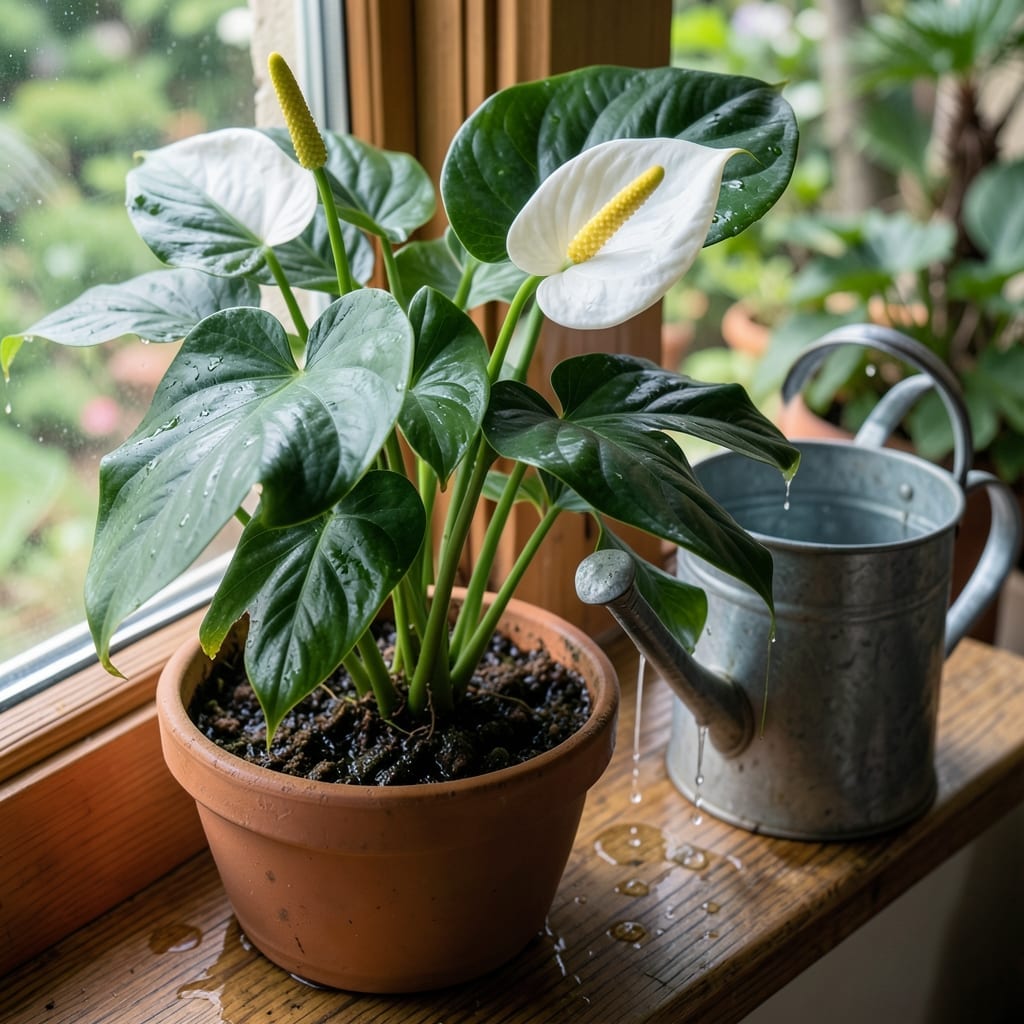
That sinking feeling when your peace lily’s leaves suddenly droop. I’ve been there—panicking, checking the soil, wondering if it’s beyond saving.
Overwatering is usually the culprit, and the fix is simpler than you think. The plant isn’t dead, just drowning, and it can bounce back within 24-48 hours with the right approach.
You’ll learn to spot the difference between thirsty droop and waterlogged droop, then take immediate steps to dry out the roots and restore balance.
No special tools needed—just patience and a few household items. Your lily will be perking up before you know it.
Drooping in peace lilies is often a distress signal, and overwatering is a primary trigger. Here’s why it happens, broken down by cause:
When soil is consistently soggy, oxygen availability to the roots plummets. Peace lilies (Spathiphyllum) thrive in well-draining conditions. Saturated soil suffocates the roots, halting their ability to absorb water and nutrients. Without oxygen, root cells die, leading to wilting and drooping as the plant conserves energy.
Excess moisture creates a breeding ground for pathogenic fungi like Phytophthora and Pythium. These organisms attack the roots, turning them mushy and brown. As the root system decays, the plant can’t uptake water efficiently, causing the leaves to lose turgor pressure and droop dramatically.
Overwatering leaches essential nutrients (nitrogen, potassium, magnesium) from the soil. Without these, the peace lily’s cellular functions falter. Potassium deficiency, for example, weakens cell walls, making leaves more prone to wilting. Meanwhile, excess water dilutes the soil’s nutrient concentration, starving the plant even if fertilizer is present.
Cold, waterlogged soil slows metabolic processes in the roots. Peace lilies prefer temperatures between 65–80°F (18–27°C). When roots are chilled by excess water, they absorb water less efficiently, leading to paradoxical dehydration—despite the soaked soil. This often manifests as sudden, severe drooping.
Here’s how to fix each common cause of drooping in an overwatered peace lily, with simple steps to bring your plant back to life.
If the soil feels soggy, stop watering immediately. Gently remove the plant from its pot and check the roots. Trim any mushy, black roots with clean scissors. Repot in fresh, well-draining soil and a pot with drainage holes. Prevention tip: Water only when the top inch of soil is dry. 💡
Peace lilies hate sitting in water. If your pot lacks drainage holes, switch to one that does. Place a layer of pebbles at the bottom to improve airflow. Prevention tip: Always use pots with drainage to avoid root rot. ✨
If roots are brown and smelly, they’re likely rotting. Rinse the roots under lukewarm water, trim the damaged parts, and repot in fresh soil. Use a fungicide if the rot is severe. Prevention tip: Ensure good airflow around the roots by using a well-aerated soil mix. 🌡️
While peace lilies tolerate low light, too little can stress them. Move your plant to a spot with bright, indirect sunlight. Prevention tip: Rotate the pot occasionally for even growth. 🎯
If roots are circling the pot, it’s time to size up. Choose a pot 1-2 inches larger and repot with fresh soil. Prevention tip: Repot every 1-2 years to prevent root binding. 🔥
With proper care, most recover within 24-48 hours. Severe cases with root rot may take up to a week. Remove excess water and ensure good drainage to speed up recovery.
Yes! Trim yellow leaves at the base and address the root cause. If overwatered, let the soil dry out completely before watering again. New healthy growth will appear.
Avoid misting until the plant stabilizes. Focus on fixing the soil moisture first. Too much humidity can worsen fungal issues in overwatered plants.
Use a well-draining mix with perlite or orchid bark. A ratio of 2 parts potting soil to 1 part perlite works well. This prevents waterlogging while retaining moisture.