
Beautiful Plants For Your Interior
Beautiful Plants For Your Interior
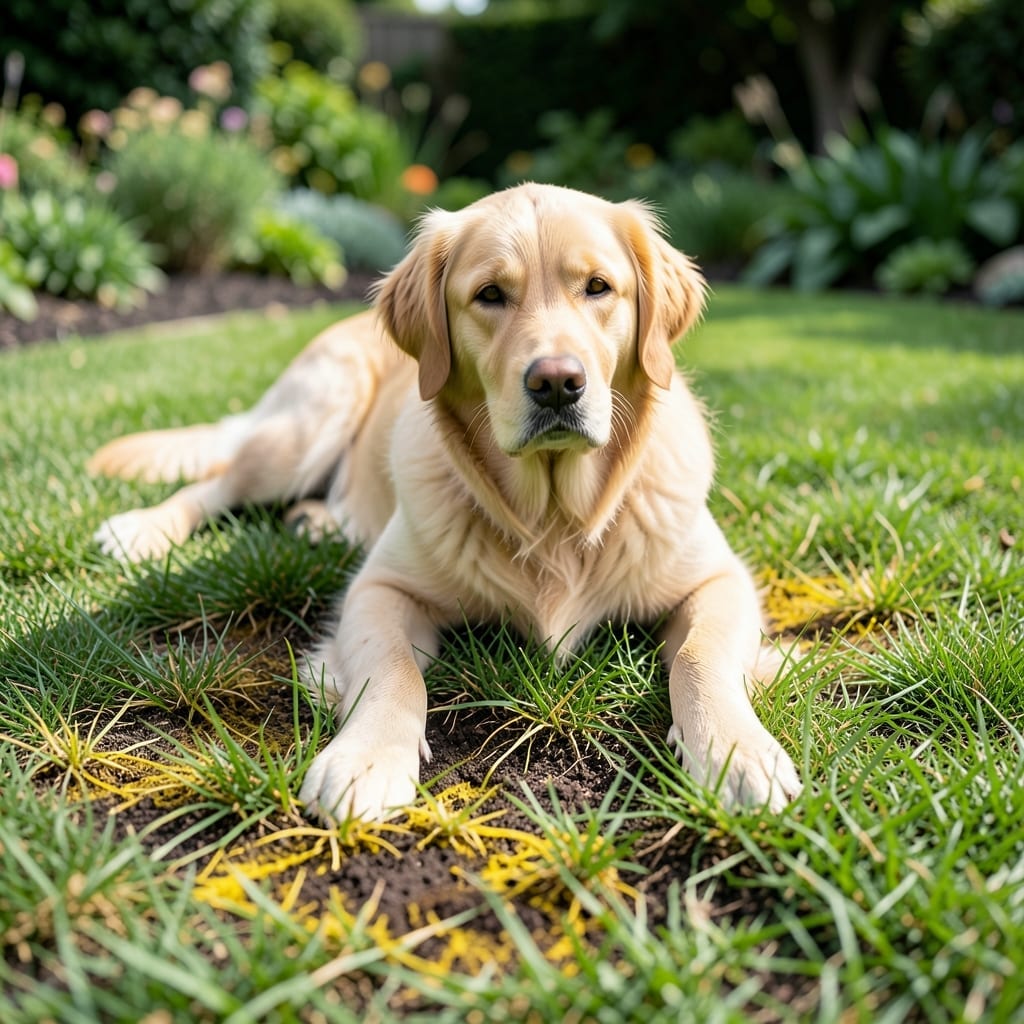
Those yellow spots in your lawn aren’t from neglect. Dog urine damage is frustrating but fixable with the right approach.
I’ve tested every trick—watering immediately, training new habits, even planting urine-resistant grass. The key is consistency and understanding why it happens in the first place.
Natural solutions like gypsum or baking soda neutralize the nitrogen before it burns the grass. You’ll see green returning within 1-2 weeks of starting treatment.
Works for any lawn size, any dog breed. Here’s how to reclaim your yard without harsh chemicals.
Dog urine contains high levels of nitrogen, urea, and salts, which can overwhelm grass and soil, leading to those dreaded brown patches. Here’s a breakdown of why it happens:
Urine is packed with nitrogen, a nutrient that grass needs in moderate amounts. However, the concentrated nitrogen in dog urine acts like a fertilizer burn, scorching the grass and disrupting its ability to absorb water. This is especially true for female dogs, whose urine tends to have higher nitrogen levels due to squatting in one spot.
Urine contains urea, which breaks down into ammonia. In small doses, ammonia can fertilize grass, but in high concentrations, it damages cell membranes in the grass blades, causing them to die off. The more concentrated the urine (e.g., from dogs that drink less water), the worse the effect.
Dog urine also contains salts, which accumulate in the soil over time. These salts draw moisture away from the roots, leading to dehydration and brown spots. Compacted or clay-heavy soils are particularly vulnerable because they retain salts longer than well-draining soils.
Fresh dog urine is acidic (pH ~6-7), but as it decomposes, it becomes alkaline (pH ~8-9). Grass thrives in slightly acidic to neutral soil (pH 6.5-7.5), so repeated exposure to urine can disrupt the soil’s pH balance, weakening the grass and making it more susceptible to disease and drought.
Reviving your lawn after dog urine damage is easier than you think. Below are targeted solutions for the most common causes, along with prevention tips to keep your grass thriving.
If you notice yellow or brown patches, flush the area immediately with water to dilute the nitrogen. For existing spots, mix 1 part baking soda with 10 parts water and pour it over the affected area to neutralize the acidity. Reapply every few days until the grass recovers.
For severely damaged patches, remove the dead grass and loosen the soil. Spread a thin layer of compost, then sow urine-resistant grass seeds like tall fescue or Kentucky bluegrass. Keep the area moist until new growth appears, usually within 7–14 days.
Pro tip 💡: Use a grass repair kit for quick, mess-free fixes.
Prevention tip ✨: Plant clover or ryegrass—they’re more resistant to dog urine than other grasses.
Grass is more sensitive to nitrogen overload than many weeds. Weeds often thrive in poor soil conditions, while grass needs balanced nutrients. The concentrated salts and ammonia in urine damage grass roots faster.
With proper watering and neutralization, you’ll see new growth in 7-14 days. Severely damaged areas may take 3-4 weeks to fully recover. Consistency is key for best results.
No, vinegar is acidic and will make the problem worse. Stick to baking soda solutions or commercial neutralizers. Always test any treatment on a small area first.
Tall fescue and Kentucky bluegrass are most resistant. Clover blends are also excellent as they naturally handle nitrogen better than traditional lawn grasses.