
Beautiful Plants For Your Interior
Beautiful Plants For Your Interior
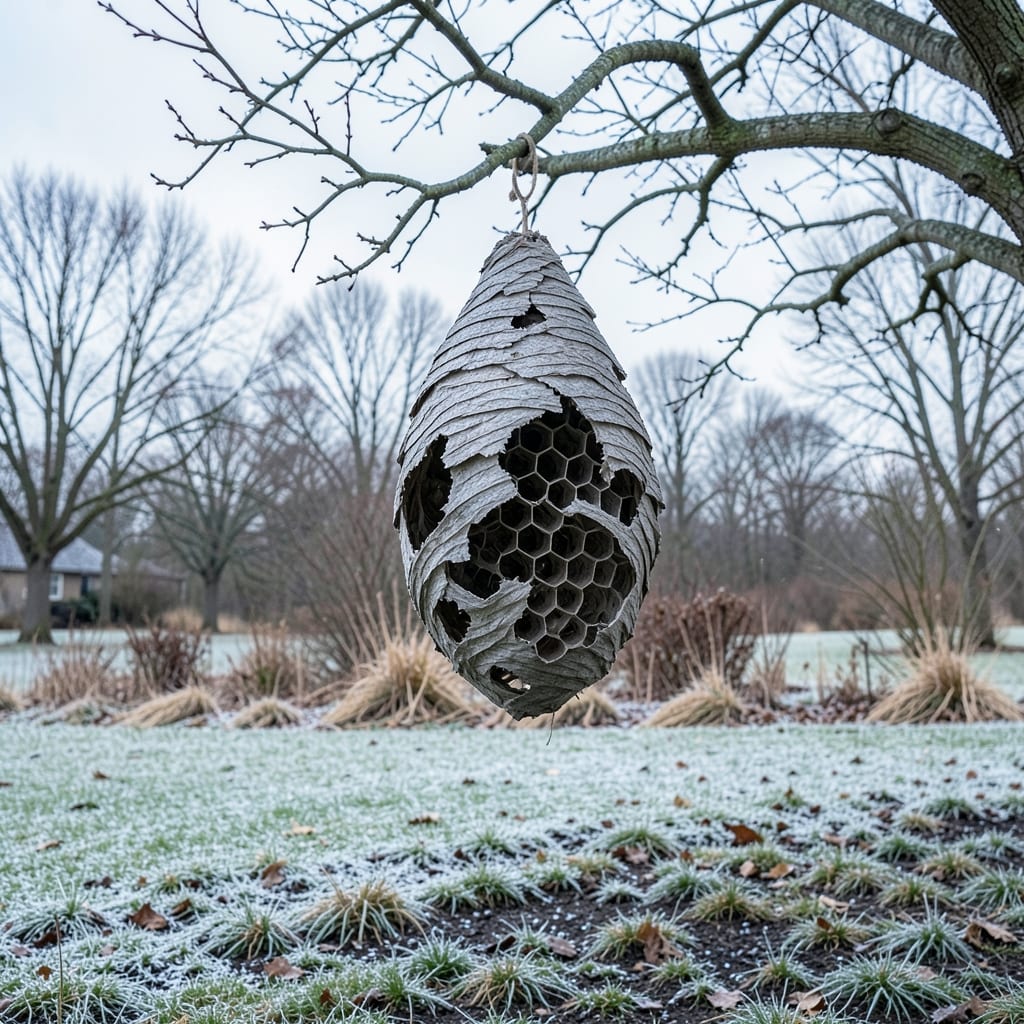
Most yellow jacket nests die off in winter as workers and males perish, but fertilized queens survive to establish new colonies in spring when temperatures rise.
This natural cycle happens because cold weather kills off the workers and drones, leaving only the queens to hibernate in protected spots. 🔥 I’ve noticed that queens often seek out tree bark, leaf litter, or even human structures for shelter. When spring arrives, they emerge to build new nests and lay eggs, starting the colony cycle all over again.
💡 In This Article
The colony’s annual shutdown begins when temperatures drop below 50°F. Worker yellow jackets and males can’t generate enough body heat to survive prolonged cold exposure. Their bodies simply shut down as metabolic processes fail, typically within 24-48 hours of sustained freezing conditions.
This mass die-off leaves only the fertilized queens, who’ve been busy consuming extra carbohydrates to build fat reserves since late summer.
Fertilized queens enter diapause—a hibernation-like state where their metabolism slows to just 5-10% of normal. They seek insulated microhabitats where temperatures stay above 40°F, often under loose bark, in rotting logs, or within wall voids. Their antifreeze proteins prevent ice crystal formation in their cells, while their thick exoskeletons reduce water loss. 🔥
What’s fascinating is how queens can survive months without food. They live off stored fat reserves, which provide both energy and water through metabolic processes. A single queen can lose up to 40% of her body weight during winter but still emerge in spring with enough energy to start a new colony.
Their breathing rate drops to just 1-2 breaths per minute during deep diapause.
When spring temperatures consistently reach 60-65°F, the queens awaken and begin scouting for nest sites. They’ll chew wood fibers to create the papery cells that will house their first brood. This timing is crucial—emerging too early risks exposure to late frosts, while waiting too long gives other insects a competitive advantage for nesting sites. ✨
The old nests from the previous year remain empty and are never reused. Without workers to maintain them, they quickly deteriorate from weather exposure. You might find these abandoned paper structures in trees or underground cavities, often with visible exit holes where the final workers perished trying to escape the cold.
Workers and males die when temperatures drop below 50°F for extended periods. Their bodies can’t sustain metabolic functions in cold weather, and they typically perish within 24-48 hours.
Fertilized queens seek insulated spots like tree bark, rotting logs, or wall voids. They enter diapause and survive on fat reserves until spring temperatures reach 60-65°F.
No, abandoned nests are never reused. Without workers to maintain them, they deteriorate quickly from weather exposure. Queens always build new nests in spring.
Late fall, specifically October or November, is ideal. Treat nests at dusk when workers are less active, using labeled insecticides and proper safety gear.