
Beautiful Plants For Your Interior
Beautiful Plants For Your Interior
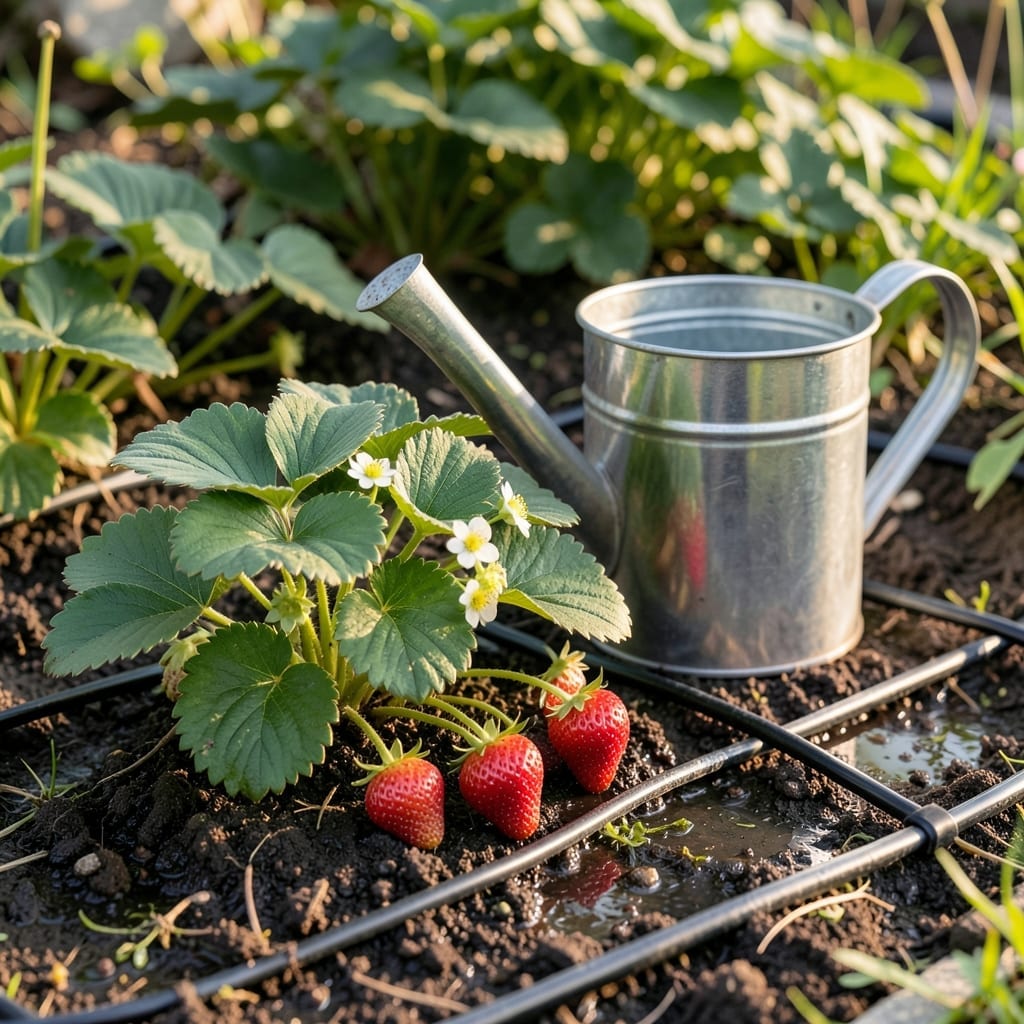
Overwatering or underwatering your 🍓 Strawberry plants can make or break your harvest. Too much water leads to soggy roots, while too little leaves berries small and bitter.
Finding that sweet spot is what separates a thriving patch from a struggling one. I’ve learned through trial and error that consistency is the key to plump, flavorful fruit.
Whether you’re new to gardening or have seasons of experience, understanding watering needs will transform your results. Let’s explore how to keep your plants perfectly hydrated.
Discover the simple yet effective methods that ensure your strawberries get just the right amount of moisture. Your future self will thank you when harvest time arrives.
Strawberries thrive with consistent moisture but hate soggy roots. I’ve found that 1-2 inches of water per week keeps them happy, whether from rainfall or irrigation. The key is maintaining evenly damp soil without waterlogging.
During fruit development, they need more water to plump up those berries. But in cooler months, you can scale back slightly. Always check the top inch of soil—if it’s dry, it’s time to water.
| Requirement | Specification |
|---|---|
| Water Amount | 1-2 inches per week |
| Frequency | Every 3-4 days |
| Best Time | Early morning |
| Soil Moisture | Evenly damp, not soggy |
| Critical Stage | Fruiting period |
June-bearing strawberries need steady watering during their single harvest season. I water mine deeply twice a week in spring, then increase to every 2-3 days as the berries form.
Everbearing and day-neutral varieties produce fruit all season. They require more frequent watering—about 1 inch every 3 days—to support continuous production. Mulching helps retain moisture between waterings.
In hot climates, strawberries may need daily watering to prevent stress. I use drip irrigation to deliver water directly to the roots, avoiding wetting the leaves which can cause disease.
For container-grown strawberries, check moisture daily. Pots dry out faster, so I water mine every 2-3 days in summer. Ensure containers have drainage holes to prevent root rot.
Overwatering signs include yellowing leaves and mushy berries. If you see these, reduce watering and improve drainage. Underwatering shows as wilting leaves and small, hard fruit.
Using a soil moisture meter takes the guesswork out of watering. I aim for a reading between 4-6 on a 10-point scale. This simple tool has saved me from many watering mistakes.
Remember, strawberries are shallow-rooted. Frequent, light watering works better than deep, infrequent soaks. This keeps the root zone consistently moist without drowning the plants.
With the right approach, you’ll see bigger, sweeter berries and healthier plants. It’s all about finding that balance and staying consistent. 🌱
I’ve seen even experienced gardeners make simple watering errors that cost them their strawberry harvest. The most common mistake? Overhead watering, which wets the leaves and invites fungal diseases. Always aim for the soil level to keep foliage dry.
Another frequent issue is inconsistent watering. Strawberries crave steady moisture, especially during fruiting. Letting the soil dry out completely between waterings stresses the plants and reduces yield.
Many gardeners also ignore soil drainage, planting strawberries in heavy clay or compacted soil. This causes root rot, which is often fatal. Always amend your soil with compost or sand to improve drainage.
Did you know that overwatering during fruiting can actually dilute the sweetness of your berries? It’s true. While strawberries need moisture, too much water at this stage leads to bland, watery fruit.
Finally, don’t neglect mulch. A 2-3 inch layer of straw or pine needles around your plants helps retain moisture, suppress weeds, and keep berries clean. It’s a simple step with big benefits.
By avoiding these common mistakes, you’ll set your strawberry plants up for success. A little attention to detail goes a long way in ensuring a healthy, productive harvest 🌿