
Beautiful Plants For Your Interior
Beautiful Plants For Your Interior
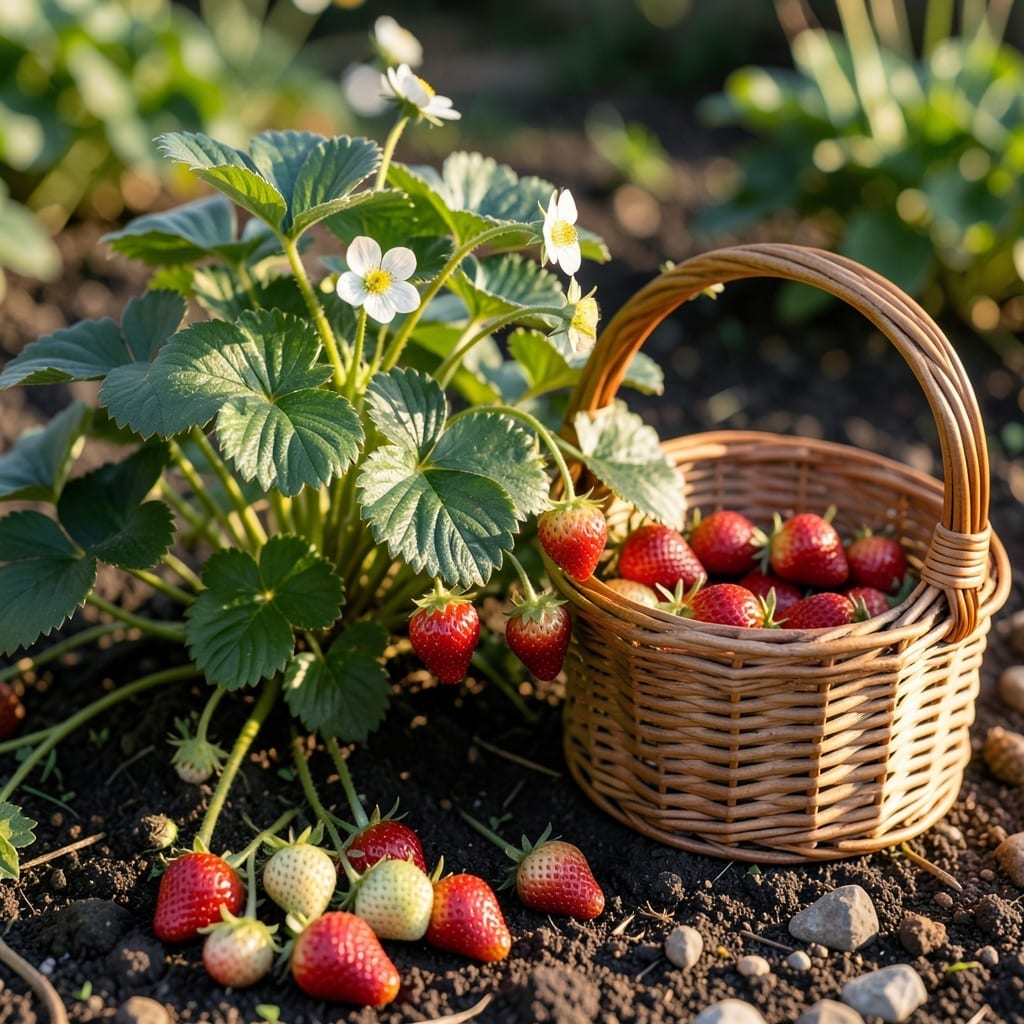
Watching your Strawberry 🍓 plants burst with fruit is one of gardening’s sweetest rewards. But how long can you expect the harvest to last?
The answer depends on the type of Strawberry, your climate, and how well you care for the plants. Some varieties give you a single, concentrated burst of fruit, while others keep producing for months.
I’ve learned that timing and technique make all the difference in extending your harvest. Whether you’re in USDA zone 6 or another region, there are ways to maximize your yield.
Discover how to get the most from your plants and enjoy fresh, homegrown strawberries for as long as possible.
If you’ve ever wondered how long strawberries produce fruit, the answer starts with knowing your variety. I’ve found that June-bearing strawberries give one big harvest, while others keep producing all season long. ☀️
The harvest duration varies dramatically between types. Some gardeners get just 2-3 weeks of fruit, while others enjoy fresh berries for 4-5 months with the right varieties and care. 🌱
| Strawberry Type | Harvest Duration | Peak Production | Harvests Per Year |
|---|---|---|---|
| June-Bearing | 2-3 weeks | Early to mid-summer | 1 |
| Everbearing | 4-5 months | Spring, summer, fall | 2-3 |
| Day-Neutral | 4-5 months | Continuous | Multiple |
June-bearing strawberries are the traditional choice, producing one large crop in early summer. They’re perfect if you want a big harvest all at once for preserving or sharing with neighbors. 🌿
Everbearing varieties like ‘Albion’ or ‘Seascape’ produce two to three harvests per season. The first comes in early summer, with additional flushes in late summer and fall, giving you fresh berries for months.
Day-neutral strawberries are my favorite for continuous production. These plants ignore day length and produce throughout the growing season, as long as temperatures stay between 40-90°F. They’re ideal for gardeners who want a steady supply.
In my USDA Zone 6 garden, I’ve seen day-neutral strawberries produce from late spring until the first frost. That’s nearly 6 months of fresh berries with proper care and ideal conditions. ✂️
The key to maximizing your strawberry harvest is understanding each variety’s needs. June-bearing types benefit from renovation after harvest, while everbearing and day-neutral varieties need consistent watering and feeding.
Remember that weather extremes can shorten production. Heat waves above 90°F may cause plants to stop fruiting temporarily, while late frosts can damage early blooms. Mulching helps regulate soil temperature. 💧
For the longest possible harvest, I recommend planting a mix of varieties. This way, as one type finishes, another is just starting. It’s like having a strawberry relay race in your garden all season long.
If you want to enjoy fresh strawberries for as long as possible, there are several proven techniques to stretch your harvest window beyond the natural fruiting period.
I’ve found that succession planting with different varieties works wonders. By mixing June-bearing, everbearing, and day-neutral types, you can have fruit ripening in stages from late spring to fall.
Proper pruning is another game-changer. For everbearing and day-neutral strawberries, I remove the first set of flowers to encourage stronger plant growth and larger yields later.
Mulching with straw or pine needles keeps the soil cool and prevents berry rot. I apply a 2-inch layer around plants, taking care not to bury the crowns.
Watering consistency is crucial. I water at the base in the morning, aiming for 1-2 inches per week. Drip irrigation works best to avoid wetting the leaves, which can lead to fungal issues.
Finally, fertilizing on schedule gives plants the nutrients they need for extended production. I use a balanced fertilizer every 4-6 weeks during the growing season, always in the morning for best absorption.
☀️