
Beautiful Plants For Your Interior
Beautiful Plants For Your Interior
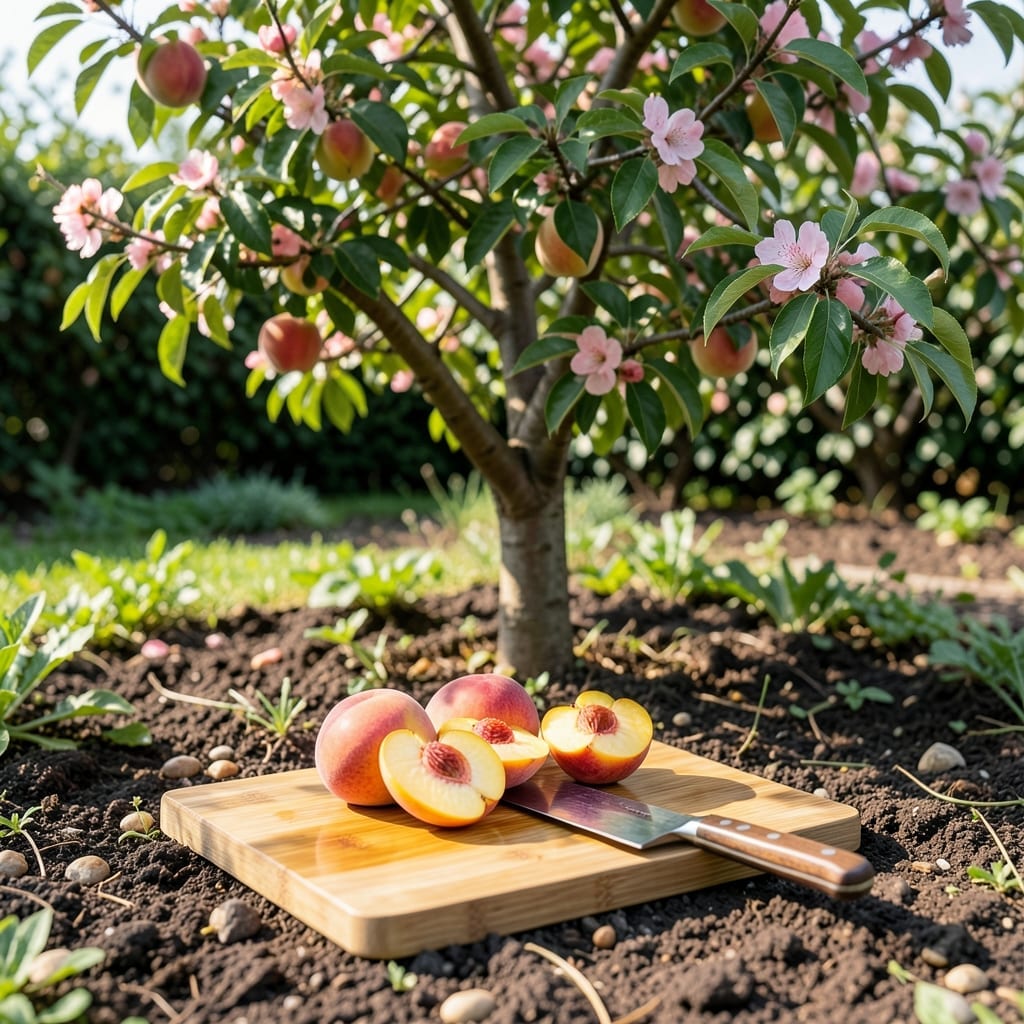
Yes, cut peaches turn brown quickly due to enzymatic browning when their flesh is exposed to oxygen in the air, similar to apples.
This happens because of a natural enzyme called polyphenol oxidase that reacts with oxygen once the fruit’s protective skin is broken. I always see this with stone fruits—the browning starts within 10-15 minutes and accelerates at room temperature. The good news is you can slow it down with a quick acid bath, like lemon juice or vinegar. ✨
💡 In This Article
The browning is caused by an enzyme called polyphenol oxidase (PPO) that lives in peach cells. When you cut the fruit, you rupture the cell walls, exposing the PPO to oxygen in the air. This triggers a chemical reaction that converts colorless phenolic compounds into brown pigments called melanins.
The process speeds up dramatically at room temperature. I’ve timed it—visible browning can start in as little as 5-10 minutes, and the color deepens significantly within 30 minutes.
The warmer the environment, the faster the reaction, which is why peaches left on a sunny countertop turn dark brown much quicker than those chilled in the fridge. ⚡
Peaches have particularly high levels of PPO compared to some other fruits. The enzyme concentration is highest just under the skin and in the pit area, which is why those parts often brown first.
The pH of the fruit also plays a role—peaches have a relatively neutral pH of around 3.9-4.2, which is ideal for PPO activity.
What most people don’t realize is that this browning doesn’t affect the taste or nutritional value—it’s purely a visual change. The texture remains the same, and the fruit is still perfectly safe to eat. The reaction is actually a defense mechanism in plants, designed to make damaged areas less appealing to pests. 💫
You’ll notice that overripe peaches brown faster than firm ones. This is because the cell walls are already breaking down, making it easier for oxygen to reach the PPO enzymes. Similarly, bruised peaches will brown more quickly when cut because the cell damage has already begun.
It’s a natural reaction called enzymatic browning. When peach cells are exposed to air, an enzyme reacts with oxygen, turning the flesh brown within 10-15 minutes. This is the fruit’s defense mechanism.
No, it’s purely visual. The texture and flavor stay the same, and it’s still perfectly safe to eat. This is just a chemical change, not spoilage.
Toss slices in 1 tablespoon of lemon juice per 1 cup of water. This acid bath slows the reaction dramatically. Keep them chilled too.
In the fridge with acid treatment, they’ll stay fresh for 2-3 days in an airtight container. For longer storage, freeze them first on a tray.
Yes, underripe fruit browns more slowly than soft, fully ripe ones. Their cell walls are more intact, limiting oxygen exposure to the enzyme.