
Beautiful Plants For Your Interior
Beautiful Plants For Your Interior
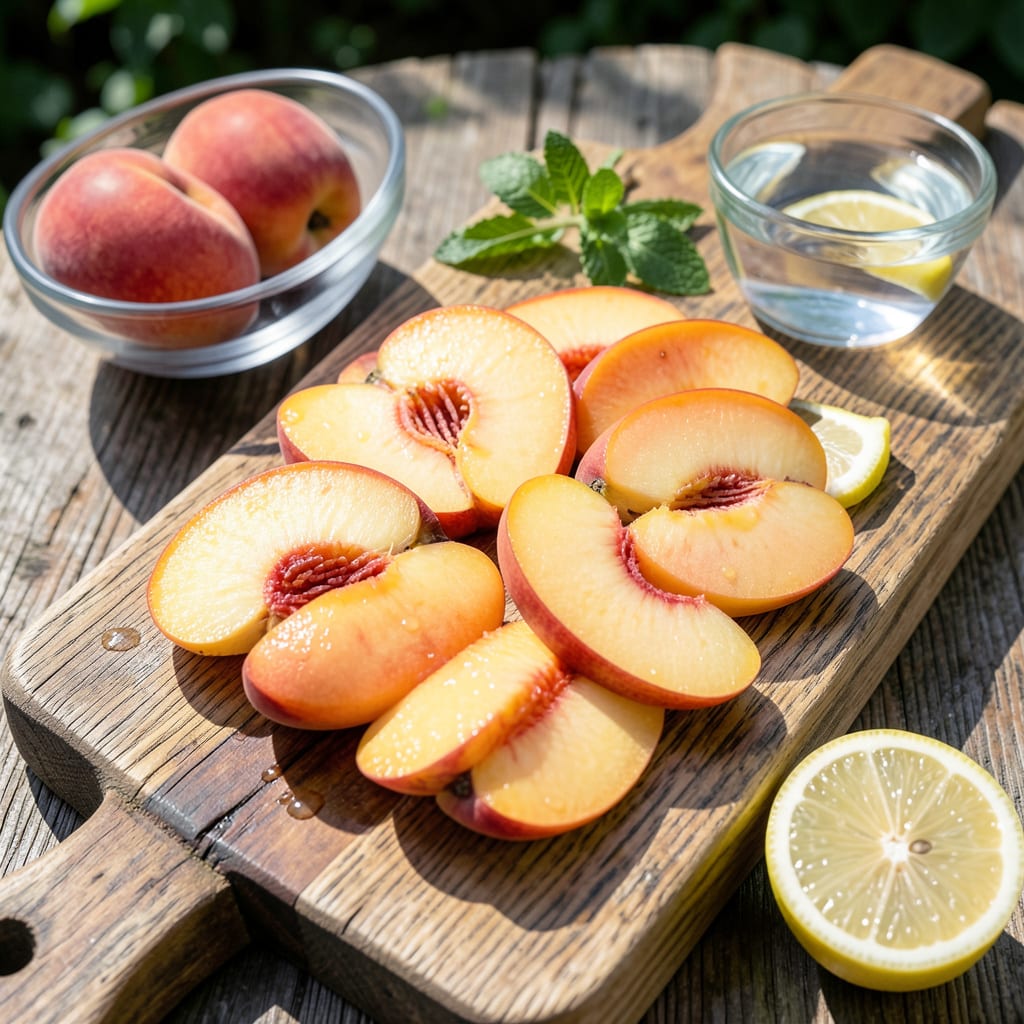
Nothing’s worse than cutting into a perfect peach only to watch it darken before your eyes. Oxidation hits fast, but a simple lemon water bath buys you hours of fresh color and flavor.
I’ve saved countless fruit salads and snacks with this trick. The acid slows browning without changing the taste, and it works just as well for garden-fresh peaches as store-bought.
📚 In This Guide
Here’s the method I rely on to keep peach slices looking fresh and vibrant longer.
Start by washing your peaches under cool running water to remove any dirt or residue. Pat them dry with a clean towel to prevent excess moisture from diluting the treatment. I find that slicing them just before treatment gives the best results—waiting too long after cutting leads to faster browning.
Cut the peaches into slices or wedges of your desired thickness, removing the pit as you go. The size doesn’t matter as much as consistency—aim for uniform pieces so they all respond to the treatment evenly. Use a sharp knife to avoid bruising the flesh, which can accelerate discoloration.
Fill a large bowl with 4 cups of cold water and add 1 tablespoon of lemon juice for every cup of water. The acidity in the lemon juice slows down the oxidation process that causes browning. Stir the mixture well to ensure the lemon juice is evenly distributed throughout the water.
If you don’t have fresh lemons, bottled lemon juice works just as effectively. Avoid using lime juice or vinegar, as they can impart unwanted flavors. The water should have a slight citrus scent but not be overly concentrated—too much lemon juice can make the peaches taste sour.
Place the peach slices into the lemon water bath, ensuring they are fully submerged. Let them soak for 3-5 minutes. This gives the lemon juice enough time to form a protective barrier on the surface of the fruit without softening the texture.
Gently stir the slices once or twice during soaking to make sure every surface is exposed to the solution. You’ll notice the water may turn slightly cloudy—that’s normal and just a sign the treatment is working.
After soaking, remove the peach slices and place them on a clean paper towel or a wire rack to drain. Lightly pat them dry if you’re using them immediately, but avoid pressing too hard, as this can damage the fruit. For storage, transfer the slices to an airtight container.
Store the container in the refrigerator, where the peaches will stay fresh and vibrant for up to 2 days. If you’re packing them for a lunchbox or picnic, keep the container on ice to maintain the effect until serving.
These small details will help you get the most out of your peach preparation.
Preparation Timing: Slice your peaches just before placing them in the lemon water bath. I learned this the hard way after noticing that even a 10-minute delay between cutting and soaking significantly increases browning. The moment the flesh is exposed to air, oxidation begins.
Solution Consistency: When creating your lemon water bath, make sure the 4 cups of cold water and 1 tablespoon of lemon juice per cup are thoroughly mixed. I stir for at least 30 seconds to ensure even distribution—this prevents some slices from getting too much acid while others get too little.
Soaking Technique: During the 3-5 minute soak, gently stir the slices once or twice. This ensures every surface gets exposed to the solution. Don’t leave them longer than 5 minutes, though, or the texture can become mushy.
Storage Method: After draining, transfer the slices to an airtight container immediately. The up to 2 days of freshness in the refrigerator only works if they’re properly sealed—exposure to air defeats the whole purpose of the treatment.
Peaches brown due to oxidation when their flesh is exposed to air. Enzymes react with oxygen, causing discoloration. A quick lemon water soak (1 tbsp lemon juice per cup of water) slows this process.
Soaked in lemon water, peeled peaches stay fresh for 4–6 hours in the fridge. For longer storage (up to 2 days), seal them in an airtight container with a bit of the lemon solution.
Yes! White vinegar (1 tbsp per cup of water) works as an alternative. The mild acidity inhibits browning, though lemon juice is more common for flavor.
If browning occurs, they’re still safe to eat! Next time, reduce air exposure by patting slices dry before storing or use a vacuum-sealed container.
