
Beautiful Plants For Your Interior
Beautiful Plants For Your Interior
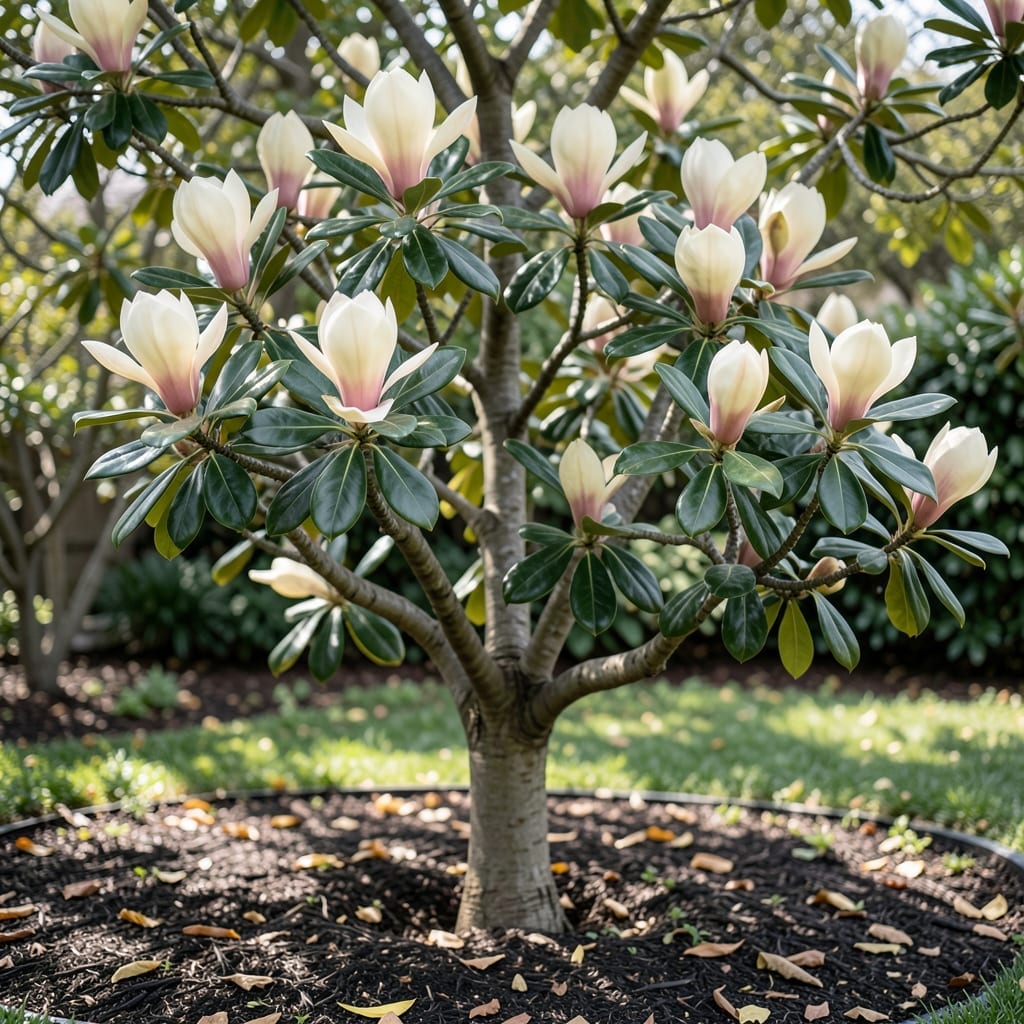
Magnolias can be either deciduous, shedding leaves annually, or evergreen, retaining leaves year-round. The type determines whether your tree will lose its foliage in fall or winter.
I’ve found that southern magnolias often stay lush through winter while saucer magnolias drop their leaves in autumn. The key difference lies in their native climates and leaf structures. Deciduous types evolved to conserve energy in colder months. ✨
This means your magnolia’s behavior depends entirely on its specific variety and local conditions. 🌟
💡 In This Article
The biological distinction starts with leaf structure. Deciduous magnolias like Saucer Magnolia (Magnolia × soulangeana) develop thin, broad leaves that can’t withstand freezing temperatures. These species evolved in temperate climates where shedding leaves conserves water and energy during dormancy. The abscission layer forms at the leaf stem base in autumn.
Evergreen varieties such as Southern Magnolia (Magnolia grandiflora) have thicker, leathery leaves with a waxy coating. This adaptation allows them to retain moisture and continue photosynthesis year-round in warmer climates. Their leaves typically last 1-2 years before being replaced, with new growth emerging as old leaves drop. ✨
Seasonal changes trigger different responses. Deciduous magnolias begin leaf color change in late summer, with full leaf drop by early winter. Evergreens may drop some leaves in spring as new growth pushes out old foliage. This gradual replacement maintains the tree’s lush appearance throughout the year. 🔥
Climate plays a crucial role in this behavior. In their native ranges, deciduous magnolias experience cold winters that necessitate dormancy. Evergreens thrive in USDA zones 6-10, where mild winters allow continuous growth. Some species like Sweetbay Magnolia (Magnolia virginiana) exhibit semi-evergreen behavior in warmer parts of their range.
The leaf retention mechanism differs fundamentally between types. Deciduous magnolias produce ethylene gas in response to shorter days and cooler temperatures, triggering leaf senescence. Evergreens maintain higher levels of growth hormones that inhibit this process, allowing them to keep foliage longer. 💫
Evergreen magnolias typically keep their leaves for 1-2 years before shedding. They gradually drop old leaves as new growth emerges, often in spring. This process maintains their lush appearance year-round.
Shorter days and cooler temperatures in fall signal deciduous magnolias to produce ethylene gas. This triggers leaf senescence, forming an abscission layer that causes leaves to drop by early winter.
Yes, some species like Sweetbay Magnolia exhibit semi-evergreen behavior. They retain leaves in warmer climates but may drop them in colder winters, adapting to local conditions.
The waxy coating helps retain moisture and protects against harsh weather. This adaptation allows evergreen magnolias to continue photosynthesis even in colder months.