
Beautiful Plants For Your Interior
Beautiful Plants For Your Interior
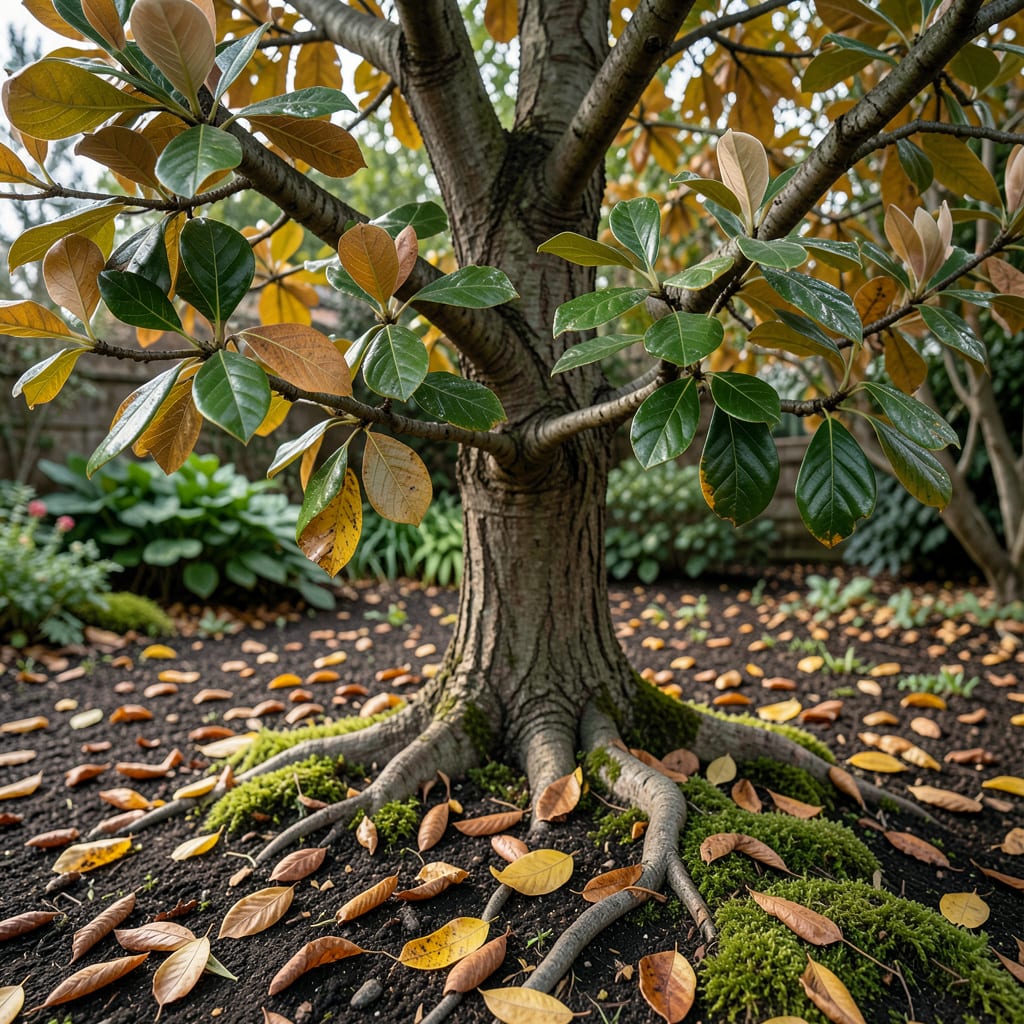
My magnolia dropped half its leaves overnight last spring. Turns out, it wasn’t dying—just reacting to a sudden temperature swing.
Most cases stem from stress: too much water, not enough, or a pest you can’t see yet. Fix the root cause, and your tree bounces back faster than you’d expect. Here’s how to play detective.
📚 In This Guide
Here’s my go-to method for identifying the cause and restoring your tree’s health quickly.
Start by examining the fallen leaves closely. Yellowing leaves with green veins often signal iron chlorosis, a common issue in magnolias. If leaves appear brown and crispy, your tree is likely suffering from underwatering or excessive heat stress.
Check the tree’s bark and remaining foliage for pests like scale insects or magnolia borers. Look for small holes, sticky residue, or sawdust-like frass at the base. These signs help pinpoint whether you’re dealing with a pest infestation rather than a cultural issue.
Magnolias prefer consistently moist but well-drained soil. Stick your finger 2-3 inches into the soil near the tree’s base. If it feels bone dry, your tree needs water immediately. Conversely, if the soil is waterlogged or has a sour smell, you’re dealing with overwatering or poor drainage.
Test soil pH while you’re at it – magnolias thrive in slightly acidic soil (pH 5.5-6.5). A simple soil test kit from your garden center will confirm if pH is the culprit. Yellow leaves with green veins often appear when soil pH is too high, preventing iron uptake.
Consider recent changes in your tree’s environment. New construction, paved areas, or compacted soil can damage roots and trigger leaf drop. Magnolias have shallow root systems that are particularly sensitive to physical disturbances.
Check for extreme weather fluctuations. A late frost after new growth has emerged can cause sudden leaf drop. Similarly, intense heat waves or drought conditions stress the tree. Note any recent temperature swings or watering schedule changes that might coincide with the problem.
For nutrient deficiencies, apply chelated iron according to package directions. If pests are present, treat with horticultural oil or appropriate insecticide, following label instructions carefully. Always water deeply at the tree’s drip line rather than near the trunk to encourage deep root growth.
Improve drainage by amending heavy clay soil with organic matter. Mulch with 2-3 inches of shredded bark to retain moisture and regulate soil temperature. Avoid piling mulch against the trunk, which can cause rot. For heat stress, ensure the tree receives afternoon shade in particularly hot climates.
After implementing fixes, observe your magnolia for 2-3 weeks. New growth should appear healthy and vibrant. Continue consistent watering – about 1-2 inches per week, including rainfall, for established trees.
Prevent future issues by maintaining good cultural practices. Fertilize in early spring with a balanced, acid-forming fertilizer. Prune only when necessary, as magnolias bloom on old wood. Regularly check for early signs of stress to address problems before they escalate.
Here are the key details that will help you accurately diagnose and treat your magnolia.
Inspection Tip: In Step 1, pay special attention to leaf patterns. Yellow leaves with green veins are your first clue for iron deficiency, while brown, crispy edges scream underwatering. I missed this distinction once and treated the wrong problem entirely.
Soil Check: For Step 2, that 2-3 inch finger test is non-negotiable. I’ve found that magnolias will show stress at both extremes—bone dry means you’re underwatering, while waterlogged soil with a sour smell means you’re drowning the roots.
Watering Strategy: In Step 5, the 1-2 inches of water per week is your baseline, but here’s what nobody tells you—water deeply at the drip line, not the trunk. Shallow watering encourages weak root systems, which makes your tree more vulnerable to stress.
Mulching Matters: When applying that 2-3 inches of shredded bark in Step 4, keep it away from the trunk. I learned this the hard way after losing a young magnolia to rot. The mulch should form a donut shape around the base, not a volcano.
Magnolias may shed leaves in summer due to heat stress, drought, or sudden temperature changes. Ensure consistent watering and mulch to retain moisture. If leaves turn yellow or brown first, it could signal a nutrient deficiency or pest issue.
Yes! Magnolias are deciduous or semi-evergreen, so some leaf drop in fall is natural as they prepare for winter. However, excessive shedding outside this season may indicate stress or disease.
Maintain even soil moisture, avoid over-fertilizing, and protect the tree from extreme winds or frost. Regularly check for pests like scale or aphids, and prune only when necessary to reduce stress.
Absolutely. Overwatering leads to root rot, which restricts nutrient uptake and causes leaf yellowing and drop. Ensure well-draining soil and water only when the top inch of soil feels dry.
