
Beautiful Plants For Your Interior
Beautiful Plants For Your Interior
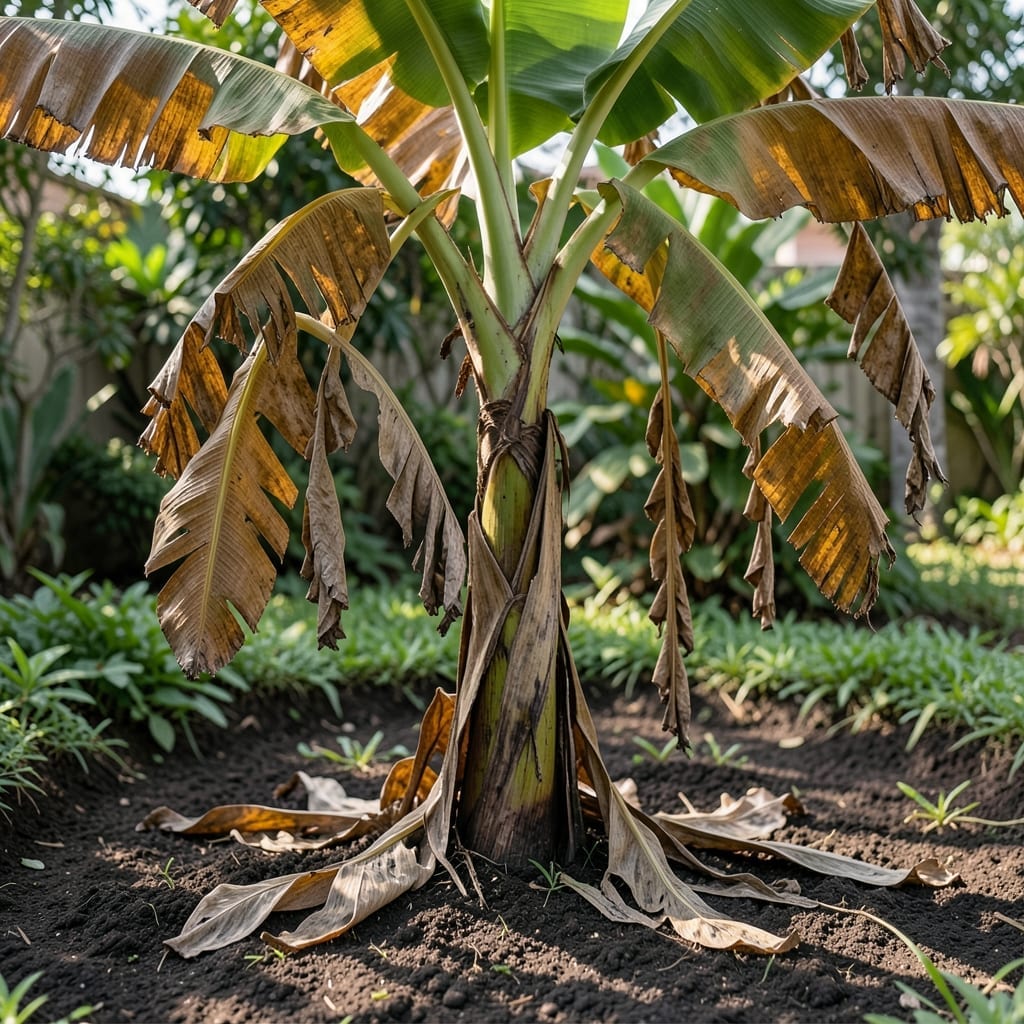
That brown, crispy banana tree isn’t done yet. I’ve brought back more than a few that looked completely dead—turns out they’re tougher than they appear.
The trick is figuring out what went wrong first. Too much water, not enough, or maybe a surprise frost? Each problem has a different fix, but the process starts with a close look at the roots and stem.
With the right approach, you’ll see new healthy growth within 4-6 weeks. Even if the leaves are gone, the corm often survives, ready to sprout again when conditions improve.
Works for potted plants, backyard specimens, and even those left out in an unexpected cold snap. Here’s how to diagnose and revive it.
A dead banana tree often results from a mix of environmental, biological, or cultural stress factors. Below are the most common causes, explained with actionable insights to help you prevent or address them.
Banana trees thrive in tropical climates (78–86°F). Frost, freezing temperatures, or sudden heatwaves can shock the plant, leading to cellular damage and death. Even temperatures below 50°F (10°C) slow growth and weaken the tree. Action: Use frost cloths in cold climates or grow cold-hardy varieties like Musa basjoo.
Root rot is a silent killer. Banana trees need consistent moisture but not soggy soil. Waterlogged roots suffocate, preventing nutrient uptake. Yellowing leaves and a foul smell from the soil are red flags. Action: Plant in well-draining soil, water when the top 2 inches are dry, and avoid saucer-like depressions that trap water.
Banana borers, aphids, and Fusarium wilt (a fungal disease) can devastate a tree. Borers tunnel into the pseudostem, while Fusarium clogs the vascular system, cutting off water and nutrients. Action: Inspect stems for holes or black streaks. Remove infected plants immediately, and use neem oil or fungicides preventatively.
Banana trees are heavy feeders, requiring potassium, nitrogen, and magnesium. Yellow edges on leaves (potassium deficiency) or stunted growth (nitrogen lack) signal trouble. Action: Apply a balanced fertilizer (e.g., 10-10-10) monthly and add compost for organic matter.
Strong winds, improper pruning, or mechanical injury (e.g., lawnmower cuts) can stress the tree. A severed pseudostem may not regrow. Action: Stake young trees, prune only dead leaves, and keep the base protected from equipment.
Bringing a struggling banana tree back to life starts with fixing the root causes. Below are practical solutions for common issues, paired with prevention tips to keep your tree thriving long-term.
Banana trees need nutrient-rich, well-draining soil. Fix it by mixing compost or aged manure into the top 6–12 inches of soil around the base. Avoid heavy clay or compacted earth, which suffocates roots. Prevention tip: Test soil pH (aim for 5.5–7.0) and reapply organic matter every 3–4 months.
Too little water causes wilting; too much leads to root rot. Fix it by watering deeply 2–3 times weekly in dry spells, ensuring the top inch of soil dries between sessions. For soggy soil, improve drainage by amending with sand or perlite. Prevention tip: Use a moisture meter to monitor levels—bananas love consistent dampness, not flooding.
Common culprits like aphids or banana weevils sap vitality. Fix it with neem oil spray (apply weekly) or insecticidal soap for soft-bodied pests. For weevils, remove and burn infected pseudostems. Prevention tip: Keep the area debris-free and introduce beneficial insects like ladybugs.
Banana trees need 6–8 hours of sunlight daily. Fix it by transplanting to a sunnier spot or trimming nearby shade-casting plants. If moving isn’t an option, use reflective mulch to maximize light absorption. Prevention tip: Plan your garden layout to avoid future shading as trees grow.
Cold snaps or heatwaves can shock the plant. Fix it by covering young trees with frost cloth in winter or providing shade cloth during scorching days. Potted bananas? Move them indoors temporarily. Prevention tip: Plant in microclimates (e.g., near a south-facing wall) to buffer temperature swings.
With these steps, your banana tree can bounce back stronger—just stay consistent and patient!
Check the pseudostem and corm. If the stem is mushy and the corm is soft or black, it’s likely gone. Healthy corms feel firm even if leaves are brown.
Yes! If the corm is intact, new growth can emerge in 4-6 weeks with proper care. Trim dead foliage and maintain consistent moisture.
Overwatering. Many assume more water helps, but soggy soil causes root rot. Water only when the top 2 inches of soil are dry.
Remove dead stems to redirect energy to the corm. Use clean shears and cut at ground level to avoid damaging new shoots.