
Beautiful Plants For Your Interior
Beautiful Plants For Your Interior
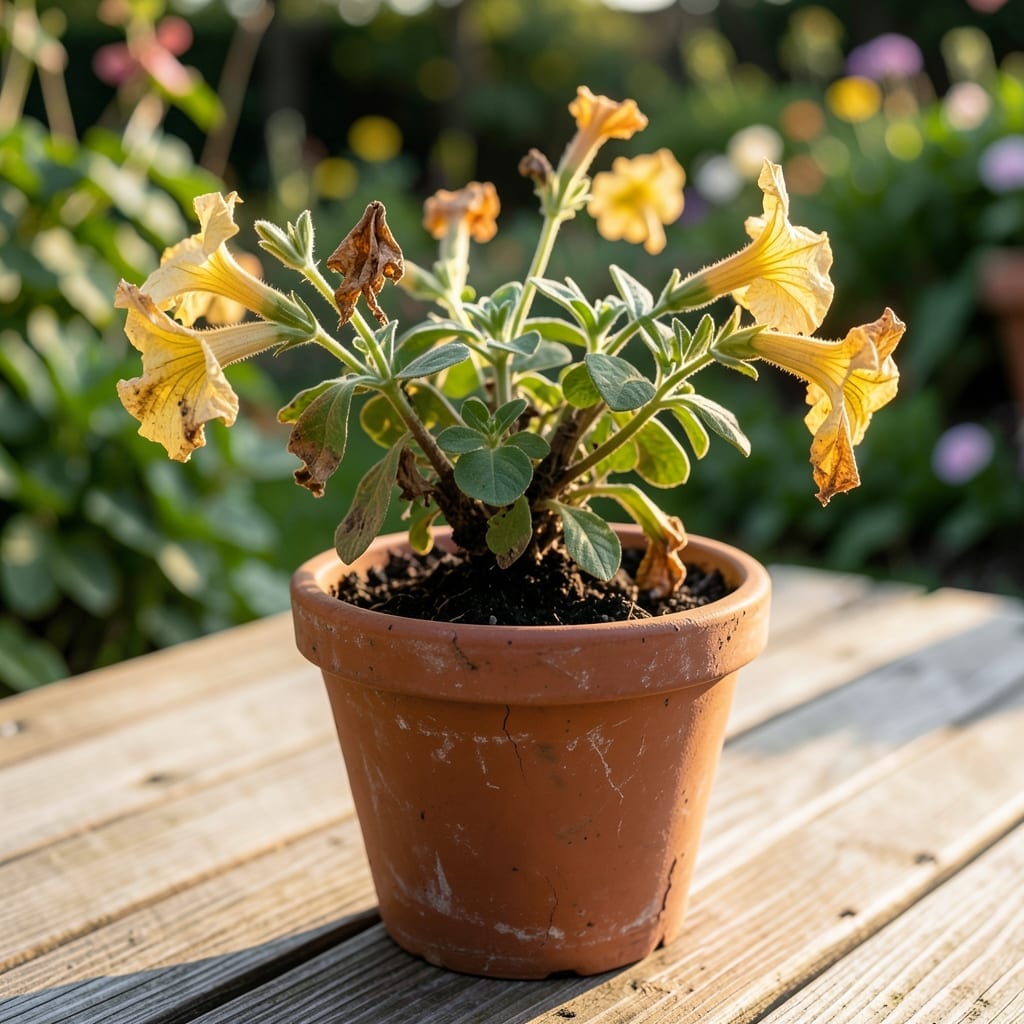
Your petunias looked perfect yesterday. Today, their stems are mushy at the base. Crown rot strikes fast, but I’ve pulled plants back from the brink more times than I’d like to admit.
It starts with wilting that doesn’t improve after watering. Then the stems turn brown and soft right where they meet the soil. Overwatering, poor drainage, or soggy soil are usually to blame.
Catching it early means you can still save them. I’ve found that removing affected stems and improving drainage can stop the spread. The key is acting before the rot reaches the roots.
With the right steps, your petunias can bounce back—stronger and ready to bloom again. Here’s how to spot it and fix it before it’s too late.
Crown rot in petunias often stems from environmental and cultural factors that create ideal conditions for fungal pathogens like Phytophthora or Fusarium. Here’s why it happens:
Excess moisture around the plant’s crown (where stems meet roots) is the leading cause. Overwatering or compacted soil prevents proper drainage, suffocating roots and inviting fungal growth. Petunias in heavy clay soils or containers without drainage holes are especially vulnerable.
Fungal spores thrive in warm (75–85°F), humid environments. Poor air circulation—common in dense plantings or greenhouses—traps moisture around the crown, accelerating infection. Nighttime watering or overhead irrigation worsens this by prolonging leaf and stem wetness.
Pathogens linger in infected soil, compost, or gardening tools. Reusing potting mix or failing to sterilize pruners can introduce fungi directly to healthy petunias. Even splashing water from contaminated soil can spread spores to the crown.
Over-fertilized, underfed, or root-bound petunias have weakened defenses. Stress from extreme temperatures, transplant shock, or pest damage makes plants more susceptible to opportunistic fungi.
Addressing these triggers—improving drainage, spacing plants, and sanitizing tools—can significantly reduce crown rot risks.
Crown rot in petunias can be frustrating, but with the right approach, your plants can recover. Here’s how to tackle each cause and prevent future issues.
If soggy soil is the culprit, let the top inch of soil dry out between waterings. Water at the base of the plant in the morning to allow excess moisture to evaporate. Use well-draining soil and containers with drainage holes to prevent waterlogging. Prevention tip: 💡 Stick your finger in the soil—if it feels damp, hold off on watering!
Heavy or compacted soil traps water around the roots. Mix in perlite, sand, or compost to improve drainage. For container-grown petunias, ensure pots have drainage holes and elevate them to avoid standing water. Prevention tip: 🌿 Raised beds or containers can help keep roots dry.
Fungal crown rot spreads quickly, so act fast. Remove infected plants to prevent contamination. For mild cases, apply a fungicide labeled for crown rot (follow package instructions). Disinfect tools with rubbing alcohol after pruning. Prevention tip: ✨ Sterilize pots and tools between uses to stop fungus in its tracks.
Reduce humidity around petunias by spacing plants properly and pruning dense foliage. Water early in the day so leaves dry quickly. If growing indoors, use a fan to improve air circulation. Prevention tip: 🌬️ Avoid overhead watering to keep foliage dry.
With these fixes and a little vigilance, your petunias can bounce back and thrive! 🌸
Look for wilting stems that don’t recover after watering. The base of the stem will appear brown, mushy, or water-soaked where it meets the soil. Yellowing leaves often follow these symptoms.
Remove infected plants immediately and isolate them. Sterilize tools with rubbing alcohol and avoid watering healthy plants until the soil dries out.
If caught early, yes! Trim affected stems, improve drainage, and adjust watering. Mild cases often rebound with proper care.
For severe or recurring infections, apply a copper-based fungicide. Always follow label instructions and treat in the morning for best results.