
Beautiful Plants For Your Interior
Beautiful Plants For Your Interior
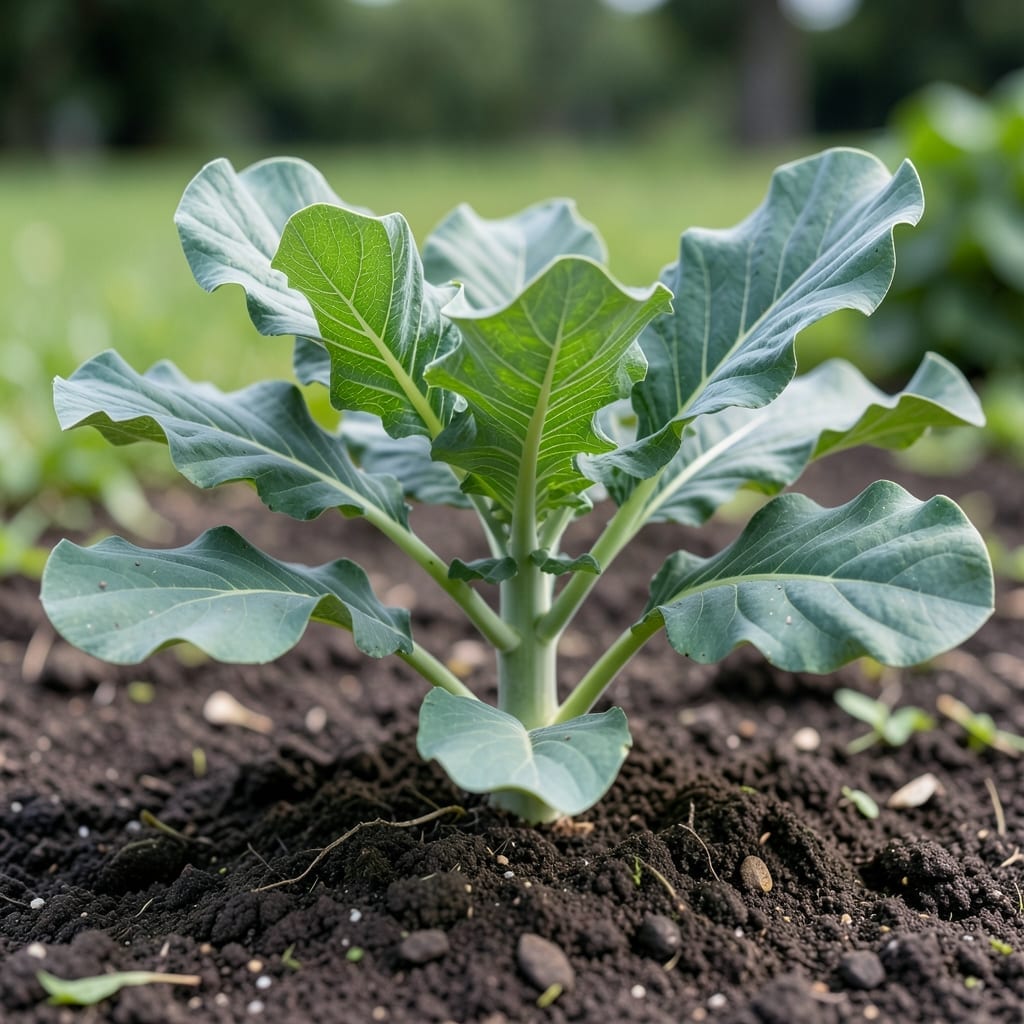
Those first cauliflower leaves tell you everything. I learned the hard way that pale, leggy seedlings mean trouble, while deep green, sturdy ones are on the right track.
You’ll spot healthy growth by the bright color and firm texture. Weak stems or yellow edges? Time to adjust light or water. A little attention now saves weeks of frustration later.
📚 In This Guide
Spot the early warnings and take action before your seedlings suffer irreversible damage.
Healthy cauliflower seedlings display deep green cotyledons that unfold into broad, slightly blue-tinted true leaves. These should feel firm to the touch with no discoloration or soft spots. The first true leaves appear 7-10 days after germination and grow rapidly in good conditions.
Problematic leaves show yellowing (chlorosis), purple veins (phosphorus deficiency), or brown edges (potassium deficiency). I always check the undersides for tiny pests like aphids, which leave a sticky residue. Real talk: early detection means the difference between recovery and loss.
Yellowing lower leaves often signals nitrogen deficiency, while upper leaf yellowing with green veins indicates iron deficiency. Purple stems and leaf undersides scream phosphorus shortage, especially in cold soil. Brown, crispy leaf tips usually mean inconsistent watering or salt burn from over-fertilizing.
I’ve found that stunted growth with normal color often points to root issues—compacted soil or damping-off fungus. Here’s the thing—cauliflower seedlings are particularly sensitive to both overwatering and underwatering, so the soil should feel like a wrung-out sponge: moist but not soggy.
Cauliflower seedlings thrive at 65-75°F during the day and 60-65°F at night. If leaves appear leggy or pale, they’re likely stretching for light. Move them to full sun (6+ hours daily) or supplement with grow lights 12-14 hours a day, positioned 4-6 inches above the plants.
If you notice leaf curling or cupping, check for temperature extremes. I keep a small thermometer near my seedlings to monitor fluctuations. Don’t skip this (I learned the hard way)—cauliflower bolts prematurely if exposed to 80°F+ for extended periods.
For nutrient deficiencies, apply a balanced, water-soluble fertilizer at half strength every 10-14 days. I prefer fish emulsion for nitrogen boosts and bone meal for phosphorus. Always water before fertilizing to prevent root burn.
If pests appear, spray with insecticidal soap every 3-4 days until gone. For fungal issues, improve airflow by thinning seedlings to 2-3 inches apart and avoid overhead watering. This is the moment that matters: catching problems early prevents them from spreading to your entire tray.
Start with sterile seed-starting mix to prevent damping-off. Harden off seedlings gradually before transplanting by exposing them to outdoor conditions for increasing periods over 7-10 days. This reduces transplant shock that often manifests as leaf wilting or yellowing.
I always rotate my cauliflower planting locations yearly to prevent soil-borne diseases. If you’re growing in containers, use fresh potting mix each season. You’ll see stronger, more resilient plants that resist common leaf problems from the start.
Small adjustments in your approach can prevent most seedling problems before they start.
Temperature Control: Maintain that 65-75°F daytime range and 60-65°F at night—cauliflower seedlings are finicky about temperature swings. I learned the hard way that even a few degrees above 80°F can trigger premature bolting, ruining your crop before it starts.
Light Requirements: If your seedlings look leggy or pale, they’re begging for more light. The 12-14 hours of daily light from grow lights should be positioned 4-6 inches above the plants. Without this, they’ll stretch unnaturally and weaken, making them more susceptible to disease.
Watering Wisdom: The soil should feel like a wrung-out sponge—moist but not soggy. Overwatering leads to damping-off fungus, while underwatering causes stress that manifests in brown, crispy leaf tips. I check mine daily, especially in fluctuating temperatures.
Early Detection Habit: Make it a routine to inspect the undersides of leaves for pests like aphids, which leave that telltale sticky residue. Catching issues in those first 7-10 days after germination often means the difference between a quick fix and losing the entire tray.
Yellowing leaves often indicate overwatering, nutrient deficiency (like nitrogen), or poor drainage. Check soil moisture and ensure proper fertilization. If the issue persists, test soil pH (ideal: 6.0–7.0).
True leaves (not cotyledons) typically appear 7–14 days after germination. If they’re slow, ensure warm soil (70–75°F) and adequate light (14–16 hours/day).
Yes! Seedling leaves are edible and packed with nutrients. Harvest sparingly to avoid stunting growth. Use them in salads or sautéed dishes for a mild, earthy flavor.
Use sterile seed-starting mix, avoid overwatering, and ensure good airflow. A thin layer of cinnamon or chamomile tea spray can act as a natural fungicide.
If seedlings struggle, consider transplanting store-bought starter plants. Alternatively, adjust light, temperature, or nutrients—cauliflower thrives in cool (60–65°F) conditions with consistent moisture.